Key Takeaways
-
Wait 6-12 months after completing Invisalign before switching retainer types to allow teeth and bone tissue to fully stabilize and reduce shifting risk.
-
Fixed/bonded retainers eliminate compliance issues by being permanently attached, making them ideal for patients who forget to wear removable retainers consistently.
-
Teeth can shift noticeably within 1-2 weeks without retainer wear and may require new retainers or refinement aligners after just 1-3 months of non-compliance.
-
Vivera retainers (Invisalign-branded) are sold in sets of four, providing replacements ready when one cracks or is lost, which is a major advantage over single retainers.
-
Never force a retainer that no longer fits—contact your dentist instead, as forcing it can harm your teeth and won’t provide proper protection.
-
Switching between retainer types requires consulting your dentist first to assess your bite, bone density, and relapse risk before making any changes.
You finally finished your Invisalign journey — congratulations! Your smile looks amazing, and you’ve worked hard to get here. But now your dentist hands you a retainer, and you’re wondering: Is this the right type for me? Can I switch retainer types after Invisalign? The good news is that yes, you often can. And understanding your options makes a huge difference in how well you protect your new smile for years to come.
Whether you’re dealing with discomfort, lifestyle changes, or just curious about your options, this guide breaks down everything you need to know about switching retainer types after Invisalign treatment. We’ll cover the different types available, when switching makes sense, and what to expect from the process. Let’s dive in!

Why Retainers Matter After Invisalign
After Invisalign, your teeth need support. Your bone and gum tissue haven’t fully settled around your new tooth positions yet. Without a retainer, teeth can slowly drift back — a process called relapse. This is the last thing you want after completing treatment!
To understand more about long-term retainer use after Invisalign, check out this helpful resource on whether you need to wear a retainer forever after Invisalign. The short answer? Wearing a retainer consistently is key to keeping your smile in place.
Here’s a quick look at why retainers are so critical after orthodontic treatment:
- Teeth naturally want to shift back to their original positions
- Bone tissue takes 9–12 months to fully stabilize after treatment
- Gums need time to adapt to new tooth positions
- Skipping retainer wear — even briefly — can cause noticeable shifting
- Consistent retainer use protects your Invisalign investment
The Main Types of Retainers After Invisalign
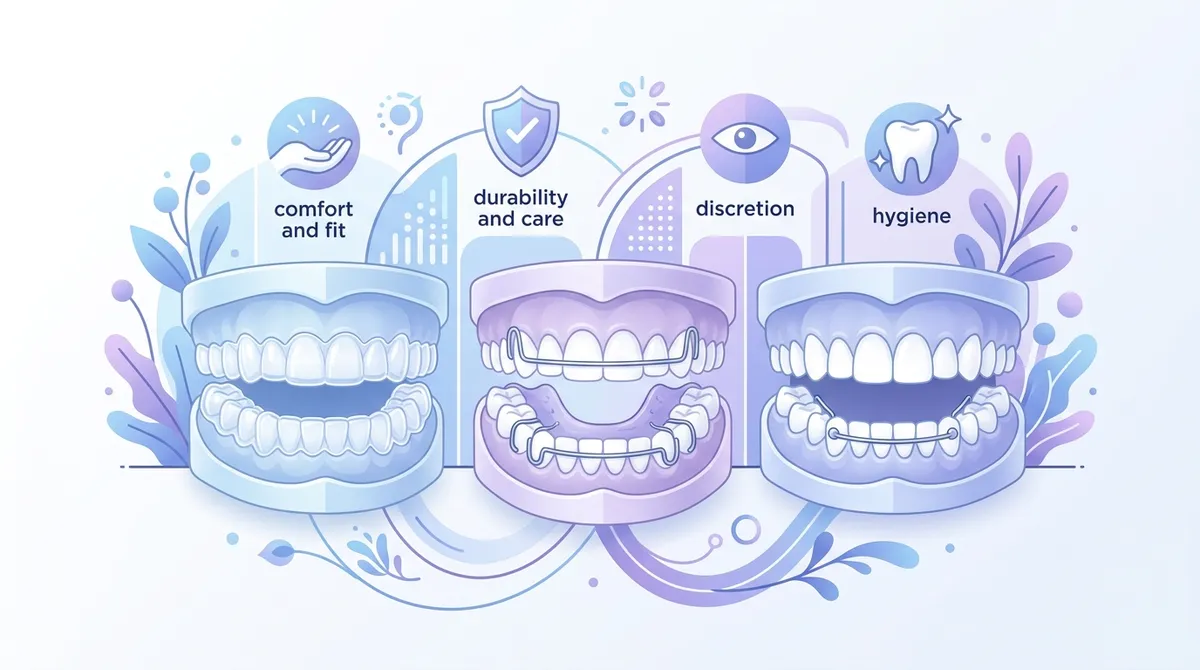
Before you can decide to switch retainer types, it helps to know what’s out there. There are three primary retainer options that dentists recommend after Invisalign. Each has its own pros and cons depending on your lifestyle, budget, and dental needs.
| Retainer Type | Material | Wear Schedule | Best For | Durability |
|---|---|---|---|---|
| Vivera (Invisalign) Retainer | Clear plastic | Nightly (after initial phase) | Invisalign patients wanting continuity | 2–3 years |
| Hawley Retainer | Acrylic + wire | Nightly | Patients needing durability & adjustability | 5–10 years |
| Permanent/Fixed Retainer | Thin metal wire (bonded) | 24/7 (always in) | High relapse risk patients | 10+ years |
Each retainer type serves the same core purpose — keeping your teeth in their new position — but they differ significantly in comfort, care, and cost. Many patients who finish the final stages of Invisalign treatment start with one type and later want to switch to another. That’s completely normal!

Can You Actually Switch Retainer Types?
Yes — in most cases, you can switch retainer types after Invisalign. However, the timing matters a lot. The first few months after completing Invisalign are the most critical for tooth stability. Switching during this window can increase the risk of shifting.
Here’s what you need to consider before making a switch:
- Talk to your dentist first. Never switch retainer types without professional guidance. Your dentist knows your bite, bone density, and relapse risk.
- Check your stabilization period. Most dentists recommend waiting at least 6–12 months before changing to a different retainer style.
- Understand the transition period. Switching retainer types may require a short adjustment phase, especially if moving from a removable to a fixed retainer.
- Confirm coverage with your dental insurance. Replacement retainers may or may not be covered. Check with your provider or review insurance options at Dental Theory to better understand your benefits.
Common Reasons People Switch Retainer Types
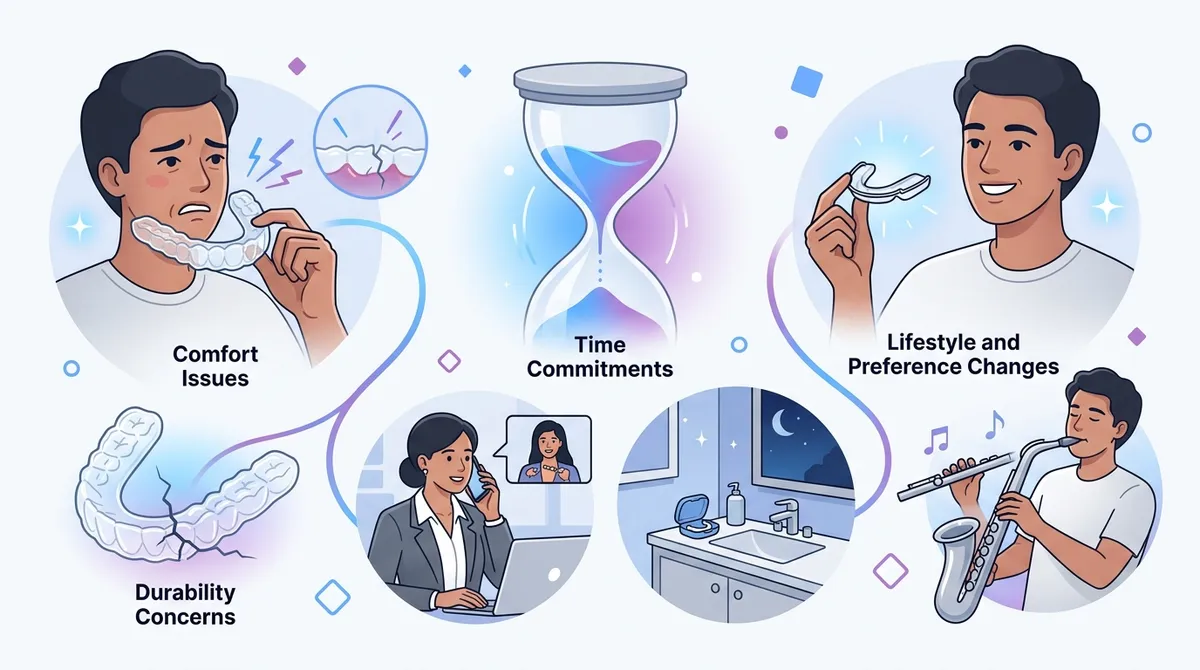
Life changes, and so do dental needs. There are several very common and completely valid reasons why someone might want to switch their retainer type after Invisalign. You are definitely not alone if you’re having second thoughts about the retainer you started with!
| Reason for Switching | From | To | Notes |
|---|---|---|---|
| Discomfort or irritation | Hawley retainer | Clear retainer | Clear retainers tend to feel smoother |
| Compliance issues (forgetting to wear) | Removable retainer | Fixed/permanent retainer | No memory required — it’s always in |
| Wire broke or retainer lost | Any type | New style | Good time to explore a different option |
| High relapse risk noticed | Removable | Fixed bonded wire | Dentist may strongly recommend this |
| Aesthetic preference | Hawley (visible wire) | Clear Vivera retainer | Nearly invisible during wear |
If you’re unsure whether your reasons warrant a switch, a conversation with your dental provider is always the best first step. At Dental Theory in Brandon, FL, the team is always happy to review your post-Invisalign plan and help you find the retainer that fits your life.
Switching from a Clear Retainer to a Fixed Retainer
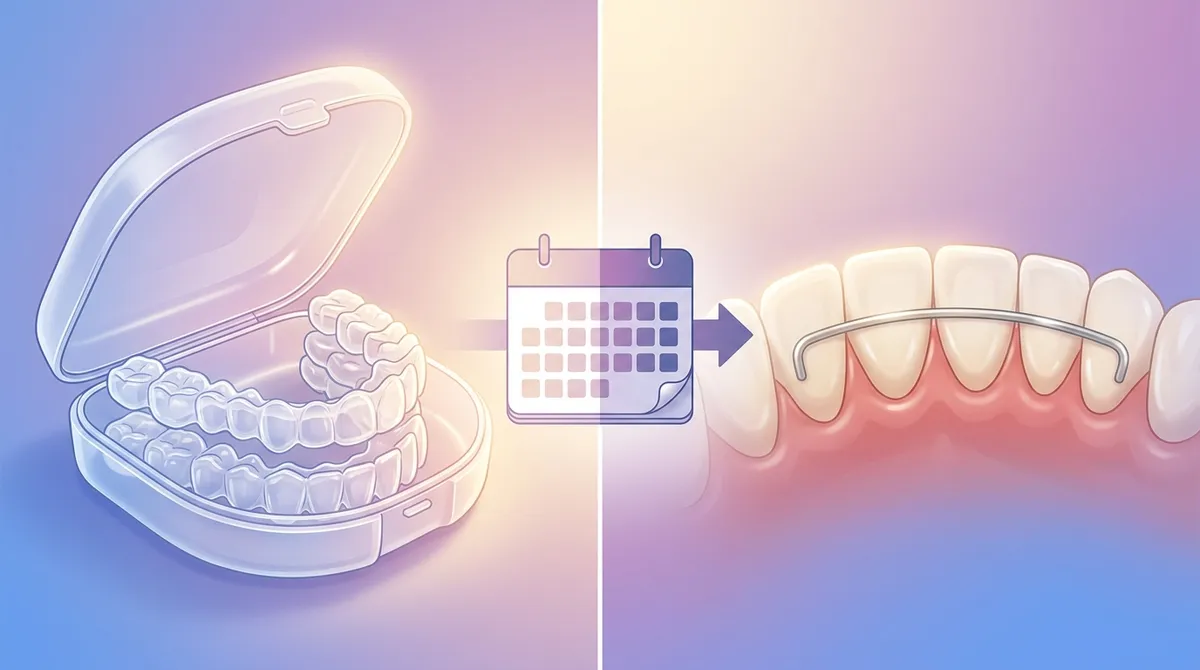
One of the most common switches is from a removable clear retainer to a fixed (bonded) retainer. This is especially popular among patients who struggle with consistency. If you’re constantly forgetting to put your retainer in at night, a permanent retainer removes that mental load entirely.
A fixed retainer is a thin wire that your dentist bonds directly to the back surface of your front teeth. It’s invisible from the outside and requires no effort on your part to wear. The trade-off? Flossing takes a bit more effort, and you’ll need to use a floss threader or water flosser to clean around it properly.
Here’s what to expect during the switch to a fixed retainer:
- Your dentist will examine your teeth and confirm they’re stable
- The bonding surface will be cleaned and prepared
- A custom wire is shaped and secured to the backs of your teeth
- You’ll feel a slight adjustment period (1–2 weeks) as your tongue adapts
- Regular checkups will monitor the wire’s condition over time
Switching from a Fixed Retainer to a Removable One
Sometimes patients go the other direction. Maybe your fixed retainer wire broke, or your dentist decided it was no longer necessary after many stable years. Switching from a bonded wire to a removable retainer is also a valid choice.
The key here is to make the transition immediately and consistently. Once the fixed retainer is removed, teeth can begin shifting within days if nothing replaces it. Your dentist will likely take a new impression or digital scan to create a perfectly fitting removable retainer.
- Wear the new removable retainer as close to full-time as possible for the first few weeks
- Gradually taper to nightly wear as your dentist recommends
- Store your retainer safely when not wearing it
- Clean it daily to avoid bacteria buildup
- Schedule a follow-up to confirm your teeth haven’t shifted
Vivera Retainers: The Invisalign-Branded Option
If you did your Invisalign treatment and want to stick with a clear retainer, Vivera retainers are the brand made by Invisalign’s manufacturer. They’re made from the same precision scanning technology as your aligners. Many patients prefer Vivera because it feels like a natural continuation of their treatment.
You can learn more about finding a top-rated Invisalign dentist near you to get Vivera retainers properly fitted. The fit matters enormously — a poorly fitting retainer offers far less protection than one customized to your exact teeth.
Vivera retainers are typically sold in sets of four, which means you have replacements ready when one cracks, warps, or gets lost. That’s a huge advantage for anyone who tends to misplace things (no judgment — we’ve all been there!).
What Happens If You Don’t Wear Your Retainer?
Let’s have an honest moment here. Life gets busy. Retainer wear drops off. It happens. But the consequences can be frustrating, especially after investing time and money into Invisalign treatment. Even a few weeks of skipping retainer wear can allow noticeable tooth movement.
Here’s a general timeline of what can happen without consistent retainer wear:
| Time Without Retainer | Likely Outcome | What to Do |
|---|---|---|
| 1–2 days | Minimal shifting, retainer may feel snug | Resume wearing immediately |
| 1–2 weeks | Noticeable tightness, possible minor shifting | See your dentist soon |
| 1–3 months | Visible movement in some cases | New retainer or refinement aligners may be needed |
| 6+ months | Significant relapse possible | May need to repeat portions of Invisalign treatment |
If your retainer no longer fits because you went too long without wearing it, don’t force it. A retainer that doesn’t fit properly won’t help — and forcing it can actually harm your teeth. Contact your dental provider for guidance instead.
How to Choose the Right Retainer for Your Lifestyle
Choosing or switching retainer types is a personal decision. There’s no single “best” retainer — only the best one for you. Think about your daily routine, your compliance history, your comfort preferences, and your budget.
Here are some helpful questions to guide your decision:
- Are you likely to forget to wear a removable retainer? A fixed retainer eliminates that risk entirely.
- Do you care about aesthetics? Clear retainers are nearly invisible; Hawley retainers have a visible wire in front.
- Are you hard on appliances? Hawley retainers are tougher and easier to repair than clear plastic ones.
- Do you have a high relapse risk? Your dentist may strongly recommend a bonded fixed retainer.
- What’s your budget? Retainer costs vary, and replacement fees can add up over time.
If you’ve already completed your Invisalign journey and want expert guidance on the best retainer path forward, Dr. K at Dental Theory in Brandon, FL, is an experienced Invisalign provider who helps patients navigate every step — including life after treatment. You can also check out Dental Theory’s full cosmetic dentistry services for more ways to keep your smile looking its best. Dr. K’s expertise is also recognized nationally — Dr. Chris Karapasha has been named one of America’s Top Young Dentists in Incisal Edge magazine’s 2025 40 Under 40, which speaks volumes about the quality of care you’ll receive.
Tips for a Smooth Retainer Transition
Whether you’re switching retainer types or just getting fitted for your first one, a few simple habits go a long way in making the transition comfortable and effective.
- Wear your new retainer as directed. Full-time wear for the first few weeks is common when switching types.
- Clean it properly every day. Use a soft toothbrush and non-abrasive cleaner to avoid scratching.
- Store it safely when not in use. A case prevents accidental damage or loss.
- Keep all follow-up appointments. Your dentist needs to confirm the fit and monitor your teeth.
- Report any pain or pressure immediately. Some adjustment is normal, but sharp pain is not.
If you’d like to learn more about Invisalign and explore whether it’s right for you or someone in your family, check out Invisalign treatment in Brandon with Dr. K at Dental Theory. You can also schedule an appointment online to get started or discuss your retainer options in person. For even more information about Dr. K’s expertise as an Invisalign provider, take a look at Dr. K’s Gold+ Invisalign Profile.
Conclusion: The Right Retainer Keeps Your Smile Shining
Switching retainer types after Invisalign is absolutely possible — and sometimes it’s the smartest move you can make for your long-term oral health. Whether you’re moving from a clear retainer to a fixed wire, or from a Hawley to a Vivera, the most important thing is that you’re wearing something consistently to protect your investment.
Don’t guess when it comes to your smile. A professional evaluation is always the right first step. Visit us on Google — Dental Theory to read what our Brandon, FL patients say about their care experience. Then, when you’re ready, reach out to Dental Theory to schedule your retainer consultation and let our team help you find the perfect fit for your smile and your life. You’ve worked too hard for that beautiful smile to let it slip away — and we’re here to make sure that doesn’t happen!
We’d also love to connect with you on social media — visit us on Facebook for tips, updates, and a peek inside our friendly Brandon dental family!
FAQs
Q: Can I switch from a clear retainer to a permanent bonded retainer after Invisalign?
A: Yes, you absolutely can! Many patients make this switch when they find it hard to stay consistent with a removable retainer. Just talk to your dentist first — timing and your teeth’s stability level will determine the best moment to make the transition.
Q: How long should I wait before switching retainer types after finishing Invisalign?
A: Most dentists recommend waiting at least 6 to 12 months after completing Invisalign before switching retainer types. This gives your teeth and bone tissue time to fully stabilize in their new positions, reducing the risk of shifting during the transition.
Q: Will switching retainer types cause my teeth to shift?
A: If done correctly and at the right time, switching retainer types shouldn’t cause significant shifting. The key is to minimize any gap between stopping one retainer and starting the new one — your teeth can begin moving quickly without support!
Q: Are Vivera retainers the best option after Invisalign treatment?
A: Vivera retainers are a great choice for many Invisalign patients because they’re made with the same precision technology as your aligners. However, ‘best’ really depends on your lifestyle, compliance habits, and what your dentist recommends based on your individual case.
Q: What should I do if my retainer no longer fits after not wearing it for a while?
A: Never force a retainer that doesn’t fit — it won’t work properly and could actually hurt your teeth! Reach out to your dental provider as soon as possible. Depending on how much shifting has occurred, you may need a new retainer or even refinement aligners.