Key Takeaways
-
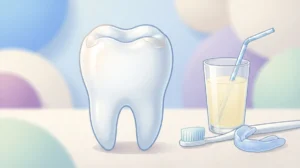
Knocked-out teeth must be stored in milk and brought to a dentist within 30-60 minutes for the best chance of saving the tooth; never touch the root or let it dry out.
-
Baby teeth that are knocked out should never be reinserted as this can damage the developing adult tooth underneath, unlike adult teeth which require immediate emergency treatment.
-
Dental abscesses are serious infections requiring same-day dental care; delaying treatment risks the infection spreading to the jaw, neck, or bloodstream.
-
Go to the emergency room for breathing difficulties, severe facial swelling, jaw fractures, or uncontrolled bleeding; go to an emergency dentist for knocked-out teeth, tooth pain, lost crowns, and abscesses without breathing complications.
-
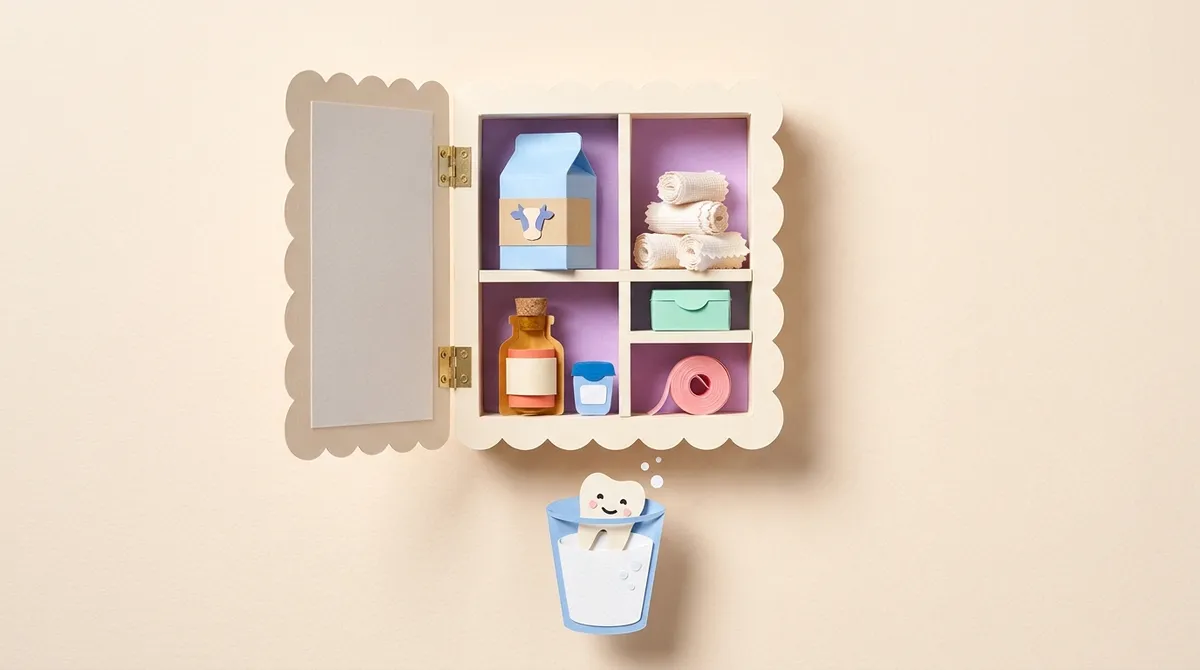
Create a home dental emergency kit including dental cement, wax, a small container for storing teeth, salt for rinses, pain relievers, gauze, and your dentist's emergency number.
-
Preventive measures like wearing mouthguards during sports, attending regular dental checkups, and addressing teeth grinding significantly reduce the risk of dental emergencies.
A dental emergency can happen at any moment. Your child bites down on something hard and cracks a tooth. You wake up with throbbing pain that won’t quit. A fall knocks out a tooth completely. These situations are stressful, scary, and — if you’re not prepared — they can lead to lasting damage. Knowing how to respond quickly and correctly makes all the difference.
This guide walks you through everything you need to know about dental emergency response. We’ll cover the most common emergencies, what to do step by step, when to head straight to your dentist, and how to keep your family protected year-round. Whether you’re a parent in Brandon, FL, or an adult dealing with sudden tooth pain, this article is your friendly roadmap to handling dental crises with confidence.
What Counts as a Dental Emergency?
Not every toothache is an emergency. But some situations need immediate dental emergency response. Knowing the difference helps you act fast — and avoid unnecessary panic.
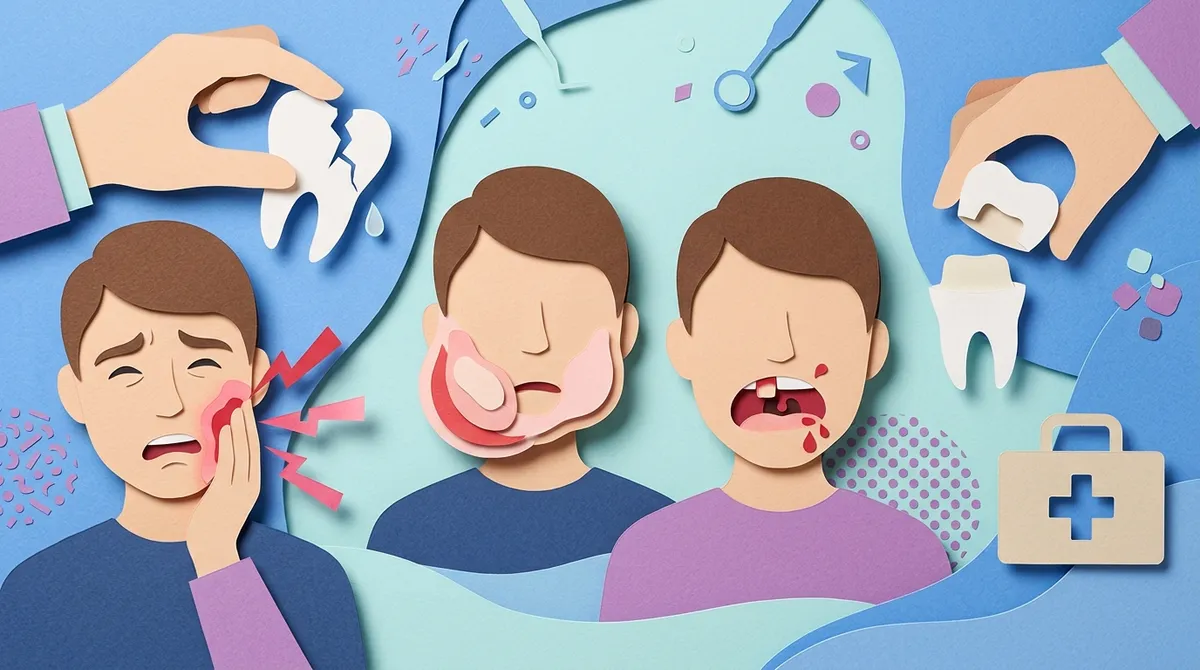
Here are the most common dental emergencies:
- Knocked-out tooth (avulsion) — Needs treatment within 30 to 60 minutes for the best chance of saving the tooth
- Severe toothache — Intense, unrelenting pain that worsens or keeps you up at night
- Cracked or broken tooth — Especially when sharp edges cut the tongue or cheek
- Lost or broken crown — Leaves the tooth exposed and vulnerable to further damage
- Dental abscess — A serious infection that can spread quickly if not treated
- Soft tissue injury — Cuts or lacerations to the lips, gums, or tongue
- Object stuck between teeth — When it can’t be removed with floss and causes increasing pain
For a deeper look at which situations require urgent care, check out this helpful guide: 9 Dental Emergencies You Should Never Ignore in 2026.
Step-by-Step Dental Emergency Response Guide
When a dental emergency strikes, staying calm is step one. Here’s how to handle the most common situations properly.
Knocked-Out Tooth: Act Fast
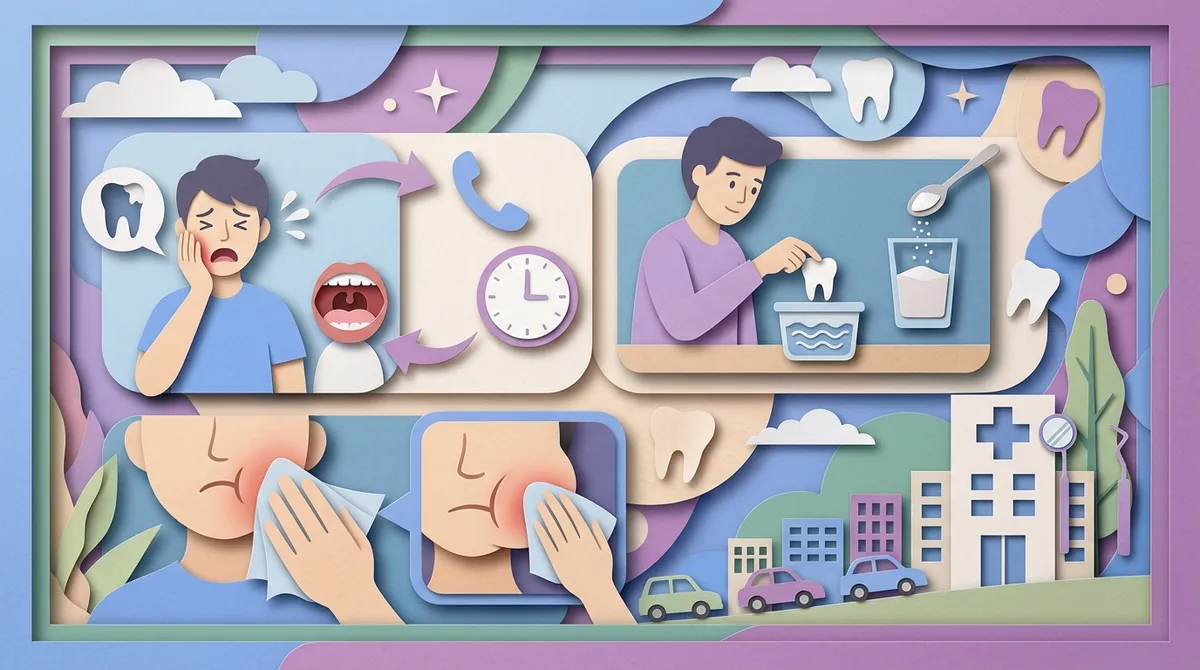
A knocked-out tooth is a race against the clock. Follow these steps immediately:
- Pick up the tooth by the crown — Never touch the root. The root has delicate cells needed for reattachment.
- Rinse gently with water — Don’t scrub or use soap. Just a gentle rinse to remove visible dirt.
- Reinsert if possible — Gently place it back in the socket and hold it there with light pressure.
- Store it safely — If reinsertion isn’t possible, place the tooth in milk or between your cheek and gum to keep it moist.
- Call your dentist immediately — Time is critical. You have the best odds within 30 to 60 minutes.
You can learn more about same-day dental solutions at Dental Theory’s emergency dental treatment page.
Severe Toothache: Don’t Ignore It
Tooth pain that is sharp, constant, or getting worse is a warning sign. Here’s what to do while you wait to be seen:
- Rinse with warm salt water — This helps reduce inflammation and clean the area.
- Floss gently — Sometimes food trapped between teeth causes pain. Try carefully removing it.
- Take an over-the-counter pain reliever — Follow the label directions. Don’t place aspirin directly on the gum — that can cause a chemical burn.
- Apply a cold compress — Place it on your cheek for 20-minute intervals to reduce swelling.
- Call your dentist as soon as possible — Tooth pain is a symptom, not a diagnosis. Only your dentist can find the real cause.
Cracked or Broken Tooth
A broken tooth or cracked crown needs quick attention. Here’s what to do:
- Save any broken pieces — Keep them in milk or water and bring them to your appointment.
- Rinse your mouth with warm water — This cleans the area and eases discomfort.
- Cover sharp edges — Use dental wax or sugar-free gum to protect your tongue and cheeks temporarily.
- Avoid biting on that side — Until your dentist evaluates the damage.
- See your dentist the same day if possible — A cracked tooth can worsen quickly, especially if the nerve is exposed.
Dental Emergency Response for Kids: What Parents Need to Know
Children are especially prone to dental emergencies. Sports, playgrounds, and curious snacking habits all create opportunities for chipped, knocked-out, or damaged teeth. As a parent, your dental emergency response matters enormously in these moments.
A few key tips for parents:
- Stay calm — Your child will mirror your energy. If you’re panicked, they’ll panic too.
- Comfort first, then assess — Make sure they feel safe before you check their mouth.
- Know the difference between baby and adult teeth — A knocked-out baby tooth should NOT be reinserted (it can damage the developing adult tooth underneath). A knocked-out adult tooth should be treated immediately.
- Have your pediatric dentist’s number saved — Seconds matter in a true emergency.
- Consider a dentist who specializes in kids — A board-certified pediatric dentist has extra training in child-specific dental emergencies.
At Dental Theory in Brandon, FL, Dr. Pri (Dr. Priyanka Karapasha) is the only board-certified pediatric dentist in Brandon offering in-office sedation. She’s uniquely qualified to treat anxious or injured children with gentle, expert care. You can also explore more guidance at How to Handle Your Child’s Dental Emergency Fast.
Emergency Response Comparison: What to Do vs. What NOT to Do
Here’s a quick-reference table to help you respond correctly to the most common dental emergencies.
| Dental Emergency | DO This | DON’T Do This |
|---|---|---|
| Knocked-out tooth | Store in milk, call dentist immediately | Scrub the root, let it dry out, or wait |
| Severe toothache | Salt water rinse, pain reliever, cold compress | Place aspirin directly on gum |
| Cracked/broken tooth | Save pieces, cover edges with wax | Ignore it or eat on that side |
| Dental abscess | Call dentist urgently, rinse with warm salt water | Pop or try to drain it yourself |
| Lost dental crown | Keep crown safe, use dental cement temporarily | Swallow it or leave the tooth exposed |
If you’ve lost a crown and aren’t sure what to do next, read: Help! My Crown Fell Off — Can It Be Reattached?
How to Build a Dental Emergency Kit at Home
Being prepared is the best form of dental emergency response. A simple kit can save precious time when every minute counts.
Here’s what to include in your home dental emergency kit:
- Dental mirror and flashlight (for getting a good look)
- Over-the-counter dental cement or temporary filling material
- Dental wax (to cover broken teeth or braces wires)
- Small container with a lid (for storing a knocked-out tooth)
- Salt (for warm water rinses)
- Ibuprofen or acetaminophen (pain management)
- Your dentist’s emergency phone number — written down, not just in your phone
- Gauze pads (for bleeding control)
This simple kit costs very little to put together and can be a lifesaver — especially for families with active kids.
Dental Emergency Response Times: Why Speed Matters
Timing is everything in a dental emergency. Here’s a helpful breakdown of how time affects outcomes.
| Emergency Type | Ideal Response Time | Risk of Waiting |
|---|---|---|
| Knocked-out tooth | Within 30–60 minutes | Tooth cannot be saved after 1–2 hours |
| Dental abscess | Same day | Infection can spread to jaw, neck, or bloodstream |
| Cracked tooth | Within 24 hours | Fracture may deepen, risking nerve damage |
| Severe tooth pain | Within 24 hours | Underlying infection can worsen rapidly |
| Lost crown | Within 24–48 hours | Exposed tooth becomes sensitive and vulnerable |
If you’re in Brandon, FL, and experience a dental emergency, don’t wait. Schedule an appointment with Dental Theory as soon as possible for fast, compassionate care.
When to Go to the ER vs. Your Emergency Dentist
This is a question many people get wrong. The emergency room can help with certain dental-related issues, but most dental emergencies are best handled by a dentist. Here’s how to decide:
Go to the Emergency Room if you have:
- Difficulty breathing or swallowing (possible sign of spreading infection)
- Severe facial swelling that is closing your eye or throat
- Jaw fracture from trauma
- Uncontrolled bleeding that won’t stop after 10–15 minutes
- High fever combined with facial swelling
Call your emergency dentist if you have:
- A knocked-out or broken tooth
- Severe but controlled tooth pain
- A lost or cracked crown
- A dental abscess without breathing complications
- Soft tissue cuts inside the mouth
For more guidance, check out: Emergency Dentist in Brandon, FL: When to Visit the ER vs. the Dentist.
How Dental Theory Handles Your Dental Emergency
At Dental Theory in Brandon, FL, we understand that dental emergencies don’t wait for convenient timing. That’s why we’re committed to seeing emergency patients as quickly as possible. From general dentistry needs to urgent restorations, our team is trained and ready to help.
If a tooth is broken or a crown has failed, our office offers same-day ceramic crowns so you leave your appointment with a complete, beautiful restoration — no second visit needed. You can read about how that works here: What Are Same-Day Crowns? Benefits and Process Explained.
For children, Dr. Pri provides gentle emergency pediatric care in a calm, welcoming environment. She is the only board-certified pediatric dentist in Brandon offering in-office sedation — making her uniquely equipped to handle dental emergencies for even the most anxious young patients.
You can visit us on Google — Dental Theory to read what patients are saying about their emergency care experiences with our team.
Emergency Prevention: Reducing Your Risk Year-Round
The best dental emergency response is the one you never have to use. Prevention goes a long way. Here are some simple habits that reduce your family’s risk of dental emergencies:
- Wear a mouthguard during sports — Even recreational activities can cause knocked-out or broken teeth
- Don’t use your teeth as tools — Avoid opening packages, bottles, or tags with your teeth
- Attend regular dental checkups — Many emergencies (like cracked teeth and abscesses) are caught early at routine visits
- Stay on top of dental restorations — Old fillings and aging crowns are more likely to fail unexpectedly
- Address tooth grinding (bruxism) — It quietly weakens teeth over time, making fractures more likely
Routine teeth cleanings and comprehensive exams are your best tools for early problem detection. Learn more about preventive habits at How To Build Strong Preventive Dentistry Habits In 2026.
Quick Reference: Dental Emergency Response by Situation
| Situation | First Step | Second Step | Call Dentist? |
|---|---|---|---|
| Knocked-out tooth | Store in milk | Head to dentist immediately | Yes — right away |
| Broken crown | Save the crown | Apply temp dental cement | Yes — same day |
| Abscess with swelling | Warm salt water rinse | Do not pop it | Yes — urgently |
| Cracked tooth | Cover with wax | Avoid chewing on that side | Yes — within 24 hours |
| Bleeding soft tissue | Apply gentle pressure with gauze | Monitor for 10–15 minutes | Yes if bleeding continues |
You Don’t Have to Face Dental Emergencies Alone
Dental emergencies are unsettling. But you don’t have to figure it all out on your own. Having a trusted dental home means you always have someone to call — a team that knows you, your history, and how to help fast. At Dental Theory, we’ve built our practice around being that trusted resource for Brandon families.
We also encourage you to visit us on Facebook for tips, updates, and patient stories that show how our team shows up when it matters most.
If you want to be fully prepared — or if you need care right now — reach out to our Dental Theory team today. We’re here for your whole family, every step of the way.
FAQs
Q: What should I do first in a dental emergency?
A: Stay calm and assess the situation. Call your dentist right away — most dental offices have emergency lines or same-day appointments for urgent situations. The faster you act, the better the outcome, especially for knocked-out teeth or dental abscesses.
Q: Can a knocked-out tooth be saved?
A: Yes! If you act quickly, there’s a good chance your dentist can reattach it. Keep the tooth moist by storing it in milk or between your cheek and gum, and get to the dentist within 30 to 60 minutes for the best results.
Q: Is a dental abscess a dental emergency?
A: Absolutely — a dental abscess is a serious infection that needs urgent care. Left untreated, it can spread to the jaw, neck, or bloodstream. Call your dentist the same day you notice symptoms like swelling, pulsing pain, or a bad taste in your mouth.
Q: What should I do if my child knocks out a tooth?
A: First, figure out if it’s a baby tooth or an adult tooth. Baby teeth should NOT be reinserted — that can harm the developing adult tooth. For adult teeth, follow the same steps as you would for adults: store in milk and call your pediatric dentist immediately.
Q: How do I know if I need the ER or an emergency dentist?
A: Head to the ER if you have difficulty breathing, severe facial swelling closing your eye or throat, or uncontrollable bleeding. For most other dental emergencies — like knocked-out teeth, pain, or broken crowns — your emergency dentist is the right call and can treat you much more effectively.
Our Service Area