Key Takeaways
-
Teeth can shift in as little as a few days without a proper retainer, with the first year after orthodontic treatment being the most critical period for relapse risk.
-
A retainer that no longer fits properly, feels painful, or has visible cracks must be replaced immediately—continuing to wear it worsens tooth movement and can cause mouth injuries.
-
Early detection of relapse signs like new gaps, bite changes, or crowding allows for simpler fixes like new retainers or clear aligners, while delayed action may require complex retreatment.
-
Store retainers in protective cases, avoid heat exposure, and clean them gently to extend lifespan—clear plastic retainers last 1-3 years while wire retainers last 5-10 years with proper care.
-
Contact your dentist immediately upon noticing retainer damage rather than waiting; even small cracks compromise the retainer’s ability to hold teeth in their corrected positions.
-
Multiple relapse warning signs exist beyond visible shifts, including speech changes, bite differences, retainer discomfort, and others noticing changes in your smile before you do.
You worked hard for that straight smile. You wore your aligners or braces for months. Then you finished treatment and got your retainer. Everything seemed perfect. But now something feels off — and you suspect your broken retainer teeth relapse situation might be to blame.
You are not alone. Teeth relapse is one of the most common concerns after orthodontic treatment. A cracked, broken, or lost retainer is often the main culprit. The good news? Catching it early makes a huge difference. This article walks you through 11 clear signs your broken retainer may be causing your teeth to shift — and what you can do about it right now.
What Is Teeth Relapse After Orthodontic Treatment?
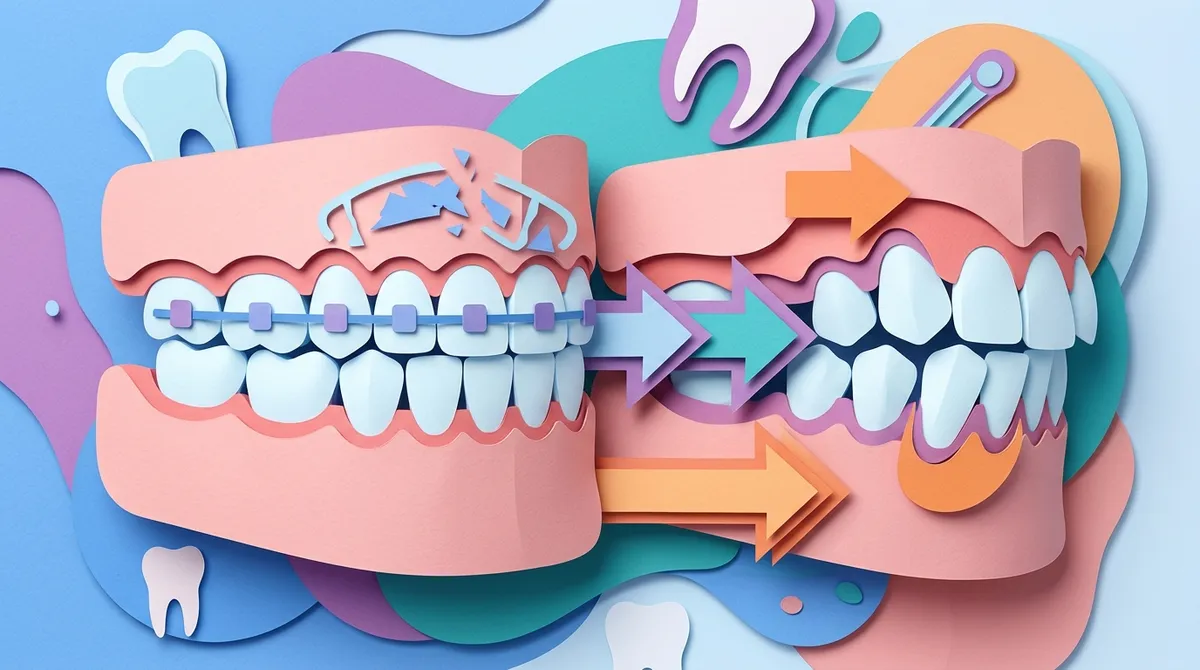
Teeth relapse simply means your teeth are moving back toward their original positions. This happens because your teeth have a natural memory. Even after years of treatment, they want to drift back. Your retainer is what holds them in place. Without it — or with a broken one — relapse can start quickly.
Understanding the connection between a broken retainer and teeth relapse is the first step to protecting your smile. You can learn more about retainer wear after treatment in this helpful guide on whether you need to wear a retainer forever after Invisalign.
How Fast Can Teeth Shift Without a Retainer?
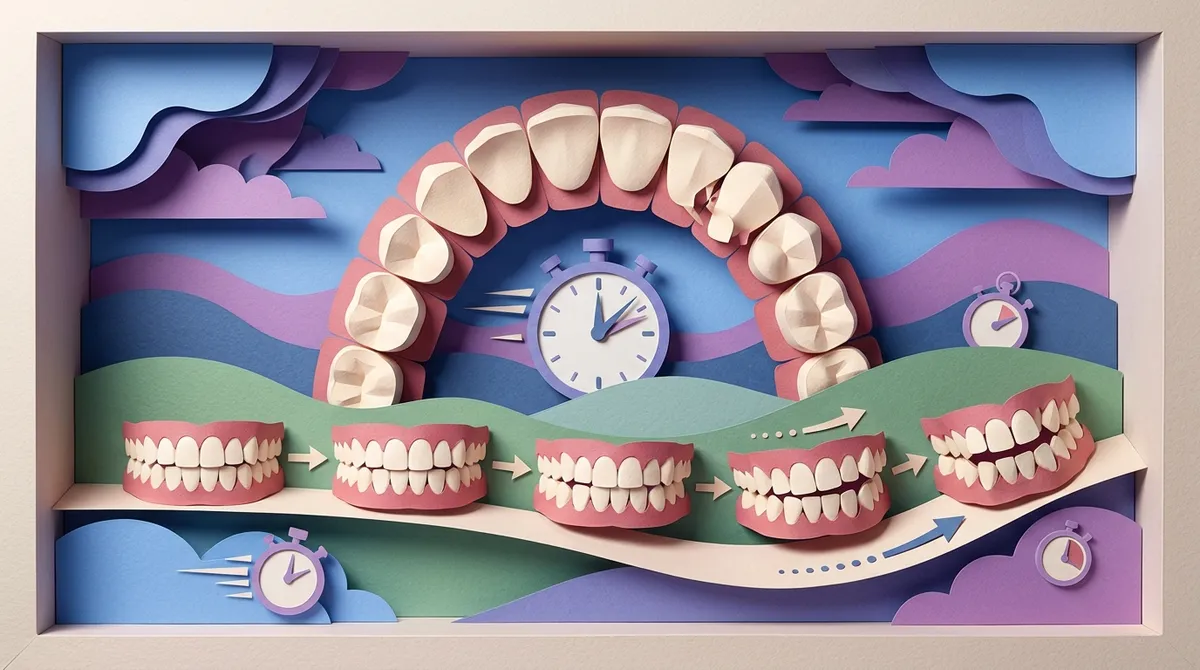
Teeth can start shifting in as little as a few days without proper retainer use. The first year after orthodontic treatment is the most critical. During this period, the bone and tissue around your teeth are still stabilizing. Any break in retainer wear — especially from a damaged retainer — creates an open window for movement.
| Time Without Retainer | Likely Outcome | Action Needed |
|---|---|---|
| 1–3 Days | Minor tightness when replacing retainer | Monitor closely |
| 1–2 Weeks | Noticeable tightness, slight movement | See your dentist soon |
| 1 Month | Visible shifting may begin | See your dentist urgently |
| 3+ Months | Significant relapse possible | Orthodontic retreatment may be needed |
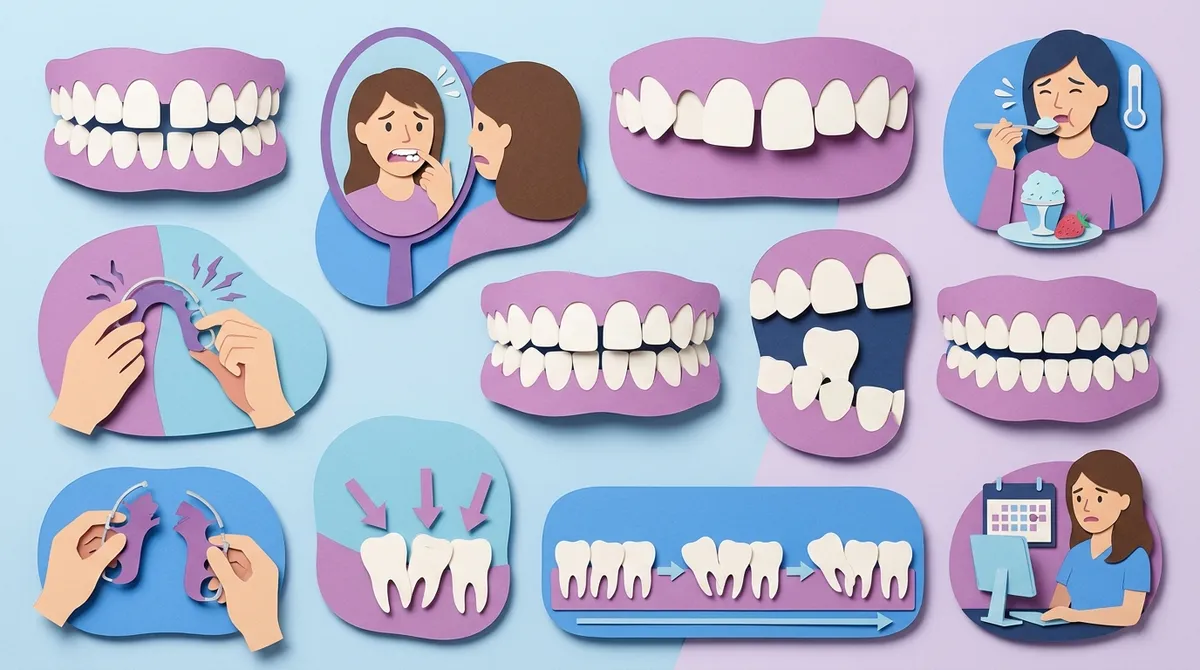
11 Signs Your Broken Retainer Is Causing Teeth Relapse
1. Your Retainer No Longer Fits Properly
This is the biggest red flag. If your retainer feels tight, loose, or just does not sit right anymore, your teeth have likely shifted. A broken retainer cannot maintain the correct shape to hold your teeth in place. That gap between your retainer and your teeth? That is movement happening in real time.
2. You Notice a New Gap Between Your Front Teeth
One of the most visible signs of teeth relapse is a gap forming between your front teeth. If you notice spacing that was not there before, your teeth are moving. This often happens faster in the upper front teeth, which face the most pressure during daily activity like talking and eating.
3. Your Bite Feels Different
Do your upper and lower teeth meet differently when you close your mouth? A change in your bite is a strong sign of relapse. Even small tooth movements can shift your bite. Do not ignore this feeling — it can lead to jaw discomfort if left unaddressed.
4. Your Teeth Look Crowded Again
Crowding was likely one of the main reasons you had orthodontic treatment in the first place. If your teeth look like they are overlapping again, your broken retainer has probably been unable to do its job. Lower front teeth are especially prone to crowding relapse.
5. You Can See a Crack or Break in the Retainer
Sometimes the sign is in the retainer itself, not just your teeth. A visible crack, chip, or break means the retainer is structurally compromised. Even if it seems wearable, a damaged retainer cannot apply the correct pressure to keep your teeth in position. Stop wearing it and contact your dentist right away.
6. Wearing Your Retainer Is Painful
Retainers should feel snug, but not painful. If slipping your retainer in causes real pain, that is a sign your teeth have moved since the retainer was made. Pain signals that the retainer is forcing teeth that have already shifted back into a position they no longer hold naturally.
7. There Is a Sharp Edge Cutting Your Tongue or Cheek
A broken retainer often develops sharp edges. These can cut or irritate the soft tissues in your mouth, including your tongue and inner cheeks. Besides being uncomfortable, this is a sign your retainer has structurally failed. Continuing to wear it can cause soft tissue injury.
8. You Have Been Skipping Retainer Wear Due to Discomfort
If your broken retainer has been uncomfortable — and you have been skipping nights — those missed sessions add up fast. Consistent wear is everything with retainers. Even a few skipped days per week over a month can allow meaningful tooth movement to begin.
9. Friends or Family Notice a Change in Your Smile
Sometimes others notice changes in our smile before we do. If a friend or family member asks whether your teeth have shifted, take it seriously. People who knew your smile after orthodontic treatment are often very good at spotting relapse — especially in the front teeth.
10. You Have Trouble Pronouncing Certain Words
Your teeth play a big role in how you speak. If you notice a lisp or trouble with certain sounds — particularly “s” and “th” sounds — that can be a subtle sign of tooth movement. Small shifts in front tooth alignment can affect your speech in noticeable ways.
11. It Has Been More Than a Month Since Your Retainer Broke
Time itself is a warning sign. If you know your retainer broke weeks ago and you have not replaced it, there is a strong chance relapse has already begun — even if you cannot see it clearly yet. The sooner you act, the better your chances of avoiding significant retreatment.
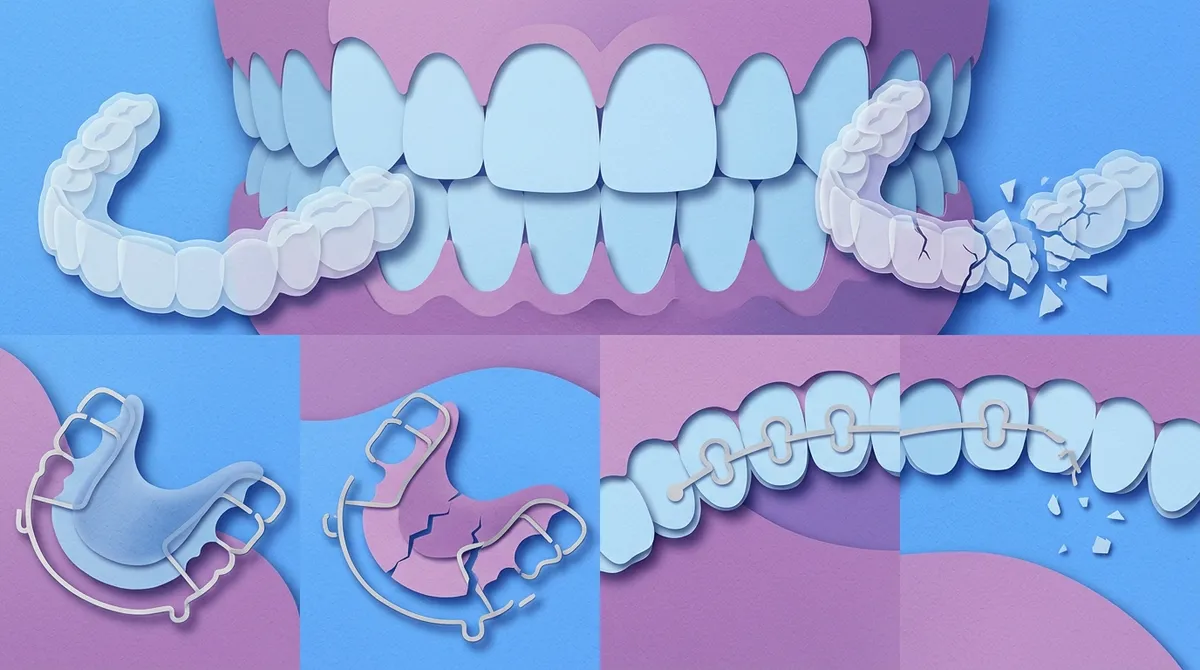
Types of Retainers and How They Break
| Retainer Type | Common Breakage Causes | Average Lifespan |
|---|---|---|
| Hawley (Wire + Acrylic) | Wire bending, acrylic cracking | 5–10 years |
| Clear Plastic (Essix) | Warping, cracking, thin spots | 1–3 years |
| Bonded (Fixed/Permanent) | Wire detachment, bonding failure | Many years with maintenance |
| Vivera (Invisalign) | Cracking from grinding or force | 2–4 years |
If you completed Invisalign treatment, you may also want to review the 7 final stages of Invisalign treatment to understand how retainer care fits into your overall smile maintenance plan.
What Happens If You Ignore a Broken Retainer?
Ignoring a broken retainer sets off a chain reaction. Here is what typically happens over time:
- Minor shifting begins — usually invisible at first, but detectable with a retainer fit test.
- The retainer stops fitting — you may not be able to wear it at all within weeks.
- Crowding or spacing becomes visible — other people may start to notice.
- Bite changes occur — upper and lower teeth no longer align as they should.
- Retreatment becomes necessary — at this stage, a new retainer alone may not be enough to reverse the relapse.
The key takeaway is simple: the longer you wait, the more complex and costly the fix becomes. If you are in the Brandon, FL area and concerned about tooth movement, the team at Dental Theory is here to help you evaluate your options quickly and comfortably.
Can Teeth Relapse Be Reversed?
In many cases, yes — especially if caught early. If the relapse is mild, a new retainer made from a fresh impression may be enough to guide teeth back into position. If the movement is more significant, options like Invisalign clear aligners can effectively re-correct tooth alignment without the hassle of traditional braces.
For adults concerned about their smile after relapse, cosmetic dentistry options are also available to address the appearance of shifted or misaligned teeth. Every case is different, which is why a professional evaluation matters so much.
How to Prevent Teeth Relapse After a Broken Retainer
Preventing relapse after a broken retainer comes down to speed and consistency. Here are the most important steps to take:
- Contact your dentist immediately when you notice any damage to your retainer.
- Do not continue wearing a cracked retainer — sharp edges can injure your mouth.
- Get a new retainer made as soon as possible to minimize the window for movement.
- Ask about retainer replacement schedules so you know when to proactively update your retainer.
- Store your retainer in its case when not in use — most breakages happen when retainers are left on tables, wrapped in napkins, or exposed to heat.
- Avoid hard foods and grinding habits that can crack or warp your retainer.
| Retainer Care Habit | Why It Matters |
|---|---|
| Use a protective case | Prevents most physical breakage |
| Clean daily with gentle soap | Prevents warping from toothpaste abrasives |
| Avoid heat exposure | Heat warps plastic retainers permanently |
| Schedule regular dental checkups | Dentist can monitor fit and catch early shifting |
| Keep a backup retainer | Provides coverage if your primary retainer breaks |
Regular teeth cleanings and checkups are also a great opportunity for your dental team to inspect your retainer and catch early signs of wear or damage before they become a bigger problem. You can also check out these helpful tips on oral hygiene mistakes you might be making right now to keep your whole mouth in top shape.
When to See a Dentist About a Broken Retainer
The honest answer is: right away. There is no safe waiting period when it comes to a broken retainer and the risk of teeth relapse. Even if you are not sure whether your retainer is broken — or whether your teeth have moved — a quick visit to your dental team can give you a clear picture.
If you are looking for caring, comprehensive dental care in the Brandon area, you can schedule an appointment with the Dental Theory team today. We make it easy and stress-free to get the answers you need.
You can also visit us on Google — Dental Theory to read reviews from patients who have been exactly where you are right now — and came out smiling on the other side.
Your Smile Is Worth Protecting
You invested real time and effort into your straight smile. A broken retainer does not have to undo all of that. The earlier you recognize the signs of broken retainer teeth relapse, the easier it is to correct. Whether you need a simple retainer replacement or a full smile re-evaluation, help is available.
For more on maintaining your smile after orthodontic treatment, explore what our patients are saying and visit us on Facebook to stay connected with the Dental Theory community. We love celebrating every smile milestone with you.
Ready to protect your smile and get back on track? Reach out to the Dental Theory team in Brandon, FL today. Let’s make sure that hard-earned smile stays exactly where it belongs.
FAQs
Q: How quickly can teeth shift after a retainer breaks?
A: Teeth can start to shift in just a few days without proper retainer support, especially in the first year after orthodontic treatment. The sooner you replace a broken retainer, the better your chances of avoiding any noticeable relapse!
Q: Can I still wear my retainer if it has a small crack?
A: It is best not to wear a cracked retainer — even a small crack can mean the retainer no longer holds its proper shape. Sharp edges from a crack can also injure your tongue or cheeks, so get it replaced right away.
Q: What should I do immediately after my retainer breaks?
A: Stop wearing the broken retainer and contact your dentist as soon as possible. The faster you get a replacement, the smaller the window for teeth to shift back toward their old positions.
Q: Can teeth relapse be fixed without getting braces again?
A: In many cases, yes! If the relapse is minor, a new retainer may be enough to guide teeth back. For more significant movement, clear aligners like Invisalign can effectively re-correct alignment — no traditional braces needed.
Q: How often should I replace my retainer to prevent relapse?
A: Clear plastic retainers typically last one to three years, while wire retainers can last five to ten years with proper care. Ask your dentist to check your retainer at each cleaning visit so you can replace it before it breaks or stops fitting well.