
Key Takeaways
-
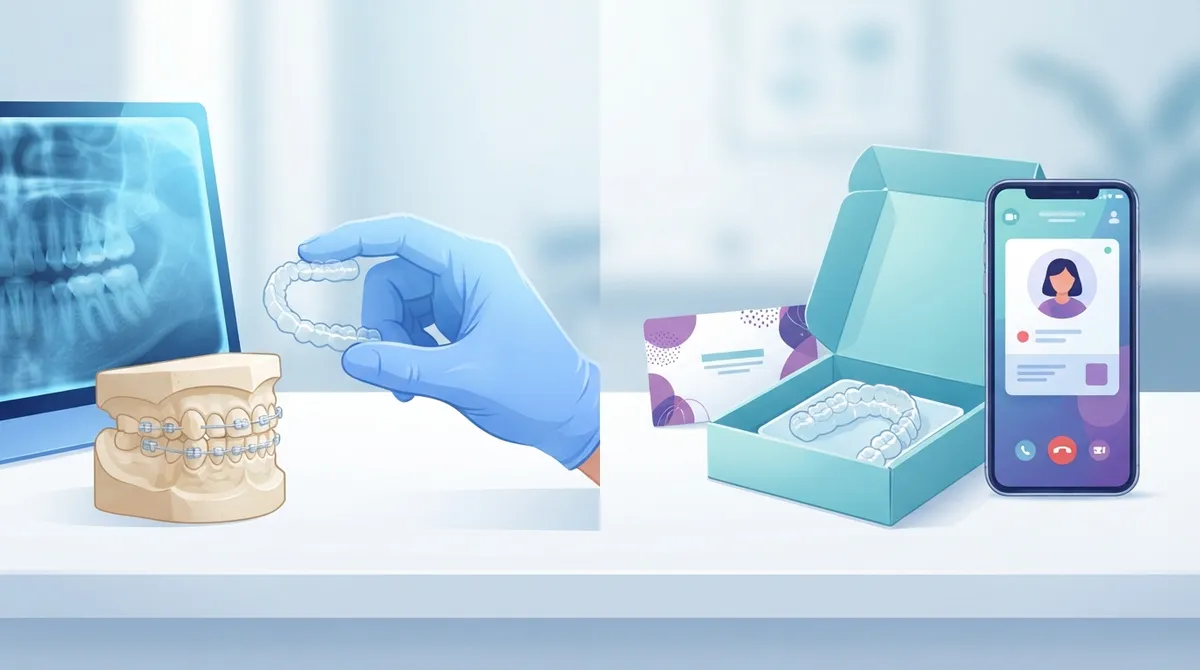
Invisalign is guided by a dentist or orthodontist who examines you in person, while Byte is a mail-based program with mostly remote review, so the level of professional oversight differs significantly.
-
A full in-person exam with X-rays and scans before treatment can catch gum disease, cavities, or bone issues that could be worsened by moving teeth.
-
Mail-based aligners like Byte are generally aimed at mild cases, while bite problems, moderate-to-severe crowding, or crowns and implants usually call for dentist-guided care.
-
Wear clear aligners about 22 hours a day and use a retainer after treatment, since teeth naturally drift back without one.
So you want straighter teeth, but you don’t want a mouthful of metal. We hear you! Clear aligners are one of the most popular ways to fix a crooked smile, and two names keep popping up in searches: Invisalign and Byte. If you’ve been comparing invisalign vs byte, you are not alone.
Here’s the thing. Both options use clear plastic trays to move your teeth. But they are not the same kind of treatment. One is guided by a dentist or orthodontist who sees you in person. The other is a direct-to-consumer, mail-based program where you handle much of the process at home.
In this friendly guide, we’ll walk through the real differences in how each works, who each is best for, what can go wrong, and how to decide. We’ll keep it simple and honest, so you can feel confident about your next step toward a smile you love.
What Is Invisalign?
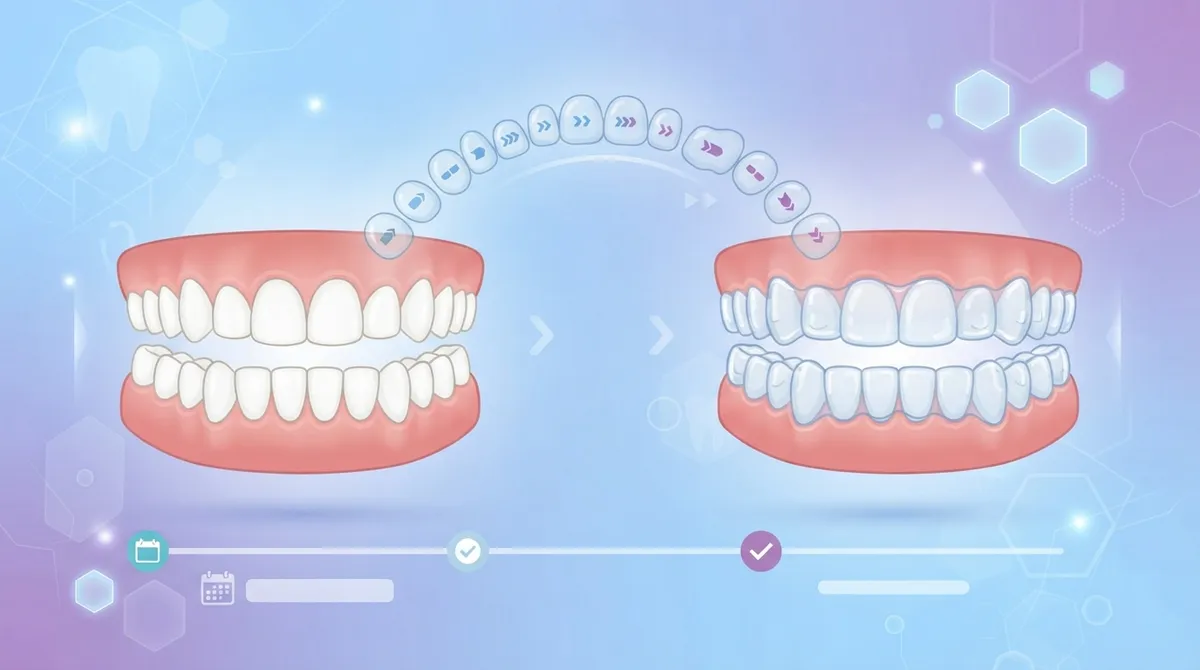
Invisalign is a clear aligner system that straightens teeth using a series of custom-made, removable trays. You wear each set for about one to two weeks, and each new set nudges your teeth a little closer to their final spot.
The big thing to know is this: Invisalign is provided through a licensed dental professional. Your dentist examines your mouth, takes digital scans, and builds a treatment plan around your exact bite and tooth movement needs. If you want a deeper look, check out our guide on what Invisalign is and how it straightens teeth.
Dr. K at Dental Theory is a Gold+ Invisalign provider. You can see Dr. K’s Gold+ Invisalign profile for yourself.
What Is Byte?
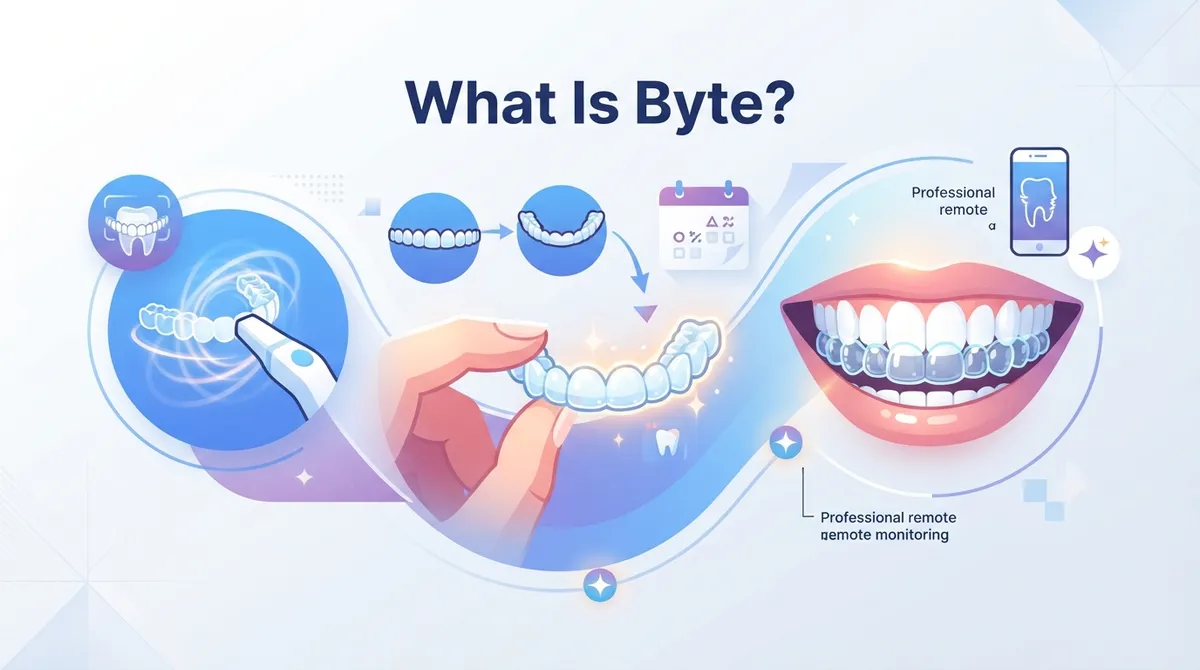
Byte is a direct-to-consumer clear aligner brand. That means you order your treatment online, take impressions or scans at home or at a partner location, and receive your aligners in the mail. A remote dental team reviews your case from afar.
The appeal is easy to understand. It can feel convenient, and the upfront price often looks lower. Many people like the idea of skipping frequent office visits.
But remote treatment also means you may not have a local dentist checking on your teeth, gums, and bite along the way. That difference matters more than most people expect, and we’ll dig into why below.
Invisalign vs Byte: Side-by-Side Comparison
Let’s put the two options next to each other so you can see the big picture at a glance.
| Feature | Invisalign (Dentist-Guided) | Byte (Mail-Based) |
|---|---|---|
| Who guides treatment | Your local dentist or orthodontist in person | Remote dental team reviewing your case online |
| Starting exam | Full in-person exam, X-rays, and digital scans | At-home impressions or scans, limited exam |
| Best for | Mild, moderate, and many complex cases | Mild to moderate cases only |
| Check-ins | Regular office visits to track progress | Mostly virtual check-ins |
| Bite correction | Can address bite issues with attachments and planning | Limited ability to fix bite problems |
| Problem solving | Adjust your plan right in the chair | Often handled by phone, app, or mail |
| Upfront cost | Higher | Often lower |
As you can see, the biggest gap is not the plastic itself. It’s the level of professional oversight you get during treatment.
The Biggest Difference: In-Person Dental Care
Your teeth are not just little white blocks. They sit in bone, held by gums, and they connect to your jaw. When teeth move, everything around them responds.
With a dentist-guided option like Invisalign, a professional checks for things that can quietly cause trouble. These include:
- Gum disease or gum recession before movement begins
- Cavities or old fillings that need care first
- Roots and bone health seen on X-rays
- Bite problems that affect how your jaw works
Moving teeth over unhealthy gums or hidden decay can make small problems much bigger. That’s why a full exam matters before any aligner treatment starts. If you’re curious about cavity concerns, we’ve explained it in 10 facts on whether Invisalign can cause cavities.
Which Cases Work Best With Each Option?
Not every smile needs the same level of care. Here’s a simple way to think about it.
Cases That Often Suit Mail-Based Aligners
Mail-based programs tend to work for people with mild issues, such as slight crowding, small gaps, or minor shifting after old braces. Even then, a professional exam is a smart move first.
Cases That Usually Need Dentist-Guided Care
More involved concerns generally call for hands-on guidance. These include:
- Moderate to severe crowding
- Overbites, underbites, and crossbites
- Gaps paired with bite problems
- Teeth that need rotating or lifting
- Patients with crowns, bridges, or implants
Curious about tougher cases? Read our article on whether Invisalign can fix severe crowding.
Convenience, Cost, and Real Value
Let’s talk money, because it matters. A lower sticker price can look really tempting. But value is about more than the first number you see.
Think about what could happen if treatment doesn’t go as planned. You might need refinements, extra trays, or even a restart with a different provider. Those surprise costs add up fast.
With Invisalign through a dentist, you get a clear plan, in-person support, and the ability to fix small bumps right away. Many practices also offer payment options. To plan ahead, you can read about Invisalign cost in 2026 and see whether insurance covers Invisalign.
On the other hand, mail-based programs shine when it comes to convenience. If your schedule is packed and your case is truly simple, fewer visits can feel like a gift. Just make sure a dentist has cleared your teeth first.
What Treatment Looks Like Step by Step
Here is what a typical dentist-guided Invisalign journey looks like at a practice like ours:
- Consultation and exam. We check your teeth, gums, and bite, and talk about your goals.
- Digital scan and X-rays. We create a precise 3D picture of your smile.
- Custom treatment plan. You can see how your teeth are expected to move.
- Aligner delivery. You start your first set and learn the wear schedule.
- Progress check-ins. We monitor movement and adjust as needed.
- Retainers. Once your teeth are straight, you wear retainers to keep them there.
Want the full walkthrough? See our guide to the Invisalign treatment process step by step.
Comfort, Looks, and Daily Life
Both options use clear trays, so most people won’t notice them much. Still, there are a few things that apply to any clear aligner:
- You wear them about 22 hours a day, taking them out to eat and brush
- You may feel mild pressure when you switch to a new set
- You need to clean your trays and your teeth every day
- Skipping wear time can slow your results
If you’re wondering about soreness, we cover it in Is Invisalign painful? What to expect. And for daily habits, our tips on wearing Invisalign 22 hours a day can help you stay on track.
Don’t Forget About Retainers
Here’s a part people often overlook. Straight teeth want to drift back. Without a retainer, your hard work can slowly slip away.
That’s true no matter which brand you pick. A good plan includes retainers from day one. A dentist can fit and monitor them with you over time. Learn more about how fast teeth shift without a retainer so you can protect your investment.
How to Choose Between Invisalign and Byte
Still on the fence? Ask yourself these simple questions:
- Have I had a recent dental exam and X-rays?
- Do I have any bite problems, jaw pain, or gum concerns?
- Do I have crowns, bridges, or implants?
- Would I feel more at ease with a dentist watching my progress?
- Is my case truly mild, or am I guessing?
If you answered yes to several of these, a dentist-guided option is likely the safer path. If you’re unsure, the best first step is a simple conversation with a professional. You can also compare clear aligners against metal options in our post on how to choose between Invisalign and traditional braces.
Why Brandon Families Choose Dental Theory
At Dental Theory, we believe straightening your teeth should feel exciting, not stressful. Our friendly, tech-forward office in Brandon, FL makes it easy to get expert guidance, clear answers, and a plan that fits your life.
Dr. K is recognized for his work in cosmetic and adult dentistry, and he was named in the Incisal Edge magazine 2025 40 Under 40 list of America’s top young dentists. When you choose a dentist-guided path, you get that experience right in your corner.
Curious what other patients say? You can visit us on Google — Dental Theory and read real reviews from our Brandon neighbors.
Ready to Start Your Smile Journey?
The honest answer to the invisalign vs byte question is that it depends on your smile, your health, and your comfort level. Mail-based aligners can look convenient, but dentist-guided Invisalign gives you a full exam, a custom plan, and a real person checking on your progress every step of the way.
If you want clear answers about what will work for your teeth, we’d love to help. Contact Dental Theory today to talk about your goals, or schedule an appointment online. Your best smile is closer than you think!
FAQs
Q: Is Invisalign better than Byte?
A: It depends on your smile! Invisalign is guided by a dentist who examines you in person, so it can handle a wider range of cases, including bite issues. Byte is a mail-based option that is generally aimed at milder cases.
Q: Can I use Byte if I have crowns or implants?
A: It’s best to talk with a dentist first. Crowns, bridges, and implants don’t move like natural teeth, so a hands-on exam helps make sure your plan is safe and realistic.
Q: Do I still need a dentist visit with mail-based aligners?
A: Yes, we strongly recommend a full dental exam before any aligner treatment. Checking for cavities and gum disease first helps protect your smile while your teeth move.
Q: How long does clear aligner treatment usually take?
A: Many people finish in about 6 to 18 months, depending on how much movement is needed. Your dentist can give you a personal timeline after a quick exam and scan.
Q: Do I need a retainer after clear aligners?
A: Absolutely! Teeth naturally want to shift back, so a retainer keeps your new smile in place. Wearing it as directed protects the time and money you invested.
Our Service Area