

Key Takeaways
-
Invisalign typically costs about $3,000 to $7,000 for a full course, with simple cases on the lower end and complex bite corrections reaching $7,500 or more.
-
Many dental insurance plans with orthodontic benefits cover Invisalign, often with lifetime maximums between $1,000 and $2,500; verify adult coverage and waiting periods before starting.
-
HSA and FSA funds can usually pay for Invisalign with pre-tax dollars, and monthly payment plans can spread the cost into predictable payments.
-
Invisalign and traditional braces often cost about the same, so the real difference is comfort: aligners are removable, nearly invisible, and easier to clean.
Let’s be honest: when you start thinking about straighter teeth, the first question that pops up is usually, “How much is this going to cost me?” If you’ve been searching for the Invisalign cost, you’re in good company. It’s the question we hear most from patients here in Brandon, and we love answering it because there are more ways to make a beautiful smile fit your budget than most people realize.
The short version is that Invisalign cost in 2026 typically ranges from about $3,000 to $7,000 for most adults, depending on how complex your case is. That’s a wide range, so this guide breaks down exactly what affects your price, what’s usually included, and how to make the investment feel manageable. Think of it as a friendly chat over coffee, minus the coffee (you’ll want to skip that with aligners in anyway!).

How Much Does Invisalign Cost in 2026?
Most patients pay somewhere between $3,000 and $7,000 for a full course of Invisalign treatment. Simple cases, like minor spacing or slight crowding, often land on the lower end. More involved cases take more aligners and more time, which moves the price up.
Here is a quick snapshot of what you can generally expect:
| Case Type | Typical Treatment Time | Estimated Cost Range |
|---|---|---|
| Mild (minor spacing or small shifts) | 6 to 9 months | $3,000 to $4,500 |
| Moderate (crowding, gaps, mild bite issues) | 9 to 15 months | $4,500 to $6,000 |
| Complex (significant crowding or bite correction) | 12 to 24 months | $6,000 to $7,500+ |
These numbers are general estimates. Your exact price depends on your unique smile, which is why a personal consultation is the only way to get a true quote. If you want to dig deeper into pricing, our guide to 7 Invisalign price facts Brandon patients should know is a great next read.
What Factors Affect the Price of Invisalign?
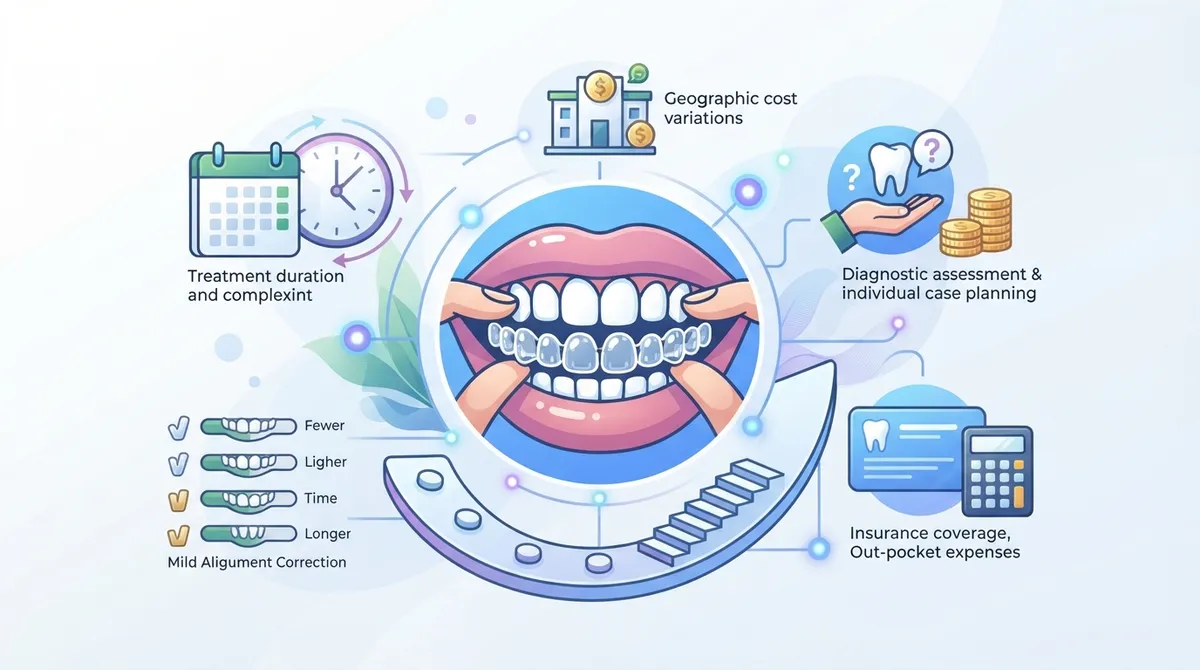
No two smiles are the same, so no two Invisalign quotes are the same either. Several things shape your final number.
Complexity of Your Case
The more your teeth need to move, the more aligners you’ll need. More aligners mean more planning, more time, and a higher cost. A little gap closure is a very different project than correcting a serious bite problem.
Length of Treatment
Longer treatment usually means more check-ins and more trays. Most adults finish in about 12 months, but your timeline may be shorter or longer. You can learn more about timing in our post on how long Invisalign takes.
Your Provider’s Experience
Experience matters. A dentist who has treated lots of Invisalign patients can plan your movements more precisely, which can save you time and avoid surprises. Dr. K at Dental Theory holds a Gold+ Invisalign profile, which reflects his depth of experience with clear aligner treatment.
Your Insurance Benefits
Many dental plans offer a lifetime orthodontic benefit that can be applied to Invisalign. That can knock hundreds off your out-of-pocket cost. We’ll cover that in more detail below.
Retainers After Treatment
Once your teeth are straight, you’ll need a retainer to keep them that way. Some practices include the first set in the price, and some don’t, so it’s smart to ask up front.
What’s Usually Included in the Invisalign Price?
A clear understanding of what you’re paying for makes the number feel a lot less scary. A complete Invisalign package typically covers these items:
- Your initial consultation and digital scans
- A custom treatment plan mapped out for your smile
- The full series of custom-made aligners
- Regular progress check-ups with your dentist
- Refinement aligners if small adjustments are needed
Retainers, emergency visits, and extras like whitening may be billed separately depending on the office. We always recommend asking for a written breakdown so there are no surprises down the road.
Invisalign vs. Braces: How Do the Costs Compare?
Many people wonder if clear aligners cost more than traditional braces. In most cases, the two are surprisingly close in price. Metal braces often run $3,000 to $7,000, which overlaps nicely with the Invisalign range.
| Feature | Invisalign | Traditional Braces |
|---|---|---|
| Typical cost | $3,000 to $7,000 | $3,000 to $7,000 |
| Appearance | Nearly invisible | Visible metal brackets |
| Removable for eating | Yes | No |
| Easier to clean teeth | Yes | More difficult |
| Office visits | Fewer in many cases | Frequent adjustments |
So the real difference often isn’t the price tag. It’s the experience. Aligners are removable, discreet, and easier on your daily routine. If you’re weighing both options, take a peek at Invisalign aligners vs. braces to see which fits your lifestyle.
Does Insurance Cover Invisalign?
Great news: many dental insurance plans do help with Invisalign. Coverage varies a lot, but plans that include orthodontic benefits often treat clear aligners the same way they treat braces.
Here’s what to keep in mind:
- Check whether your plan has orthodontic coverage at all.
- Look for a lifetime maximum, which is often between $1,000 and $2,500.
- Ask whether adults are covered, since some plans only cover kids and teens.
- Confirm whether there’s a waiting period before benefits kick in.
- Have our team verify your benefits so you know your real out-of-pocket cost.
We know insurance can feel like a maze. That’s why we wrote this friendly guide on Invisalign insurance coverage, and our team is always happy to look at your plan with you. You can also browse the insurance plans we work with.
Ways to Make Invisalign More Affordable
Even without a huge insurance benefit, there are smart ways to spread out the cost. A beautiful smile shouldn’t mean a financial headache.
- Monthly payment plans: Break the total into smaller, predictable payments instead of paying all at once.
- HSA and FSA funds: Pre-tax dollars can often be used for Invisalign, which saves you money right away.
- In-house membership plans: If you don’t have insurance, a membership can help lower your overall dental costs.
- Promotions and specials: Practices sometimes run seasonal offers, so it’s worth asking.
Curious about the pros and cons of paying upfront versus monthly? Our breakdown of Invisalign payment plans vs. paying in full walks through it step by step.
Is Invisalign Worth the Investment?
This is the question underneath all the other questions. And honestly, for most of our patients, the answer is a big, happy yes.
Straighter teeth are easier to brush and floss, which can lower your risk of cavities and gum trouble over time. Many patients also tell us they feel more confident smiling in photos, at work, and at family gatherings. That boost is hard to put a price on.
Then there’s the convenience. You can take your aligners out to eat your favorite foods, and you can brush and floss like normal. There are no wires poking your cheeks and no tightening appointments every few weeks. If you want to see the bigger picture, check out 9 reasons Invisalign is worth it in 2026.
Why Brandon Patients Choose Dental Theory for Invisalign
At Dental Theory, we believe a dental visit should feel stress-free and even a little rejuvenating. Our friendly, family-focused practice in Brandon uses the latest technology to map out your smile in advance, so you can see where you’re headed before you even start.
Dr. K, our cosmetic and adult dentistry specialist, guides adult patients through every step of Invisalign treatment. He’s been recognized nationally, too. Dr. Chris Karapasha has been named one of America’s Top Young Dentists in Incisal Edge magazine’s 2025 40 Under 40, which we’re pretty proud of. You can read more about his work on his Dr. K page or explore our full Invisalign services.
Don’t just take our word for it. See what real patients are saying and visit us on Google — Dental Theory to read reviews from your Brandon neighbors.
What to Expect at Your Invisalign Consultation
Nervous about the first step? Don’t be! Your consultation is relaxed, no-pressure, and all about you. Here’s how it usually goes:
- We chat about your goals and what you’d like to change about your smile.
- We examine your teeth and gums to make sure Invisalign is a good fit.
- We take a quick digital scan, so there’s no messy goopy impression.
- We review your custom treatment plan and estimated timeline.
- We go over your exact cost, insurance benefits, and payment options.
By the end of the visit, you’ll know your price, your plan, and your path forward. No guessing, no surprises. Want to know more about what happens after? Our Invisalign treatment process guide covers every stage.
Ready to Find Out Your Real Invisalign Cost?
The best way to get a true Invisalign price is to sit down with a dentist who can look at your smile and build a plan around it. Online ranges are helpful, but nothing beats a personalized quote.
If you’re ready to take the first step toward the smile you’ve been dreaming about, contact Dental Theory today and our friendly team will walk you through your options. You can also schedule an appointment online whenever it’s convenient for you. We can’t wait to meet you and help you smile with confidence in 2026!
FAQs
Q: How much does Invisalign cost in 2026?
A: Most patients pay between $3,000 and $7,000 for a full course of Invisalign, depending on how complex their case is. Simple cases land on the lower end, while more involved treatments cost more. A quick consultation gives you an exact number for your smile.
Q: Does dental insurance cover Invisalign?
A: Many plans do! If your insurance includes orthodontic benefits, it often applies to clear aligners the same way it does to braces. Our team is happy to check your coverage so you know your real out-of-pocket cost before you start.
Q: Is Invisalign more expensive than braces?
A: Not usually. Invisalign and traditional braces often fall in a very similar price range, around $3,000 to $7,000. The bigger difference is comfort and convenience, since aligners are removable and nearly invisible.
Q: Can I use my HSA or FSA for Invisalign?
A: Yes, in most cases you can! HSA and FSA funds are typically allowed for orthodontic treatment, which means you can pay with pre-tax dollars and save a nice chunk of money.
Q: Are retainers included in the Invisalign cost?
A: It depends on the practice. Some include your first retainers in the price, while others bill them separately. Always ask for a written breakdown at your consultation so there are no surprises.
Our Service Area