
Key Takeaways
-
Invisalign suits mild to moderate cases and offers a discreet look, while traditional braces handle complex bite problems and severe crowding more reliably.
-
Invisalign aligners work best when worn about 22 hours a day, so choose braces if you tend to forget removable devices.
-
Invisalign lets you remove trays to eat, drink, brush, and floss normally, whereas braces require avoiding sticky, hard, and chewy foods.
-
Many mild to moderate cases take about 12 to 18 months with either option, and skipping aligner wear hours can add months to treatment.
-
Costs for Invisalign and braces are often similar, so check your dental insurance benefits and ask about payment plans before deciding.
-
Retainers are required after either treatment to prevent teeth from drifting back, so plan for long-term retainer use from the start.
Picking a way to straighten your teeth can feel like a big deal. You want a great smile, but you also want a plan that fits your life, your budget, and your comfort level. If you are stuck on the invisalign vs traditional braces question, you are in good company. Almost every adult and parent we talk to has the same worry: “Which one is actually right for me?”
Here is the good news. Both options can give you a straight, healthy smile. They just get there in different ways. Think of it like choosing between a manual and an automatic car. Both will get you to your destination, but the ride feels very different.
In this friendly guide, we will walk through how each option works, what it feels like day to day, and how to decide what fits you best. By the end, you will know the right questions to ask and feel ready to take the next step with confidence. Let’s dive in!
What Are Invisalign and Traditional Braces?
Before you compare, it helps to know what each treatment really is. Let’s keep it simple.
How Invisalign Works
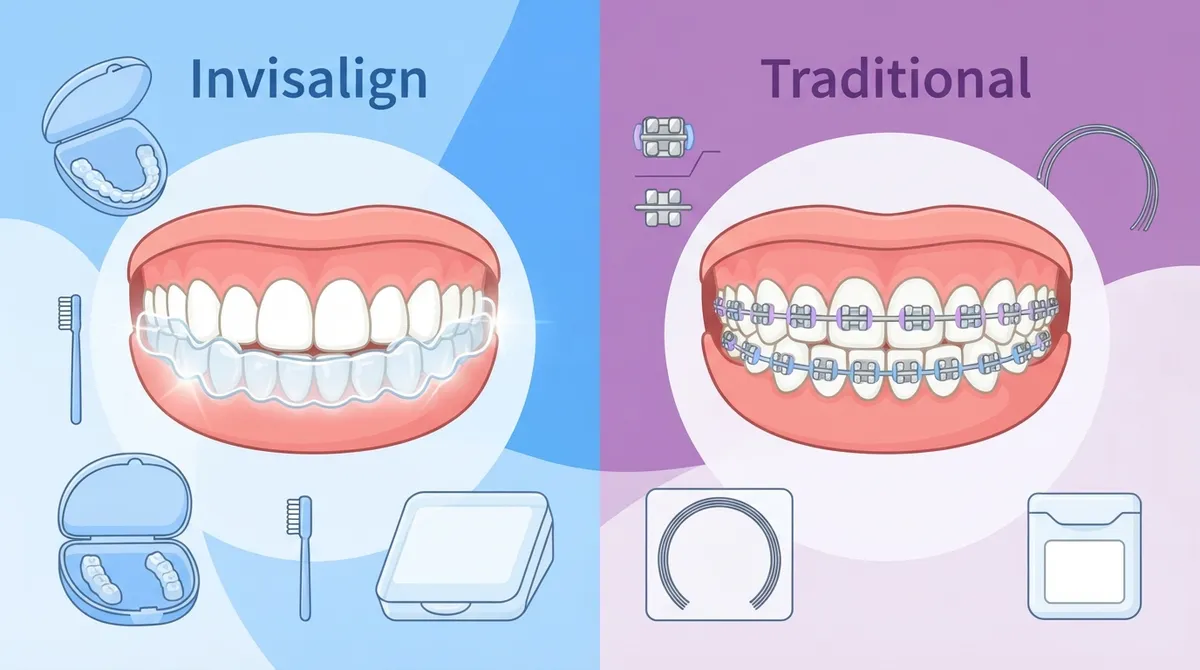
Invisalign uses a series of clear, custom-made plastic trays called aligners. Each tray fits snugly over your teeth and applies gentle pressure to move them. Every couple of weeks, you switch to a new tray that is just a little different from the last one. Slowly but surely, your teeth shift into place. If you are curious about the basics, our guide on what Invisalign is and how it straightens teeth is a great place to start.
You take the aligners out to eat, drink, brush, and floss. That freedom is one of the biggest reasons people love them.
How Traditional Braces Work
Traditional braces use metal brackets that are bonded to the front of your teeth. A thin wire runs through the brackets, and small rubber bands hold everything together. Your orthodontic provider adjusts the wire from time to time to guide your teeth into the right spots.
Because braces stay on your teeth around the clock, they work steadily without relying on you to remember anything. That can be a big plus for some people, especially younger patients.
Invisalign vs Traditional Braces: Side-by-Side Comparison
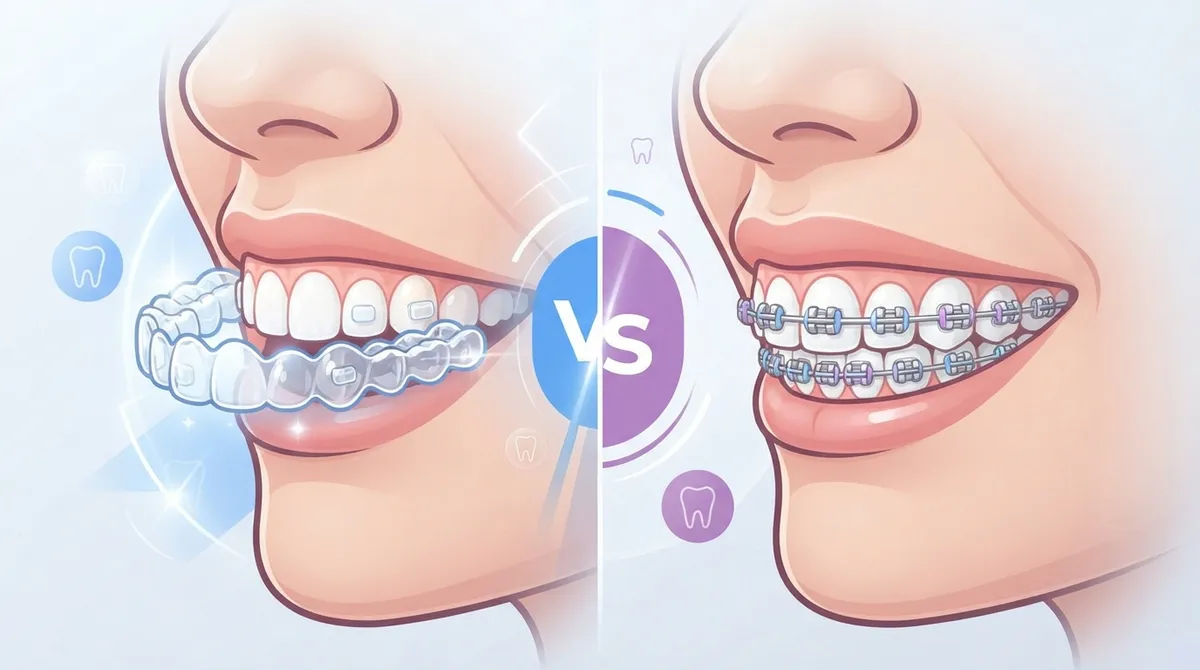
Sometimes the easiest way to see the difference is to put everything in one place. Here is a quick look at how the two options stack up.
| Feature | Invisalign | Traditional Braces |
|---|---|---|
| Appearance | Nearly invisible clear trays | Visible metal brackets and wires |
| Removable | Yes, for meals and cleaning | No, fixed in place |
| Comfort | Smooth plastic, mild pressure | Can irritate cheeks and gums |
| Food Restrictions | Minimal, remove trays to eat | Avoid sticky, hard, and chewy foods |
| Cleaning | Brush and floss as normal | Needs extra tools and time |
| Office Visits | Fewer check-ins | Regular adjustment visits |
| Best For | Mild to moderate cases, motivated patients | Complex cases, patients who need built-in accountability |
Keep in mind that this table is a general guide. Your own mouth is unique, so the best choice depends on your specific needs.
Step-by-Step: How to Decide Which Option Fits You
Ready to figure out your best match? Follow these simple steps. You do not need to be a dental expert to do it.
- Think about your goals. Do you want to fix a small gap, or do you have a bigger bite problem? Mild crowding and spacing often respond well to clear aligners. More complex issues may call for braces.
- Be honest about your habits. Invisalign works best when you wear the trays about 22 hours a day. If you tend to forget things, fixed braces may keep you on track.
- Consider your lifestyle. Do you speak in public, play a sport, or play a wind instrument? Think about which option would feel easiest for your daily routine.
- Look at your budget. Costs vary based on your case and your insurance. Ask about coverage and payment plans before you decide.
- Schedule a consultation. A professional exam is the only way to know for sure what will work for your teeth.
Take your time with this process. There is no rush, and the right answer is the one that fits you.
The Big Advantages of Invisalign
Many people choose clear aligners because they blend into everyday life so well. Here are some of the top perks.
- Discreet look: Most people will not even notice you are wearing them. If you are curious about this, read what others really notice in can you see Invisalign.
- Easy eating: You take the trays out for meals, so you can enjoy your favorite foods.
- Simple cleaning: Brushing and flossing stay the same as before.
- Smoother feel: No metal pieces to poke your cheeks or lips.
- Fewer visits: You typically spend less time in the chair.
There are even more benefits that patients often miss. We shared a few in 6 Invisalign advantages Brandon patients often overlook.
The Big Advantages of Traditional Braces
Do not count braces out! They have been helping people for decades, and they still shine in many situations.
- Handles complex cases: Braces can fix severe crowding, rotated teeth, and tricky bite problems.
- No compliance worries: Since they are fixed, you cannot forget to put them in.
- Precise control: Wires and brackets let your provider guide each tooth carefully.
- Great for younger patients: Kids and teens who may lose or forget aligners often do well with braces.
If you have a more serious alignment concern, it is worth reading 11 things to know about whether Invisalign can fix severe crowding so you know what to expect.
What About Comfort and Pain?
Let’s be real. Any tooth movement can bring a little soreness. With both options, you may feel pressure for a few days after a new tray or an adjustment.
Braces can also cause sore spots where the metal rubs against your cheeks. A little dental wax usually helps. Aligners are smoother, but they can feel tight when you start a new set. Most people say the discomfort is mild and fades quickly. For a deeper look, check out is Invisalign painful and what to expect in 2026.
How Long Does Each Treatment Take?
Timing is one of the first things people ask about. The honest answer is that it depends on your teeth. Many mild to moderate cases take about 12 to 18 months with either option. More complex cases can take longer.
Wearing your aligners as directed makes a huge difference. Skipping hours can slow your progress and add months. If you want a closer look at how the timelines compare, our post on Invisalign vs braces timeline breaks it down nicely. You can also learn what to expect at each stage in the Invisalign treatment process, step by step.
Taking Care of Your Teeth During Treatment
Healthy teeth move better, so good hygiene matters with either option. Here are some friendly tips to keep your smile in top shape.
- Brush after meals and before putting your aligners back in.
- Floss daily, using floss threaders or a water flosser if you wear braces.
- Clean your trays every day so bacteria do not build up.
- Keep up with regular cleanings and checkups.
Plaque can sneak up on you when you have hardware on your teeth. That is why a few small habits go a long way. Our tips on how to brush your teeth with Invisalign the right way are super helpful, and so is learning about whether Invisalign can cause cavities.
Cost and Insurance: What to Know
Price is a big part of any decision. In general, the cost of Invisalign and traditional braces can be fairly close, though your final price depends on how complex your case is and how long treatment lasts.
Many dental plans offer some orthodontic coverage, and it often applies to both options. It is smart to check your benefits before you start. We put together a helpful guide on whether insurance covers Invisalign to help you plan. Our insurance page is another good place to look, and our team is always happy to walk you through your options.
Do Not Forget About Retainers
Here is something many people overlook. No matter which treatment you pick, retainers are part of the deal. Once your teeth are straight, they want to drift back. A retainer keeps them right where you worked so hard to put them.
If you skip it, your smile can shift faster than you think. Learn the facts in how fast teeth shift without a retainer, and see why wearing a retainer long term matters.
Which One Is Right for Different People?
Let’s look at a few real-life style examples. These are not rules, just friendly ideas to help you picture yourself.
- The busy professional: Often loves Invisalign because it looks discreet in meetings and photos.
- The teenager: May do better with braces since the hardware stays put and cannot get left in a lunch tray.
- The adult with a mild gap: Is often a great candidate for clear aligners.
- The person with a tricky bite: May need the extra control that braces provide.
Adults especially enjoy the flexibility of aligners. Learn more about Invisalign for adults in Brandon. And if you are wondering whether you qualify, take a peek at conditions that may disqualify you from Invisalign.
Why Choose a Local Brandon Provider?
The person guiding your treatment matters just as much as the treatment itself. At Dental Theory, we focus on making every visit relaxed and welcoming, using modern technology and a friendly approach for patients of all ages. Dr. K, our adult and cosmetic dentist, is a Gold+ Invisalign provider, and you can see Dr. K’s Gold+ Invisalign profile to learn more about his experience.
You can also see what neighbors say about us. Feel free to see what our Dental Theory patients say on Google. Dr. K has even been recognized nationally, as Dr. Chris Karapasha has been named one of America’s Top Young Dentists in Incisal Edge magazine’s 2025 40 Under 40.
If you are leaning toward clear aligners, you can read more about our Invisalign services or explore how to choose the right Invisalign provider in Brandon.
Common Myths About Invisalign vs Traditional Braces
There is a lot of chatter out there, so let’s clear up a few myths.
- Myth: Invisalign is only for easy cases. Truth: It can treat many issues, though very complex cases may still need braces.
- Myth: Braces are outdated. Truth: They are still a trusted, effective option for lots of patients.
- Myth: Aligners are always faster. Truth: Speed depends on your case and how well you follow the plan.
- Myth: You can skip wearing aligners now and then. Truth: Consistency is the secret to great results.
Want to dig deeper into the claims you may have heard? Check out 4 Invisalign myths that keep Brandon patients guessing, and see how Invisalign aligners compare to braces in 2026.
Your Next Step Toward a Straighter Smile
At the end of the day, the best choice in the invisalign vs traditional braces debate is the one that fits your teeth, your habits, and your life. Invisalign offers freedom and a discreet look. Traditional braces offer steady, reliable control for complex cases. Neither one is better for everyone, and that is perfectly okay.
The smartest move is to sit down with a dental professional who can look at your mouth, listen to your goals, and give you honest advice. A quick conversation can save you months of second-guessing.
Ready to find out which path suits you? Take the first step today. You can schedule an appointment online, or simply contact Dental Theory and our friendly team will help you get started. We cannot wait to help you smile with confidence!
FAQs
Q: Is Invisalign better than traditional braces?
A: Not always! Invisalign is a great pick for mild to moderate cases and for people who want a discreet look. Traditional braces often work better for complex bite problems, so the best choice depends on your teeth.
Q: Which is faster, Invisalign or traditional braces?
A: Treatment time is usually similar, often around 12 to 18 months for many cases. The biggest factor is your specific needs and, with Invisalign, how closely you wear your trays each day.
Q: Does Invisalign cost more than braces?
A: The two are often close in price, though your final cost depends on how complex your case is. Checking your insurance benefits and asking about payment plans can help you plan ahead.
Q: Can I take Invisalign out whenever I want?
A: You can remove them to eat, drink, and clean your teeth, but they work best when worn about 22 hours a day. Leaving them out too long can slow your progress, so consistency is key.
Our Service Area