Key Takeaways
-
Poor fit at placement is a primary cause of premature crown failure; choosing an experienced dentist using advanced technology for precise, custom-fit crowns from day one is your best defense against early failure.
-
Teeth grinding (bruxism) puts enormous pressure on crowns and can crack, loosen, or wear them down significantly faster; a custom nightguard is essential protection if you grind your teeth at night.
-
Decay can develop underneath even properly placed crowns when bacteria slip in through gaps; maintaining excellent oral hygiene with twice-daily brushing and daily flossing around the crown is critical to prevent this.
-
Well-cared-for dental crowns typically last 10-15 years or longer, but regular dental checkups twice yearly are essential to catch problems early and prevent small issues from becoming major failures.
-
Biting hard foods, ice, or using teeth as tools can chip or crack crowns, especially ceramic ones; avoiding these habits and following a crown-safe diet can add years to your crown’s lifespan.
-
Gum disease and recession expose crown edges to bacterial attack and decay; maintaining healthy gums through consistent oral hygiene and professional cleanings is vital for crown longevity.
You invested in a dental crown to protect your tooth. Now you’re worried it might not last. That’s a totally fair concern! Dental crowns are meant to last many years. But sometimes, they fail sooner than expected. Understanding why crowns fail prematurely can save you time, money, and a whole lot of stress.
The good news? Most premature crown failures are preventable. With the right care and the right dentist, your crown can go the distance. In this guide, we’ll walk you through the top causes of early crown failure — and exactly what you can do about them. Let’s dive in!
What Does It Mean When a Crown Fails?
A crown “fails” when it can no longer do its job. That might mean it cracks, chips, falls off, or lets bacteria sneak underneath. Sometimes you’ll feel pain. Other times, the crown looks fine but is slowly breaking down. Either way, a failed crown needs prompt attention.
If you’ve ever dealt with a crown that came loose, you know how frustrating it is. You can read more about what to do in that situation at our helpful guide on what happens when a crown falls off and whether it can be reattached. But prevention is always better than a fix!
Top Reasons Why Crowns Fail Prematurely
There isn’t just one reason a crown gives up early. It’s usually a combination of factors. Here are the most common culprits:
1. Poor Fit at Placement
A crown that doesn’t fit perfectly is a crown that won’t last. If there are small gaps between the crown and the tooth, bacteria can get in. That leads to decay underneath the crown — which is a top reason for early failure.
This is why choosing an experienced dentist matters so much. At Dental Theory in Brandon, FL, Dr. K uses advanced technology to create same-day ceramic crowns with a precise, custom fit every time. A great fit from day one is your best defense against early failure.
2. Decay Under the Crown
Even with a crown in place, your natural tooth underneath can still get cavities. This happens when bacteria slip under a poorly sealed crown. Over time, the decay weakens the tooth structure. Eventually, the crown has nothing solid to hold onto.
Want to understand how decay can sneak up on you? Check out our article on decay under a dental crown: causes, signs, and solutions. The earlier you catch it, the better your options.
3. Teeth Grinding (Bruxism)
Do you grind or clench your teeth at night? This habit puts enormous pressure on crowns. It can crack them, loosen them, or wear them down way faster than normal. Many people don’t even know they grind their teeth until a dentist spots the signs.
If you’re a grinder, a custom nightguard can protect your crown. Without one, even the best-placed crown might not survive the nightly pressure. Our team can help you figure out if bruxism is putting your crown at risk.
4. Biting Hard Foods or Objects
Crowns are tough, but they’re not indestructible. Biting into hard candies, ice, or using your teeth as tools can chip or crack your crown. This is especially true for ceramic crowns, which look amazing but need to be treated with care.
Our guide on 10 foods to avoid with crowns is a great resource. Knowing what to skip can add years to your crown’s life.
5. Poor Oral Hygiene
A crown doesn’t mean you can skip brushing and flossing. The gum line around your crown is still vulnerable to disease. Gum disease can cause the supporting tissue and bone to break down. When that happens, your crown loses its foundation — and fails.
Good home care is simple but essential. Brush twice a day, floss daily, and keep up with your professional teeth cleanings. It really does make a difference!
6. Inadequate Root or Tooth Structure
A crown needs enough healthy tooth or root to hold onto. If a tooth has had multiple procedures or extensive decay, there may not be much left to work with. In these cases, the crown may fail because its foundation is simply too weak.
Sometimes a dental crown with a post can help reinforce a weakened tooth. Your dentist will evaluate whether this extra support is needed before placing your crown.
7. Gum Recession
When gums pull away from the teeth, the edges of the crown can become exposed. This creates a spot where bacteria love to gather. It can also make the crown look unnatural and feel sensitive. Over time, this can lead to decay at the crown’s edge and eventual failure.
Warning Signs Your Crown Might Be Failing
Catching problems early can save your crown — or at least save the tooth underneath it. Watch out for these signs:
- Pain or sensitivity when biting down
- A crown that feels loose or wobbly
- Visible cracks or chips in the crown
- Dark lines forming at the gum line
- Swelling or tenderness around the crown
- The crown feels higher or lower than normal when you bite
If you notice any of these signs, don’t wait! Learn more about loose dental crown symptoms and what to do. Prompt action can prevent a small issue from becoming a big one.
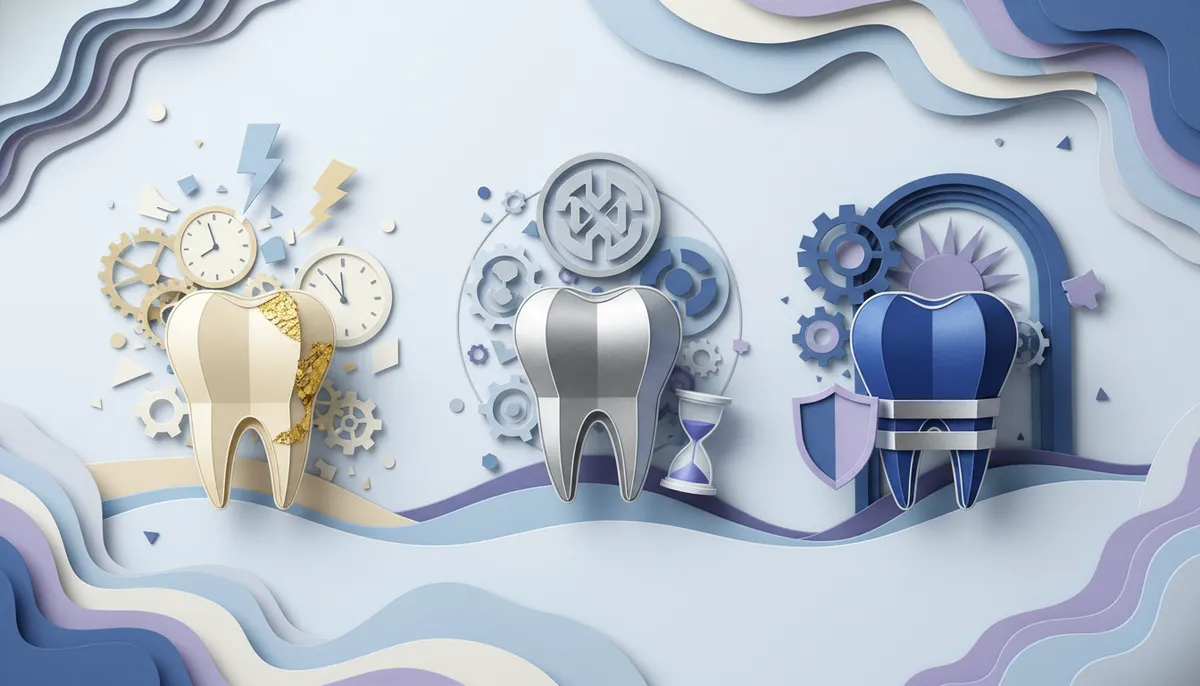
How Crown Material Affects Longevity
Not all crowns are created equal. The material your crown is made from plays a big role in how long it lasts. Here’s a quick comparison:
| Crown Material | Average Lifespan | Pros | Cons |
|---|---|---|---|
| Ceramic (All-Porcelain) | 10–15+ years | Natural look, metal-free, biocompatible | Can chip if misused |
| Porcelain-Fused-to-Metal | 10–15 years | Strong, durable | Metal edge can show at gumline |
| Gold/Metal Alloy | 15–20+ years | Very durable, fits well | Noticeable color, not tooth-colored |
| Zirconia | 10–20 years | Extremely strong, natural appearance | Can be harder on opposing teeth |
At Dental Theory, we use only ceramic crowns. They look beautiful and natural. With proper care, they can last well over a decade. You can learn more about why porcelain dental crowns are often the best choice for most patients.
How to Make Your Crown Last Longer
Now for the fun part — the things YOU can do to protect your crown! Here’s a step-by-step action plan:
- Brush properly twice a day. Use a soft-bristled toothbrush and fluoride toothpaste. Pay extra attention to the gum line around your crown.
- Floss daily around the crown. Flossing removes plaque that your toothbrush misses. Use gentle, sliding motions — don’t snap the floss, as it can loosen the crown.
- Visit your dentist regularly. Twice-yearly checkups and cleanings catch problems early. Your dentist can also check the fit and condition of your crown.
- Wear a nightguard if you grind your teeth. A custom-fitted nightguard protects your crown from the pressure of bruxism while you sleep.
- Avoid hard and sticky foods. Skip ice, hard candies, and chewy caramels. These can crack or pull off your crown.
- Don’t use your teeth as tools. Opening packages or biting nails can put unexpected stress on your crown.
Following these simple steps can add years — even decades — to your crown’s life. For more detailed advice, check out our guide on how to care for a dental crown and make it last.
The Role of Your Dentist in Crown Longevity
The quality of your crown placement matters just as much as your aftercare. A well-placed crown starts with a dentist who takes the time to get it right. Here’s what a great dentist does to set your crown up for success:
- Thoroughly removes all decay before placing the crown
- Ensures a precise fit using digital impressions or in-office technology
- Checks your bite carefully to avoid uneven pressure
- Uses high-quality crown materials that match your needs
- Provides clear aftercare instructions
Same-day crowns, like those offered by Dr. K at Dental Theory, are milled in-office with precision technology. This means a more accurate fit compared to older methods. A better fit means a longer-lasting crown — it’s as simple as that! Learn more about what same-day crowns are and how the process works.
Common Crown Mistakes to Avoid
Even people who mean well make mistakes that shorten their crown’s lifespan. Here are the most common ones:
- Skipping follow-up appointments. After a crown is placed, a quick check-in ensures the bite is right. Missing this can lead to uneven wear.
- Ignoring sensitivity or pain. Pain after a crown is placed can be a sign of a problem. Don’t wait and hope it goes away.
- Using whitening products on crowned teeth. Whitening products don’t work on crown material. Using them can create a color mismatch but won’t harm the crown directly. However, abrasive whitening toothpastes can scratch ceramic crowns over time.
- Not replacing a lost crown quickly. If your crown falls off, see your dentist right away. A bare tooth is vulnerable to damage and decay. Read our post on what to do when your crown falls off for step-by-step guidance.
How Long Should a Dental Crown Last?
A well-made, well-cared-for dental crown typically lasts between 10 and 15 years. Many last even longer — sometimes 20 years or more! The actual lifespan depends on several factors:
| Factor | Impact on Crown Life |
|---|---|
| Oral hygiene habits | High — poor hygiene dramatically shortens life |
| Crown material quality | High — better materials last longer |
| Dentist skill and fit | High — precision placement = longer life |
| Teeth grinding (bruxism) | High — can cut lifespan in half |
| Diet and food choices | Moderate — hard foods cause chips and cracks |
| Regular dental checkups | Moderate — early detection saves crowns |
Want a deeper dive into crown longevity? Our article on how long dental crowns last and what you need to know covers everything in detail.
What Happens If a Crown Fails?
If your crown fails, you have a few options. Your dentist will evaluate the tooth and recommend the best path forward. Here’s what might happen:
- Recementation: If the crown is still intact, it may be able to be re-cemented back onto the tooth.
- Crown replacement: If the crown is damaged or the tooth has changed, a new crown will be made.
- Root canal + new crown: If decay has reached the pulp, a root canal may be needed before a new crown goes on.
- Dental implant: If the tooth cannot be saved, a dental implant may be the best long-term replacement option.
The earlier you act, the more options you’ll have. Waiting too long can limit what’s possible — and increase the cost! You can review common mistakes to avoid in our article about dental crown mistakes that could cost you big.
When to See a Dentist About Your Crown
Don’t wait for a full-blown emergency. See your dentist promptly if you notice any of the following:
- Your crown feels loose or shifts when you bite
- You feel sharp pain when eating or drinking hot or cold things
- The crown cracks or a piece breaks off
- You see or feel a gap forming between the crown and your gum
- Persistent bad taste or odor near the crown area
These are signs that something is wrong and needs professional attention. If you’re in the Brandon area, you can schedule an appointment quickly and easily. We’re here to help!
Comparing Same-Day Crowns vs. Traditional Crowns
| Feature | Same-Day Crowns | Traditional Crowns |
|---|---|---|
| Visits needed | 1 visit | 2+ visits |
| Temporary crown needed | No | Yes |
| Fit accuracy | Digital precision | Lab-dependent |
| Material (at Dental Theory) | Ceramic | Varies by lab |
| Failure risk from temp crown | None | Possible |
| Overall convenience | High | Moderate |
Same-day crowns eliminate the temporary crown phase — which is actually a common point of early failure. No temp crown means one less thing to worry about! Learn more about same-day crowns vs. traditional crowns and which is better for you.
Your Crown Deserves the Best Care — Starting Now
Understanding why crowns fail prematurely puts the power in your hands. A failing crown isn’t just bad luck — it’s almost always something that could have been caught earlier or prevented entirely. Good habits, smart food choices, regular checkups, and a skilled dentist all work together to protect your investment.
At Dental Theory in Brandon, FL, we’re passionate about helping you keep your smile healthy for the long haul. Whether you need a brand-new same-day ceramic crown or just want someone to check on your existing one, we’ve got you covered. We’d love to be your dental home — for your crown and everything else your smile needs. You can also visit Dental Theory on Google to read reviews from real patients in Brandon and see why families trust us with their smiles.
Ready to give your crown the best chance at a long, healthy life? Reach out to our Dental Theory team today — we’re always happy to help you smile with confidence!
FAQs
Q: Why do dental crowns fail prematurely?
A: Dental crowns fail early for several reasons — poor fit at placement, decay sneaking under the crown, teeth grinding, biting hard foods, and not keeping up with oral hygiene. The great news is that most of these causes are totally preventable with the right care and regular dental visits!
Q: How can I tell if my dental crown is failing?
A: Watch for signs like pain when biting, a loose or wobbly crown, visible cracks or chips, dark lines at the gum line, or an unusual taste near the crown. If something feels off, don’t wait — see your dentist as soon as possible so the problem doesn’t get worse.
Q: How long should a dental crown last before needing replacement?
A: With proper care, a dental crown typically lasts 10 to 15 years — and sometimes much longer! Factors like your oral hygiene habits, the quality of the crown material, and whether you grind your teeth all play a big role in how long your crown goes the distance.
Q: Does grinding my teeth cause crowns to fail sooner?
A: Absolutely — teeth grinding (bruxism) is one of the top causes of premature crown failure. The constant pressure and friction can crack, chip, or loosen a crown over time. A custom nightguard is a simple and effective way to protect your crown while you sleep.
Q: Are same-day crowns less likely to fail than traditional crowns?
A: Same-day crowns are milled with digital precision, which means a more accurate fit from day one — and a better fit means less risk of early failure. They also skip the temporary crown phase, which is itself a common point of failure with traditional crown procedures. Pretty cool, right?