Key Takeaways
-
Fixed retainers can last 10-20+ years but require consistent dental visits and proper flossing; removable retainers typically last 1-10 years depending on material and care, making maintenance discipline more critical than retainer type.
-
Removable retainers only work when worn consistently—missing even a few nights causes teeth to shift and the retainer to feel tight, so setting daily alarms and incorporating wear into your bedtime routine is essential.
-
Fixed retainers need regular monitoring because bonding material weakens over time; schedule dental check-ups to catch loose or broken wires before teeth start moving, and avoid biting hard foods directly with front teeth.
-
Choose your retainer type based on your lifestyle and habits: forgetful wearers should select fixed retainers, teeth grinders need removable night guards, and contact sport players require removable options for safety.
-
Clean retainers properly to maximize durability—use lukewarm water and retainer cleaner for removable types (never hot water), floss daily around fixed retainers with a threader, and never store removable retainers in tissues.
-
Watch for warning signs of retainer failure including cracks, loose fit, discomfort, or visible tooth gaps, and address them immediately; waiting increases the cost and difficulty of fixing tooth movement after the fact.
You just finished orthodontic treatment. Your teeth look amazing. Now your dentist hands you a retainer and says, “Wear this every day.” Sound familiar? Most people don’t think much about retainers — until something goes wrong. Whether you’re choosing between a fixed retainer vs removable option, or trying to figure out which one offers better durability, this guide is here to help. Making the wrong choice — or the wrong assumptions — can cost you your beautiful smile. Let’s walk through the seven biggest mistakes people make so you can keep your teeth straight for years to come. If you’re in the Brandon, FL area and need expert guidance, the team at Dental Theory is always happy to help.
Why Retainers Matter More Than You Think
After orthodontic treatment, your teeth want to move back. This is called relapse, and it happens to almost everyone who skips retainer wear. Retainers hold your teeth in their new positions. Without one, all that time and money spent on alignment can be undone. The question isn’t whether to wear a retainer — it’s which type and how to take care of it properly.
If you’ve ever wondered about whether you need to wear a retainer forever after Invisalign, the short answer is yes — in some form. Both fixed and removable retainers can do the job, but each has its strengths and weaknesses.
Fixed vs. Removable Retainers: A Quick Comparison
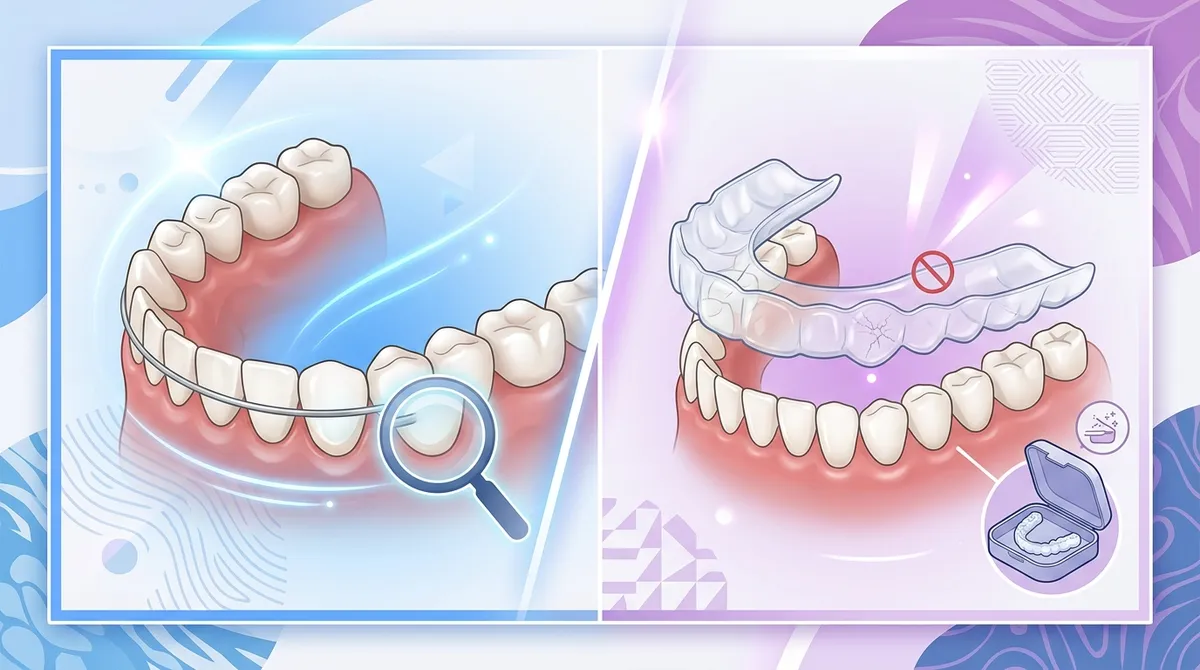
Before diving into the mistakes, let’s break down what each retainer type actually is.
| Feature | Fixed Retainer | Removable Retainer |
|---|---|---|
| Placement | Bonded directly to teeth | Worn and removed by patient |
| Durability | Long-lasting if maintained | Depends on care and compliance |
| Visibility | Hidden behind teeth | May be visible when worn |
| Cleaning | Requires floss threader | Easy to clean separately |
| Patient Effort | Low (always in place) | High (must remember to wear) |
| Cost to Replace | Higher | Lower |
Now that you see the key differences, let’s get into the mistakes that can undermine your retainer’s durability — and your smile’s longevity.
Mistake 1: Assuming Fixed Retainers Last Forever Without Maintenance
Fixed retainers feel permanent. They’re glued right to the back of your teeth. But that doesn’t mean they’re indestructible. Over time, the bonding material can weaken. The wire can bend or break. Many people don’t even notice when a fixed retainer comes loose — and their teeth quietly start shifting.
- Check your fixed retainer regularly with your tongue
- Look for any wire that feels loose or uncomfortable
- Schedule regular dental check-ups to have it inspected
- Avoid biting hard foods directly with your front teeth
Durability of a fixed retainer is strong — but it needs professional monitoring. Your dental team can catch early signs of failure before your teeth start to move.

Mistake 2: Not Wearing Your Removable Retainer Consistently
This is probably the most common retainer mistake of all. Removable retainers only work when they’re actually in your mouth. Life gets busy. You forget one night. Then two. Then a week goes by. Suddenly your retainer feels tight when you try to wear it again — a sign your teeth have already shifted.
- Set a daily alarm to remind yourself to wear your retainer
- Keep it in a visible spot so you don’t forget
- Build it into your bedtime routine
- If it feels tight, don’t force it — call your dentist
The final stages of Invisalign treatment always include retainer instructions. Follow them closely. Removable retainer durability depends almost entirely on how consistently you use and care for it.
Mistake 3: Cleaning Retainers the Wrong Way
How you clean your retainer directly affects how long it lasts. Using the wrong products can warp, crack, or weaken it. This is true for both fixed and removable types.
| Retainer Type | Do This | Avoid This |
|---|---|---|
| Fixed Retainer | Floss daily with a threader or water flosser | Skipping flossing around the wire |
| Removable Retainer | Rinse with lukewarm water, use retainer cleaner | Hot water, toothpaste, harsh chemicals |
| Both Types | Regular dental check-ups for professional cleaning | Going years without a dental visit |
Hot water is a big enemy of removable retainers. It can warp the plastic. Always use lukewarm or cool water when rinsing. And never wrap your retainer in a napkin — that’s how retainers end up in the trash by accident!
Mistake 4: Ignoring the Signs That a Retainer Needs Replacing
Both fixed and removable retainers have a lifespan. Removable retainers typically last three to ten years depending on the material and care. Fixed retainers can last much longer — but they do eventually need attention. Ignoring the signs of wear can lead to tooth movement that’s hard to reverse.
Watch for these warning signs:
- Cracks or chips in a removable retainer
- Discomfort or soreness when wearing a retainer
- A loose feeling with a fixed retainer wire
- Visible gaps or changes in your teeth alignment
- Retainer no longer fits snugly
If any of these sound familiar, don’t wait. Reach out to the Dental Theory team and schedule an evaluation. Catching retainer issues early is always easier — and less expensive — than fixing tooth movement after the fact.
Mistake 5: Choosing the Wrong Retainer Type for Your Lifestyle
Not everyone is a good candidate for every type of retainer. Choosing the wrong one for your habits or lifestyle is a setup for failure. For example, if you know you’ll forget to wear a removable retainer, a fixed one might be the smarter choice. On the other hand, if you have a history of grinding your teeth, a fixed wire might not hold up as well.
| Lifestyle Factor | Better Option | Why |
|---|---|---|
| Forgetful wearer | Fixed retainer | Always in place, no compliance needed |
| Teeth grinder (bruxism) | Removable (night guard style) | Offers protection and alignment retention |
| Contact sport player | Removable | Can be removed during play for safety |
| Strong oral hygiene habits | Either type | Can manage cleaning requirements of both |
Talk to your dentist honestly about your habits. There’s no shame in admitting you might forget to wear a removable retainer. The right retainer choice is the one that actually works for your life. You can also learn more by reading about switching retainer types after Invisalign if your needs change over time.
Mistake 6: Skipping Regular Dental Check-Ups After Treatment Ends
Many people think their dental work is “done” once orthodontic treatment is over. But this is actually when consistent dental care becomes even more important. Regular check-ups are how your dentist monitors your retainer’s condition and catches any early tooth movement.
At your check-ups, your dental team will:
- Check that your fixed retainer wire is still fully bonded
- Look for signs of plaque buildup around the wire
- Evaluate your bite and alignment
- Inspect your removable retainer for cracks or warping
- Clean hard-to-reach areas around retainer hardware
The general dentistry team at Dental Theory offers comprehensive exams that include retainer monitoring. You can also explore professional teeth cleanings to keep your smile healthy between orthodontic follow-ups. You can even schedule an appointment online for your next visit.
Mistake 7: Not Understanding How Long Each Retainer Type Really Lasts
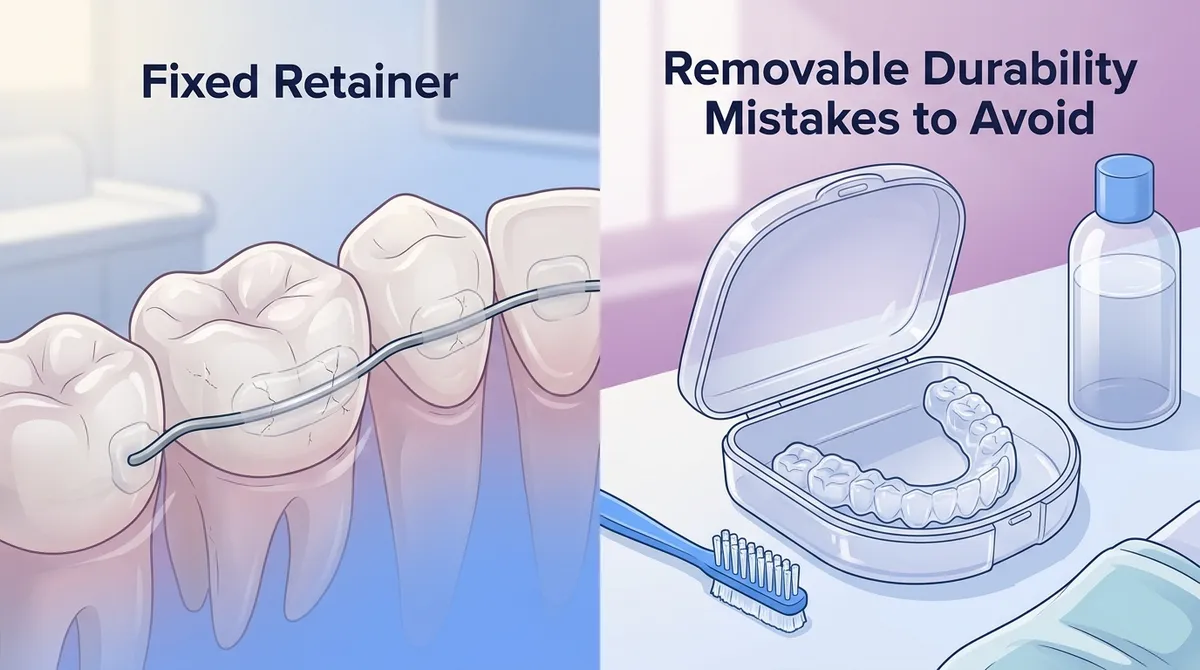
When comparing fixed retainer vs removable durability, people often expect one to clearly “win.” But the truth is more nuanced. Both types can last a long time — or fail quickly — depending on how well you take care of them.
Here’s a general durability timeline for each type:
- Fixed retainers: Can last 10–20+ years with proper maintenance and regular dental visits
- Hawley (wire) removable retainers: Typically last 5–10 years with good care
- Clear plastic (Essix) retainers: Usually last 1–5 years depending on wear and storage
- Vivera retainers (Invisalign brand): Often last 3–5 years with consistent use
Fixed retainers win on raw longevity potential, but only if you keep up with dental visits and proper flossing. Removable retainers offer flexibility but require more patient commitment. The best retainer is always the one you’ll actually use correctly. If you’re not sure which option is right for you after Invisalign treatment, ask your provider during your final consultation.
Bonus Tips: Maximizing Retainer Durability
Beyond avoiding those seven mistakes, there are some extra steps you can take to extend the life of any retainer type.
- Store removable retainers in their case — never wrapped in a tissue
- Keep retainers away from pets (dogs love chewing them!)
- Avoid eating with a removable retainer in your mouth
- Don’t soak retainers in mouthwash for extended periods
- Ask about replacement schedules so you’re never caught off guard
Taking care of your retainer is a simple habit that pays off big. It protects the investment you made in your smile — and keeps you from needing retreatment down the road.
How Dental Theory Supports Your Long-Term Smile
Whether you’re just finishing orthodontic treatment or trying to figure out why your old retainer doesn’t fit anymore, getting professional guidance makes all the difference. The team at Dental Theory in Brandon, FL is passionate about long-term dental health. From comprehensive dental exams to cosmetic dentistry and orthodontic follow-up care, we’ve got your whole family covered. Check out what patients are saying by visiting our Dental Theory Google profile and see why Brandon families trust us with their smiles.
You can also follow us and connect with our friendly team when you visit us on Facebook for tips, updates, and patient stories.
Conclusion: Choose Smart, Maintain Well, Smile Long
The fixed retainer vs removable durability debate doesn’t have one universal winner. Both types can serve you incredibly well when used correctly. The biggest mistakes aren’t about which retainer you choose — they’re about how you care for it, how consistently you use it, and whether you keep up with regular dental check-ups. Avoid the seven mistakes outlined above, and you’ll be protecting your beautiful smile for years to come. Ready to get started or need a retainer check-up? Get in touch with the Dental Theory team today and take the first step toward lasting dental health.
FAQs
Q: Which is more durable — a fixed retainer or a removable retainer?
A: Fixed retainers generally last longer — up to 20 years or more — when properly maintained with regular dental visits and good flossing habits. Removable retainers typically last between one and ten years depending on the material and how well you care for them. The best choice really comes down to your lifestyle and how committed you are to daily maintenance!
Q: Can a fixed retainer break, and what should I do if it does?
A: Yes, fixed retainers can break or come loose over time, especially if you bite into hard foods or skip regular dental check-ups. If you notice a loose wire or discomfort, call your dentist right away — don’t wait! The sooner it’s repaired, the less chance your teeth have to shift back toward their old positions.
Q: How do I know when it’s time to replace my removable retainer?
A: If your removable retainer has cracks, feels loose, no longer fits snugly, or causes discomfort, it’s likely time for a replacement. Clear plastic retainers tend to wear down faster than wire-based ones, so check yours regularly. Your dentist can evaluate it during a routine check-up and let you know if it’s still doing its job properly!
Q: Is it possible to switch from a fixed retainer to a removable one?
A: Absolutely — many people switch retainer types as their needs change, and that’s totally okay! You’ll want to talk with your dentist first to make sure it’s safe to remove your fixed retainer and that your teeth are stable enough to transition. From there, your dentist can fit you for the right removable option for your lifestyle.
Q: How often should I visit the dentist to maintain my retainer?
A: Most dental professionals recommend visiting at least twice a year for check-ups, and retainer monitoring is always included in those visits. Regular appointments help catch any early signs of retainer failure or tooth movement before they become bigger problems. Think of it as a simple tune-up to keep your beautiful smile exactly where it should be!