Key Takeaways
-
Most adults complete Invisalign treatment in 12-18 months, with mild cases finishing in 6-9 months, making it often faster than traditional braces which average 18-36 months.
-
Wearing aligners 20-22 hours daily is critical to staying on schedule; inconsistent wear is the biggest factor that extends treatment timelines by weeks or months.
-
Invisalign offers lifestyle advantages like eating all foods, easier cleaning, and nearly invisible appearance, while braces provide constant 24/7 pressure that may suit patients who struggle with consistency.
-
Lifelong retainer wear is essential after treatment ends, as teeth naturally drift back to original positions; most patients wear retainers full-time initially, then switch to nighttime wear.
So you’re thinking about straightening your teeth, and the first question on your mind is probably, “How long is this going to take?” That’s a great question, and honestly, it’s one we hear almost every day! Understanding the Invisalign timeline compared to traditional braces can help you plan around vacations, weddings, school pictures, and everything in between.
Here’s the good news: for many people, clear aligners move at a similar pace to metal braces. Some cases even finish sooner. But the answer depends on your teeth, your habits, and the treatment you choose.
In this friendly guide, we’ll walk through each option side by side, share what a typical Invisalign timeline looks like in 2026, and help you figure out which path fits your life best. Whether you’re a busy parent, a working professional, or a teen who wants a confident grin, you’ll find clear answers here. Grab a cup of coffee and let’s get into it!
What Is the Typical Invisalign Timeline?
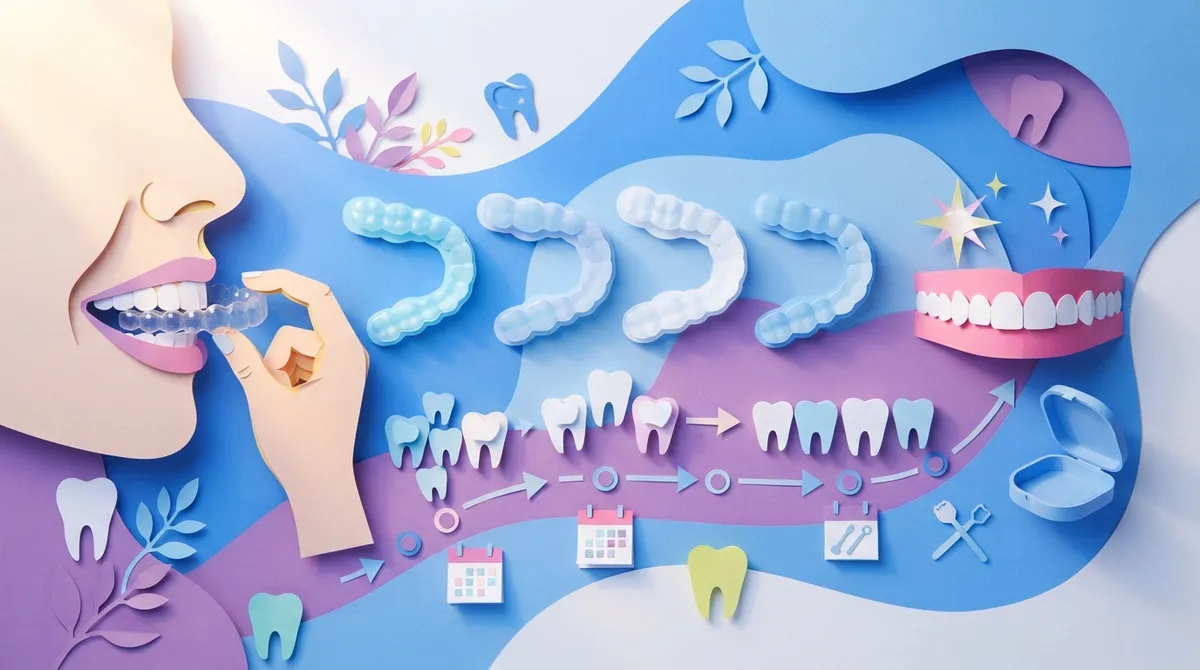
Most adults and teens finish Invisalign treatment in about 12 to 18 months. Mild cases, like small gaps or minor crowding, can wrap up in as little as 6 to 9 months. More complex bite problems may take 18 to 24 months or longer.
Every Invisalign journey is different, but most follow the same basic path. Here is how the Invisalign timeline usually unfolds:
- Consultation and digital scan (Week 1): Your dentist checks your teeth, takes a 3D scan, and talks through your goals.
- Custom treatment plan (Weeks 2-4): Your plan maps out how each tooth will move, and you can often preview your final smile.
- Aligners arrive (Weeks 3-5): Your custom trays are made and shipped to your dentist.
- Active treatment (Months 1-18): You switch to a new set of aligners about every one to two weeks.
- Check-ins (Every 6-8 weeks): Your dentist makes sure everything is moving on track.
- Refinements (If needed): A few extra aligners may polish the final details.
- Retainers (Lifelong): Retainers keep your new smile in place.
If you’d like to see what the end of the journey looks like, check out our guide on the final stages of Invisalign treatment.
What Is the Typical Timeline for Traditional Braces?
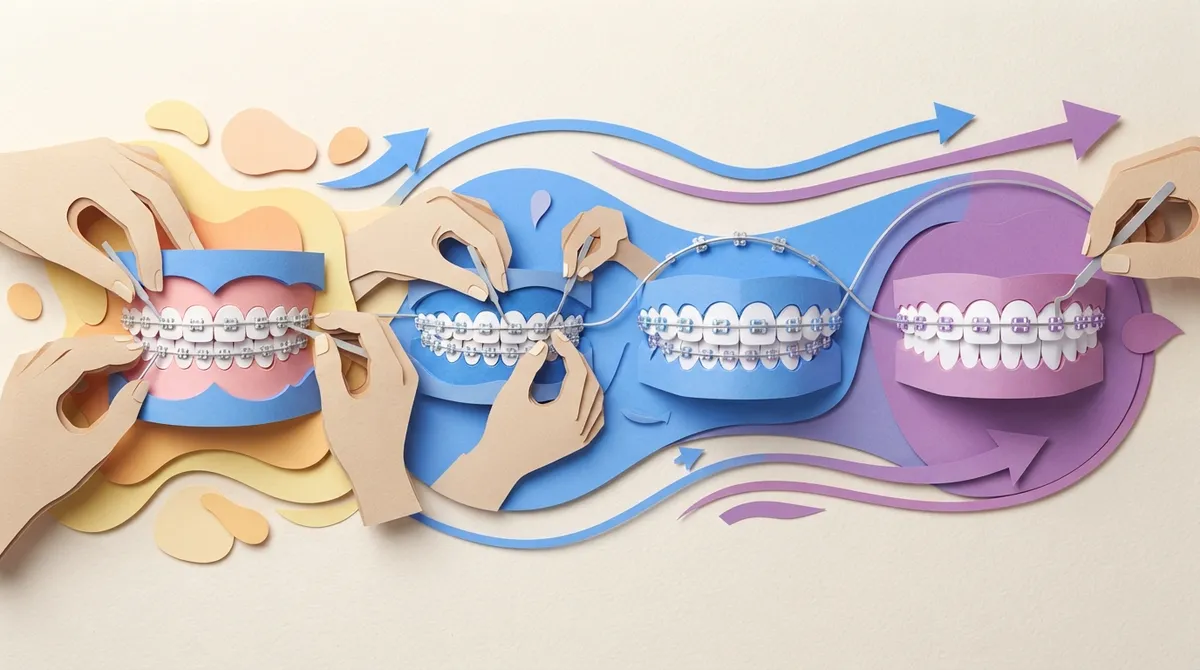
Traditional metal braces usually take 18 to 36 months. The average is around two years. Younger patients with growing jaws may move a little faster, while adults often need a bit more time.
The braces timeline looks a little different:
- Placement day: Brackets are glued to each tooth, and a wire is threaded through them.
- Adjustment visits: You see your orthodontist every 4 to 8 weeks for tightening and wire changes.
- Final removal: The brackets come off, and you get a retainer.
One big difference is that braces are fixed in place. That means the pressure is working on your teeth 24 hours a day, whether you remember to wear them or not. That can be a plus for people who struggle with consistency. We’ll talk more about that in a moment.
Invisalign vs. Braces: Side-by-Side Timeline Comparison
Let’s put the two options head to head so you can see how they stack up.
| Factor | Invisalign | Traditional Braces |
|---|---|---|
| Average treatment time | 12-18 months | 18-36 months |
| Mild cases | 6-9 months | 12-18 months |
| Complex cases | 18-24+ months | 24-36+ months |
| Office visits | Every 6-8 weeks | Every 4-8 weeks |
| Daily wear needed | 20-22 hours | Always on |
| Removable? | Yes | No |
| Eating restrictions | None (remove to eat) | Yes (sticky, hard foods) |
| Appearance | Nearly invisible | Visible metal |
As you can see, the Invisalign timeline is often shorter for mild to moderate cases. Braces tend to hold an edge for very complex movements, though modern aligners keep getting better at those, too.
What Affects Your Invisalign Timeline?
Two people can start on the same day and finish months apart. Here’s why.
How Complex Your Case Is
Small gaps and slight crowding move faster than major bite corrections. Rotated teeth and big spacing changes simply take more time.
How Well You Wear Your Aligners
This is the big one! Invisalign works best when you wear your trays 20 to 22 hours a day. If they spend too much time in the case, your teeth fall behind, and your timeline stretches out.
Your Age
Teens often move quickly because their bones are still developing. Adults can absolutely get great results, but bone is a little denser, so movement can be slower.
Your Habits
Skipping a tray change or forgetting to wear aligners on busy days can add weeks. On the flip side, staying consistent keeps you on schedule.
Not sure if clear aligners are right for you? Our post on conditions that may disqualify you from Invisalign can help you sort that out.
Can Invisalign Really Be Faster Than Braces?
For many patients, yes! Here is why clear aligners can sometimes win the race.
- Planned movements: Your whole treatment is mapped out in 3D before you start, so there’s less guesswork.
- Steady, gentle pressure: Each tray moves teeth in small steps, which keeps progress smooth.
- Fewer emergency visits: No broken brackets or poking wires means fewer surprise delays.
That said, braces may still be the better pick for certain severe cases. The best way to know is to have an expert look at your teeth. Dr. K is a Gold+ Invisalign provider, which means he has extensive experience with all kinds of cases. You can view Dr. K’s Gold+ Invisalign profile to learn more.
Lifestyle Differences That Shape the Journey
The timeline isn’t just about months on a calendar. It’s about how treatment fits into your daily life.
Eating and Drinking
With Invisalign, you pop your aligners out to eat. That means pizza, popcorn, and crunchy apples are all back on the menu! Braces ask you to skip sticky candy, hard nuts, and chewy snacks. If you want to know how to keep your trays in great shape, read what not to do while wearing Invisalign.
Cleaning and Comfort
Aligners come out, so brushing and flossing stay simple. Braces trap food around brackets and wires, so cleaning takes more patience. Many patients also find aligners gentler on their cheeks and lips. You can read more in our post, is Invisalign painful?
Looks and Confidence
Clear aligners are nearly invisible. Adults who don’t want a mouth full of metal in work meetings often love this option. Teens enjoy it for photos, sports, and social events.
Which Option Is Right for You?
Here’s a quick way to think about it. Invisalign might be your best match if:
- You want a discreet treatment
- You can commit to wearing trays most of the day
- You have mild to moderate crowding or spacing
- You want to enjoy all your favorite foods
Braces might be a smarter choice if:
- You have a very complex bite problem
- You’d rather not manage removable trays
- You want constant, always-on treatment
Curious how clear aligners compare in more detail? Take a look at the top benefits of choosing Invisalign over braces, or explore our overview of Invisalign at Dental Theory.
What Happens After Your Timeline Ends?
Finishing your last aligner is a big moment, but it’s not the finish line just yet. Your teeth naturally want to drift back toward their old spots. That’s why retainers matter so much, whether you chose braces or Invisalign.
Most people wear their retainers full-time for a few months, then switch to nighttime wear. Wondering how long you’ll need them? Our guide on whether you need to wear a retainer forever after Invisalign breaks it down in plain language.
Tips to Keep Your Invisalign Timeline on Track
Want to finish on time, or even a little early? These simple habits make a big difference.
- Wear your aligners 20-22 hours a day. Set phone reminders if you need them.
- Change trays on schedule. Mark your calendar so you never lose track.
- Brush before putting trays back in. This keeps your teeth and aligners clean.
- Keep your appointments. Regular check-ins catch small problems early.
- Store aligners in their case. Wrapping them in a napkin is how many trays end up in the trash!
- Ask questions. If something feels off, tell your dentist right away.
Costs and Insurance Considerations
Timeline and budget often go hand in hand. A shorter treatment may mean fewer visits, which can help your wallet. Many dental plans offer orthodontic benefits that apply to both options. You can learn what your plan may cover by reviewing our insurance information, and our team is happy to walk you through the details.
Ready to Start Your Smile Journey?
Whether you choose clear aligners or traditional braces, the best treatment is the one you can stick with and feel good about. For many patients, the Invisalign timeline offers a comfortable, flexible, and often faster path to a straighter smile.
At Dental Theory, we love helping Brandon families and adults find the option that fits their goals. Want to hear from other patients first? You can visit us on Google — Dental Theory to read real reviews, or visit us on Facebook to see what’s happening around the practice.
Dr. K has also earned national recognition, and you can read how Dr. Chris Karapasha has been named one of America’s Top Young Dentists in Incisal Edge magazine’s 2025 40 Under 40.
Ready to see how long your own timeline might be? Contact Dental Theory today to book your consultation, or schedule an appointment online. Your best smile is closer than you think!
FAQs
Q: How long does the average Invisalign timeline last?
A: Most patients finish Invisalign in about 12 to 18 months. Mild cases can wrap up in 6 to 9 months, while more complex cases may take up to 24 months. Your dentist can give you a personalized estimate after your digital scan!
Q: Is Invisalign faster than traditional braces?
A: For many mild to moderate cases, yes. Invisalign often finishes sooner than braces, which average around two years. Very complex bite problems may still move faster with braces, so a quick exam will help you know for sure.
Q: What can slow down my Invisalign treatment?
A: The biggest slowdown is not wearing your aligners enough. Aim for 20 to 22 hours a day. Skipping tray changes or missing appointments can also add time to your journey.
Q: Do I still need a retainer after my Invisalign timeline ends?
A: Absolutely! Teeth like to drift back to their old positions, so retainers are key to protecting your results. Most people wear them full-time at first, then switch to nighttime wear.
Q: How often will I visit the dentist during Invisalign?
A: Most patients have check-ins every 6 to 8 weeks. These quick visits make sure your teeth are moving as planned, so you stay on track toward your finish date.
Our Service Area