
Key Takeaways
- A dental crown becomes necessary when more than 50% of the tooth’s width is compromised, as fillings cannot provide adequate protection and strength.
- After a root canal, a crown is crucial to protect the now-brittle tooth and prevent potential fracture, significantly improving long-term tooth survival.
- Crowns are essential for stabilizing cracked or fractured teeth, preventing further damage and potential tooth loss by distributing bite forces evenly.
- Large existing fillings that are failing require crowns to provide comprehensive tooth protection and prevent repeated cycle of increasingly larger fillings.
- Dental crowns serve both functional and cosmetic purposes, restoring tooth structure while improving appearance and addressing issues like severe discoloration or misshapen teeth.
When you’re sitting in the dentist’s chair and hear that you need dental work, the first question that often comes to mind is: “Do I really need a crown, or will a filling be enough?” It’s a common concern, and honestly, it’s a great question to ask! Understanding when dental crowns are necessary can help you make informed decisions about your oral health and avoid more serious problems down the road.
At Dental Theory in Brandon, FL, we believe in transparent communication about treatment options. A dental crown isn’t always the first choice, but when your tooth has sustained significant damage, it becomes the best long-term solution for protecting what’s left of your natural tooth structure. Let’s explore exactly when crowns become necessary and why they’re often the smarter investment for your smile.
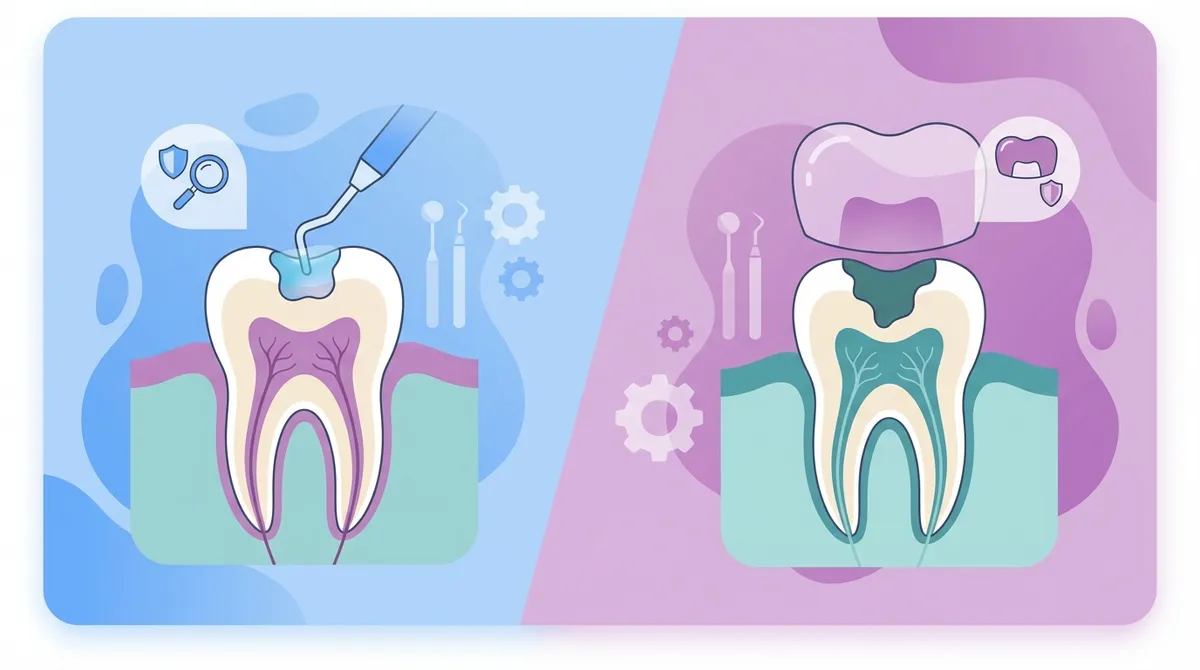
Think of a dental crown as a protective helmet for your tooth. While fillings work wonderfully for small to moderate cavities, there comes a point where a tooth needs more comprehensive protection. This typically happens when more than 50% of the tooth’s width is compromised by decay or damage. At that stage, a filling simply can’t provide the strength and stability your tooth needs to withstand daily chewing forces.
Understanding the Difference Between Crowns and Fillings
Before we dive into when crowns are necessary, let’s clarify what makes them different from fillings. A filling is like patching a hole in a wall—it fills the space where decay was removed. A crown, on the other hand, is like rebuilding the entire outer structure of the tooth, covering it completely from the gum line up.
Fillings work best when:
- The cavity is small to moderate in size
- The tooth walls remain strong and intact
- Less than half of the tooth structure is affected
- The tooth hasn’t undergone root canal therapy
Crowns become necessary when the tooth needs complete protection and reinforcement. The crown provides a 360-degree protective collar—what dentists call the “ferrule effect”—that distributes bite forces evenly around the entire tooth. This is something a filling simply cannot achieve, no matter how well it’s placed.
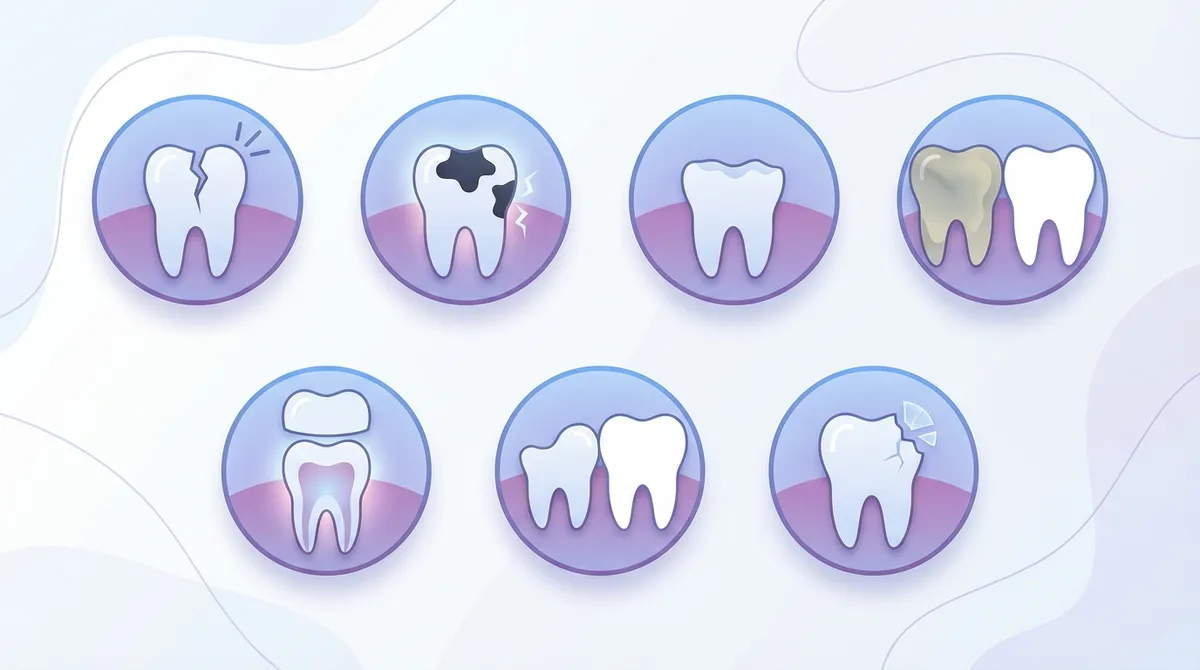
Seven Clear Signs You Need a Dental Crown
1. Severe Tooth Decay Affecting More Than Half the Tooth
When decay has eaten away a significant portion of your tooth, removing the decayed material leaves behind thin, weakened walls. These walls become flexible under pressure and are prone to fracturing when you bite down. Research shows that when more than 50% of the tooth width is compromised, crowns provide better long-term outcomes than large fillings.
Large fillings actually increase fracture risk because they don’t provide the surrounding support that teeth need. The remaining tooth structure becomes brittle and can crack under normal chewing forces, potentially leading to tooth loss.
2. After Root Canal Treatment
If you’ve had a root canal, your dentist will almost certainly recommend a crown afterward—and for good reason. During root canal therapy, the nerve and blood supply to the tooth are removed. Without this internal nourishment, the tooth becomes more brittle and prone to fracture over time.
Think of it like a tree that’s been cut down. The wood is still there, but without water and nutrients flowing through it, it becomes dry and breakable. A crown protects this weakened tooth structure and can extend the life of your tooth for many years. Studies show that teeth treated with root canals and covered with crowns have significantly better survival rates than those left unprotected.
3. Cracked or Fractured Teeth
Teeth can crack for various reasons—biting down on something hard, trauma from an accident, or even from years of grinding your teeth at night. When you have a cracked tooth, a crown acts like a band that holds everything together, preventing the crack from spreading deeper.
Without a crown, a cracked tooth will likely continue to fracture, potentially splitting vertically down to the root. At that point, the tooth may not be salvageable. A crown distributes bite forces evenly across the entire tooth surface, stabilizing the crack and protecting against further damage.
4. Severely Worn-Down Teeth
Do you grind your teeth at night? Or perhaps you’ve consumed acidic foods and beverages over many years? Both bruxism (teeth grinding) and acid erosion can wear down your tooth enamel significantly. When teeth become noticeably shorter or flattened, crowns can restore their proper shape and height.
Worn teeth don’t just look unappealing—they can affect your bite alignment and even cause jaw pain. Crowns rebuild the tooth structure to its original dimensions, improving both function and appearance. This is one area where Dr. K particularly excels, combining restorative and cosmetic dentistry techniques for optimal results.
5. Large Existing Fillings That Are Failing
Even the best fillings don’t last forever. Over time, fillings can develop tiny gaps at the margins where bacteria sneak in, causing recurrent decay. If you already have a large filling that’s failing, replacing it with another filling isn’t the best solution—the tooth needs more comprehensive protection.
When an existing filling takes up more than half the tooth, replacing it with a crown provides the structural integrity the tooth needs. This prevents the repeated cycle of larger and larger fillings until there’s nothing left to save.
6. Cosmetic Concerns With Discolored or Misshapen Teeth
While crowns are primarily functional, they also serve cosmetic purposes. Teeth that are severely discolored (especially if whitening treatments won’t work), oddly shaped, or poorly aligned can be transformed with crowns. Porcelain crowns can be color-matched to your natural teeth, creating a seamless, beautiful smile.
For cosmetic improvements, crowns offer a more dramatic transformation than bonding or veneers, especially when the tooth also has structural issues. It’s a two-for-one solution: restoring strength while creating aesthetic appeal.
7. As Anchors for Dental Bridges
If you’re missing a tooth and considering a dental bridge, the teeth on either side of the gap need crowns to support the bridge. These anchor teeth bear additional force from the replacement tooth, so they need the extra strength that crowns provide.
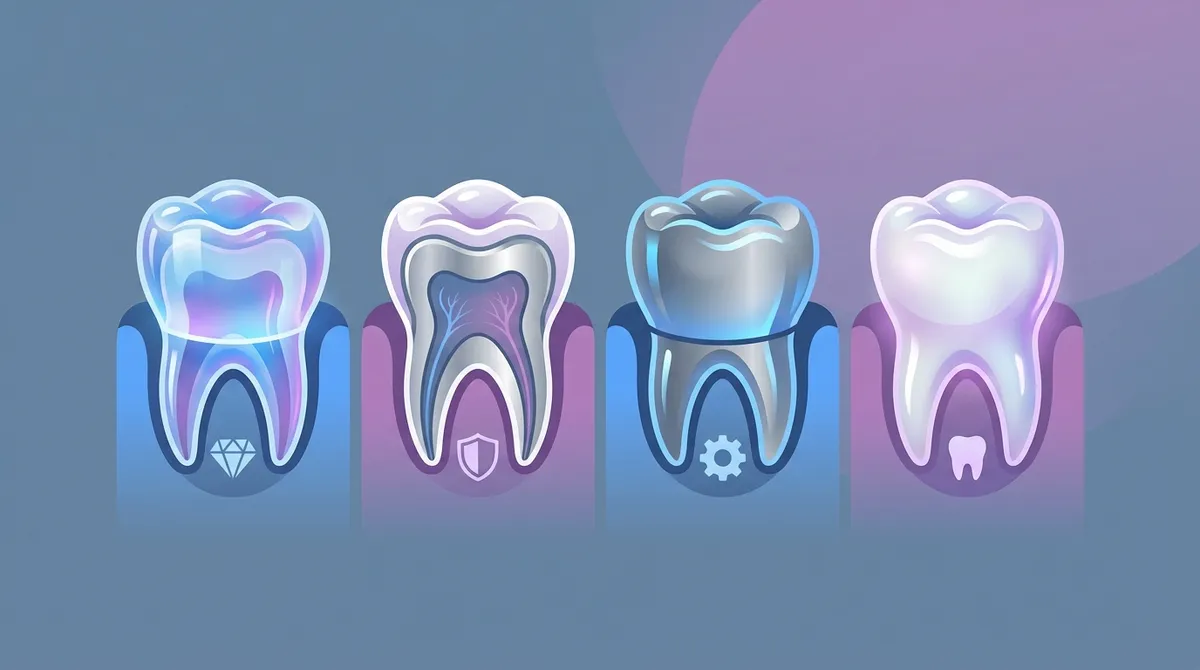
Types of Dental Crowns: Choosing the Right Material
Not all crowns are created equal. The material your dentist recommends depends on several factors, including the tooth’s location, your bite force, aesthetic concerns, and budget considerations.
| Crown Type | Material | Best For | Pros | Cons |
|---|---|---|---|---|
| Porcelain/Ceramic | All-ceramic | Front teeth | Most natural appearance, biocompatible | Less strong than metal options |
| Porcelain-Fused-to-Metal | Metal with porcelain coating | Back teeth | Strong and aesthetic | Metal may show at gum line |
| Gold Alloy | Gold mixed with other metals | Back molars | Extremely durable, gentle on opposing teeth | Highly visible |
| Zirconia | Crystalline oxide | Any tooth | Very strong, aesthetic, biocompatible | More expensive |
At Dental Theory, we also offer same-day crowns using advanced CEREC technology. This means you can get a custom-designed, milled, and placed crown in just one appointment—no temporary crown, no second visit needed!
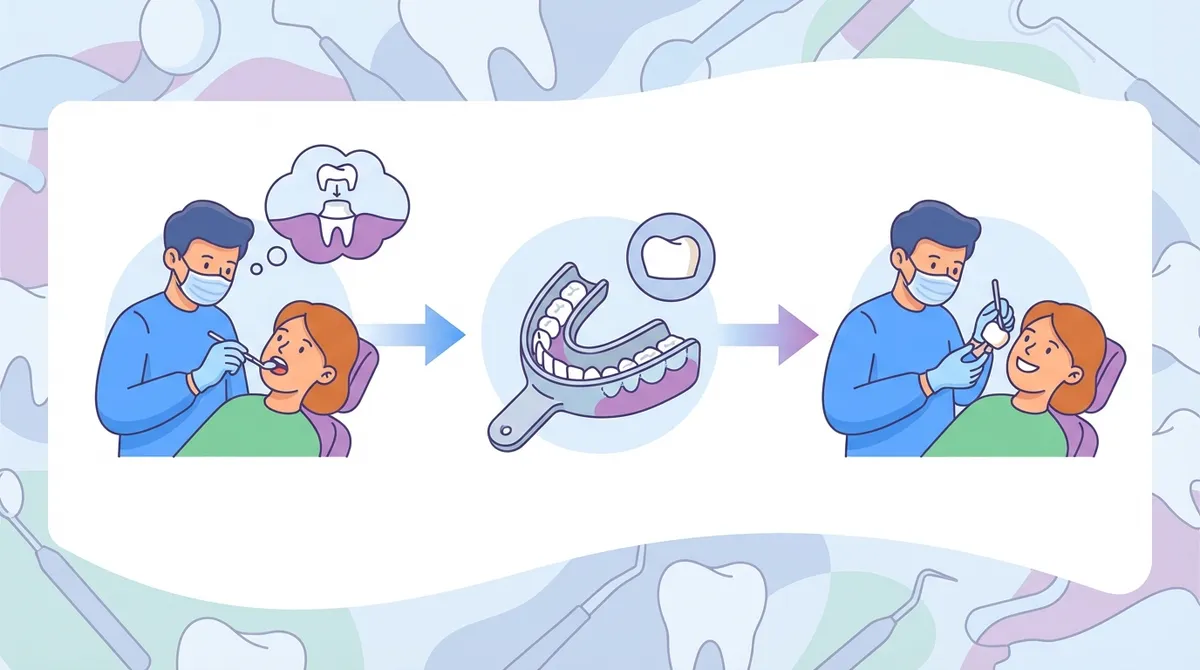
The Crown Placement Process: What to Expect
Understanding the process can ease any anxiety about getting a crown. Here’s what typically happens:
- Initial Examination and X-rays: Your dentist examines the tooth and takes X-rays to assess the extent of damage and check the root and surrounding bone.
- Tooth Preparation: The tooth is shaped to accommodate the crown. Any decay is removed, and if necessary, the tooth is built up with filling material to provide a stable foundation.
- Impression or Digital Scan: A mold or digital scan of your teeth is taken to create a crown that fits perfectly.
- Temporary Crown (Traditional Method): If using a dental lab, you’ll wear a temporary crown for 2-3 weeks while your permanent crown is fabricated.
- Crown Placement: The permanent crown is checked for fit and color, then cemented into place.
- Final Adjustments: Your dentist ensures your bite feels comfortable and makes any necessary adjustments.
With same-day crowns, steps 3-5 happen in one appointment using in-office milling technology. It’s a game-changer for busy families and patients who prefer fewer dental visits.
Crown vs. Large Filling: A Direct Comparison
Still wondering whether a crown is really necessary, or if a filling would suffice? Let’s break down the key differences:
| Factor | Large Filling | Dental Crown |
|---|---|---|
| Coverage | Fills cavity only | Covers entire tooth |
| Strength | Limited; tooth walls can flex | Maximum; distributes forces evenly |
| Longevity | 5-10 years average | 10-15+ years with proper care |
| Cost | Lower initial cost | Higher initial cost, better long-term value |
| Protection | Protects filled area only | Protects entire tooth structure |
| Fracture Risk | Higher with large fillings | Significantly reduced |
When more than 50% of your tooth structure is compromised, a crown isn’t just a recommendation—it’s an investment in preventing future problems. While the upfront cost is higher, crowns typically save you money in the long run by preventing tooth fractures that could require extraction and replacement.
How Long Do Dental Crowns Last?
With proper care, dental crowns typically last 10-15 years, though many patients enjoy their crowns for 20 years or more. The lifespan depends on several factors:
- Material quality (zirconia and gold tend to last longest)
- Location in the mouth (back teeth endure more force)
- Oral hygiene habits
- Whether you grind your teeth
- Regular dental check-ups
To maximize your crown’s lifespan, maintain excellent oral hygiene by brushing twice daily, flossing around the crown, and visiting Dental Theory for regular check-ups and cleanings. If you grind your teeth, wearing a nightguard can prevent premature wear on your crown and natural teeth.
When Should an Existing Crown Be Replaced?
Even well-made crowns eventually need replacement. Signs that it’s time for a new crown include:
- Recurrent Decay: Decay develops at the crown margin where it meets your natural tooth
- Crown Fracture: The crown cracks or breaks, especially common with older porcelain crowns
- Poor Fit: The crown becomes loose or you can feel a gap developing
- Gum Recession: The crown margins become visible and unaesthetic
- Persistent Sensitivity: Ongoing pain or sensitivity that doesn’t resolve
During your regular dental visits, your dentist will check your crowns for these issues. Catching problems early prevents more extensive damage to the underlying tooth.
Cost Considerations and Insurance Coverage
Let’s talk about the elephant in the room: cost. Dental crowns are more expensive than fillings, typically ranging from $800 to $2,500 per crown depending on the material and complexity. However, it’s important to view this in terms of long-term value rather than just upfront cost.
Most dental insurance plans cover a portion of crown costs when deemed medically necessary—usually 50% after your deductible. At Dental Theory, we work with most major insurance providers and can help you maximize your benefits.
For patients without insurance or who want to make treatment more affordable, we offer an in-house membership plan that includes preventive care and discounts on restorative treatments. We also provide flexible payment plans to help make necessary dental care accessible.
Alternatives to Dental Crowns
In some situations, alternatives to crowns might be appropriate:
Onlays or Inlays: These are partial crowns that cover only the damaged portion of the tooth. They’re a middle ground between fillings and full crowns, preserving more natural tooth structure while providing better protection than a filling.
Dental Veneers: For purely cosmetic concerns on front teeth with minimal structural damage, veneers might be sufficient. However, they don’t provide the same strength as crowns.
Tooth Extraction and Replacement: In cases where the tooth is too damaged to save, extraction followed by a dental implant or bridge might be necessary.
Your dentist will discuss all appropriate options with you. At Dental Theory, we believe in conservative dentistry—preserving as much natural tooth structure as possible while ensuring long-term health and function.
Special Considerations for Children
When it comes to pediatric patients, crowns serve a slightly different purpose. Baby teeth sometimes need crowns when decay is extensive, but these teeth will eventually fall out naturally. Dr. Pri, our board-certified pediatric dentist, uses stainless steel crowns for baby teeth, which are durable, cost-effective, and maintain the space needed for permanent teeth to come in properly.
For anxious children or those requiring extensive treatment, Dr. Pri offers sedation dentistry options to ensure a comfortable, stress-free experience. She’s the only board-certified pediatric dentist offering in-office sedation in Brandon, Florida, making her uniquely qualified to provide gentle, compassionate care for children who need crowns or other dental work.
Caring for Your Dental Crown
Once you have a crown, proper care ensures it lasts as long as possible. Good news: caring for a crown is just like caring for your natural teeth!
- Brush twice daily with fluoride toothpaste
- Floss daily, paying special attention to the area where the crown meets your gum
- Avoid chewing ice, hard candy, or other extremely hard objects
- Wear a nightguard if you grind your teeth
- Visit your dentist every six months for check-ups and professional cleanings
- Address any sensitivity or discomfort promptly
Some patients worry about special maintenance requirements, but crowns integrate seamlessly into your oral care routine. The key is consistency—maintaining excellent oral hygiene protects both your crown and the natural tooth underneath.
Why Choose Dental Theory for Your Crown
At Dental Theory, we combine advanced technology with personalized, compassionate care. Dr. K brings extensive experience in restorative and cosmetic dentistry, with specialized training in creating beautiful, functional crowns that blend seamlessly with your smile. His 5-star rating on Healthgrades.com reflects his commitment to exceptional patient care.
Our same-day crown technology means less time in the dental chair and faster results. We understand that your time is valuable, and we’re committed to providing efficient, high-quality care that fits your busy schedule. Our friendly team creates a welcoming, stress-free environment where you feel comfortable asking questions and making informed decisions about your oral health.
Making the Right Decision for Your Smile
Deciding whether you need a dental crown ultimately comes down to protecting your long-term oral health. While no one loves hearing they need extensive dental work, crowns are one of the most successful, time-tested restorations in dentistry. When your tooth has sustained significant damage—whether from decay, fracture, or wear—a crown provides the comprehensive protection needed to save your natural tooth and prevent more serious problems down the road.
The key is not to delay treatment. A tooth that needs a crown today might need extraction tomorrow if left untreated. Early intervention almost always leads to better outcomes and lower overall costs. If you’re experiencing tooth sensitivity, notice a crack, or have been told you need a crown, don’t put it off.
Your smile is worth protecting, and at Dental Theory, we’re here to help you maintain optimal oral health for years to come. We believe in educating our patients, presenting all available options, and working together to create treatment plans that fit your needs and budget. Whether you need general dentistry, cosmetic improvements, or restorative care, our team provides comprehensive solutions in a comfortable, family-friendly environment.
If you’re wondering whether a dental crown is right for you, we invite you to schedule an appointment with our experienced team. We’ll thoroughly examine your tooth, discuss all treatment options, and help you make the best decision for your oral health. Your journey to a healthier, more confident smile starts here at Dental Theory—where exceptional dental care meets genuine compassion.
FAQs
Q: How do I know if I need a dental crown or if a filling will work?
A: The general rule is that when more than 50% of your tooth’s width is damaged by decay, fracture, or wear, a crown provides better long-term protection than a filling. Your dentist will evaluate the extent of damage and recommend the option that gives your tooth the best chance of lasting for years to come. Crowns are also necessary after root canal treatment, for cracked teeth, and when large existing fillings are failing.
Q: Are dental crowns painful to get?
A: Getting a dental crown shouldn’t be painful! Your dentist will numb the area with local anesthesia before preparing the tooth, so you shouldn’t feel any discomfort during the procedure. Some patients experience mild sensitivity for a few days after the anesthesia wears off, but this typically resolves quickly. If you experience significant pain, it’s important to contact your dentist right away.
Q: How long does it take to get a dental crown?
A: Traditional crowns typically require two appointments spread over 2-3 weeks—one for tooth preparation and impression, and another for permanent crown placement. However, with same-day crown technology like CEREC, you can get a custom crown designed, milled, and placed in just one appointment, usually taking about 2-3 hours total. This eliminates the need for temporary crowns and multiple visits.
Q: Will my dental insurance cover the cost of a crown?
A: Most dental insurance plans cover 50% of crown costs when the procedure is deemed medically necessary (not purely cosmetic). Coverage depends on your specific plan, deductible, and annual maximum benefits. At Dental Theory, we work with most major insurance providers and can help you understand your benefits and maximize your coverage before beginning treatment.
Q: Can a tooth with a crown still get cavities?
A: While the crown itself can’t decay, the natural tooth structure underneath and around the crown margins can still develop cavities if proper oral hygiene isn’t maintained. This is why it’s crucial to brush and floss daily, paying special attention to where the crown meets your gum line. Regular dental check-ups help catch any issues early before they compromise your crown or the tooth beneath it.