
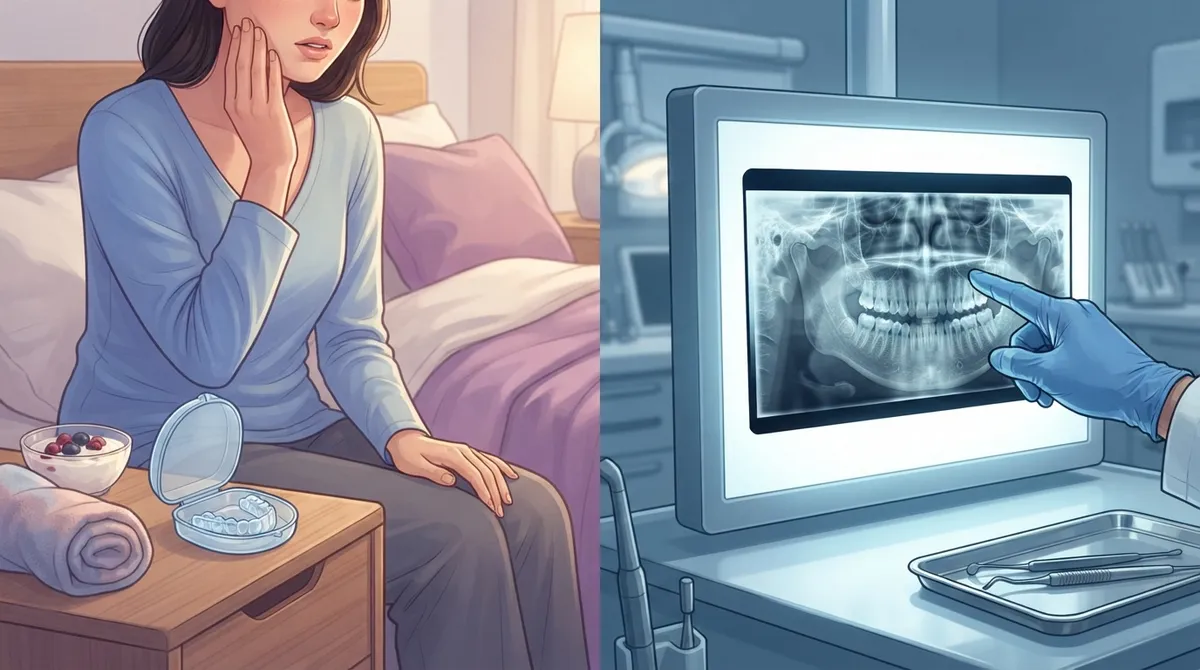
Key Takeaways
-
Pain lasting more than a few weeks, loud clicking/popping sounds, or trouble opening your mouth fully are strong indicators that imaging is needed to diagnose TMJ disorder.
-
Not all TMJ cases require imaging; many mild cases improve with home care like soft foods, warm compresses, and night guards before any scans are ordered.
-
Digital X-rays are typically the first imaging choice for TMJ evaluation, but CT scans or MRI may be recommended depending on whether bone damage or disc problems are suspected.
-
Jaw pain after trauma, changes in bite alignment, or pain spreading to ears and neck are specific signs that warrant imaging to rule out fractures or structural damage.
-
When conservative treatments like night guards and lifestyle changes fail after a reasonable trial period, imaging becomes the logical next step to identify underlying joint problems.
-
A thorough hands-on exam by your dentist—checking joint sounds, bite alignment, and range of motion—should always come before imaging to determine if scans are actually necessary.
Does your jaw click, pop, or ache every time you chew? You might have a TMJ disorder, and you’re probably wondering what happens next. One of the biggest questions our patients ask is simple: do you actually need imaging or X-rays for TMJ? The answer isn’t always yes, but it isn’t always no either. It depends on your symptoms, your history, and what your dentist finds during a hands-on exam.
At Dental Theory in Brandon, FL, we help patients sort through jaw pain and figure out what’s really going on. This guide breaks down when imaging makes sense, what kinds of X-rays or scans dentists use, and how you can tell if your jaw pain needs a closer look. We’ll walk through eight clear signs that point toward needing imaging, so you can feel confident about your next step.
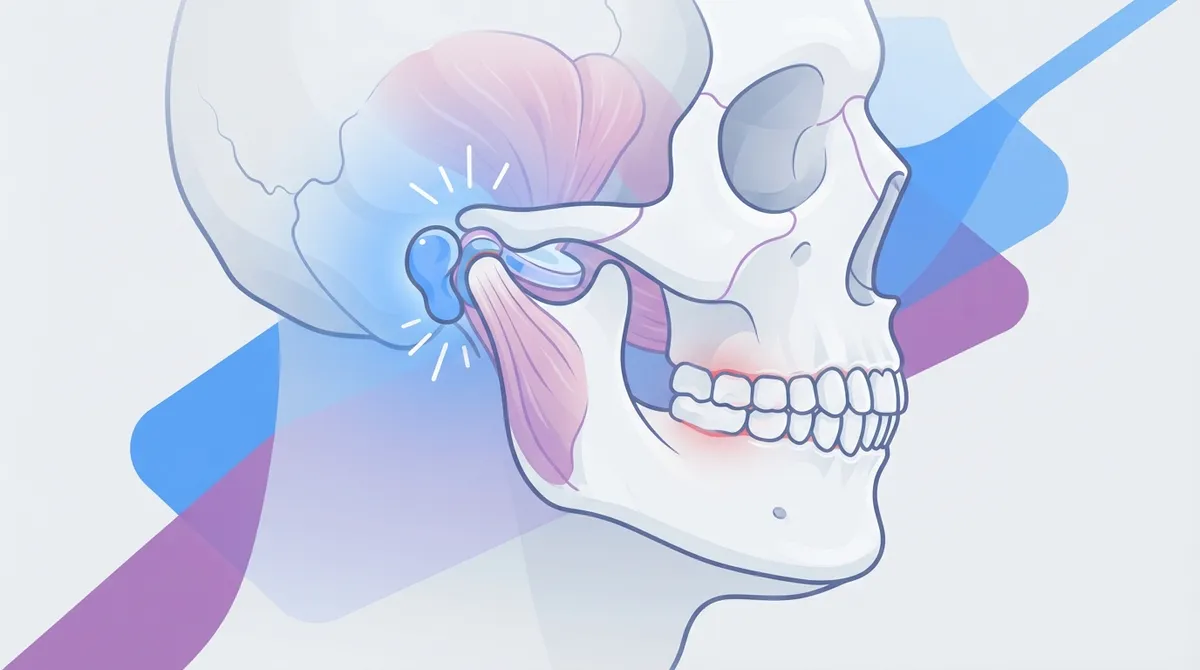
What Is TMJ and Why Does It Cause Pain?
TMJ stands for temporomandibular joint. It’s the hinge that connects your jawbone to your skull. You have one on each side of your face, right in front of your ears. When something goes wrong with this joint, dentists call it a TMJ disorder, or sometimes just “TMJ” for short.
This joint works every time you talk, chew, yawn, or even smile. When it’s healthy, you don’t even notice it. But when something is off, like a slipped disc, worn cartilage, or tight muscles, you can feel real pain. Some people also grind or clench their teeth, which adds even more stress to the joint. You can learn more about how TMJ and bruxism are connected and why they often show up together.
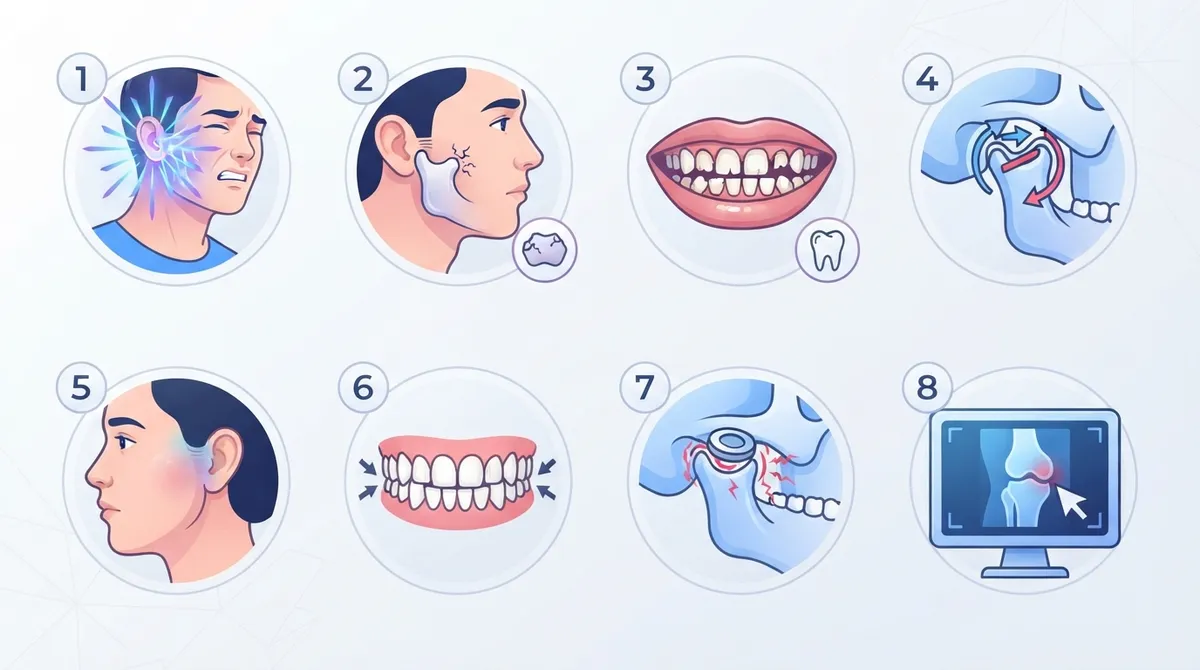
8 Signs You May Need Imaging or X-Rays for TMJ
Not every jaw ache needs a scan. But certain signs tell your dentist that a picture is worth a thousand words. Here are eight signs that usually point toward needing imaging.
1. Pain That Doesn’t Go Away After a Few Weeks
Mild jaw soreness can come and go. But if your pain sticks around for more than a few weeks, it’s time to look closer. Long-lasting pain is one of the top reasons dentists order X-rays or scans to check the joint itself.
2. Loud Clicking or Popping Sounds
A little clicking now and then isn’t always a big deal. But loud, frequent popping, especially paired with pain, can mean the disc inside your joint has shifted. Imaging helps your dentist see exactly what’s happening inside the joint.
3. Trouble Opening or Closing Your Mouth Fully
If your jaw locks, catches, or won’t open all the way, this is a strong sign something structural is going on. This is one of the clearer signs of TMJ disorder that usually calls for a closer look with imaging.
4. Jaw Pain After an Injury
Did you get hit in the face, fall, or have a car accident? Jaw pain after any kind of trauma almost always needs imaging. This helps rule out fractures or other damage that a simple exam can’t catch.
5. Pain That Spreads to Your Ears, Neck, or Head
TMJ pain doesn’t always stay in one spot. It can spread to your ears, temples, neck, and shoulders. If you’re dealing with headaches or ear pain along with jaw discomfort, imaging can help confirm whether TMJ is the cause. Wondering if teeth grinding can cause headaches or ear pain? The answer is often yes.
6. Treatments Haven’t Worked
Sometimes dentists start with simple fixes, like a night guard, warm compresses, or soft foods. If these steps don’t help after a reasonable trial period, imaging becomes the next logical step to find out what’s really going on.
7. Noticeable Changes in Your Bite
Has your bite started feeling different lately? Do your teeth not line up the way they used to? This can be linked to joint problems. Learn more about how a bad bite can lead to TMJ issues and why imaging often plays a role in diagnosis.
8. Your Dentist Suspects Arthritis or Joint Damage
If your dentist feels grinding, hears extra sounds, or suspects wear and tear inside the joint, imaging gives a clear view of the bone and cartilage. This helps confirm or rule out arthritis and other joint issues.
Types of Imaging Used for TMJ Diagnosis
Not all imaging is the same. Dentists choose different tools depending on what they need to see. Here’s a simple breakdown of the most common options.
| Imaging Type | What It Shows | When It’s Used |
|---|---|---|
| Panoramic X-ray | Full view of jaw, teeth, and joint position | First-step imaging for most TMJ cases |
| Digital X-rays | Detailed bone structure images | Checking for bone changes or wear |
| CT Scan (Cone Beam) | 3D view of bone and joint structure | Complex cases or suspected bone damage |
| MRI | Soft tissue, disc position, cartilage | When disc problems are suspected |
Many dental offices, including ours, use digital X-rays as a starting point. These give clear, quick images with lower radiation than older X-ray machines. If more detail is needed, your dentist may refer you for a CT scan or MRI.
What Happens During a TMJ Evaluation?
Before jumping to imaging, your dentist will do a full check of your jaw and bite. Here’s what a typical TMJ evaluation looks like, step by step.
- Your dentist asks about your symptoms, how long they’ve lasted, and what makes them worse.
- They gently feel your jaw joint while you open and close your mouth.
- They listen for clicking, popping, or grinding sounds.
- They check how far you can open your mouth and if it moves evenly.
- They look at your bite and how your teeth fit together.
- They may check your neck and shoulder muscles for tightness.
- Based on findings, they decide if imaging is needed.
- If imaging is ordered, they explain what type and why.
This step-by-step approach means you won’t get X-rays just because you mentioned jaw pain. Imaging is used when it will actually help guide treatment.
Do All TMJ Cases Need Imaging?
No, not every case needs a scan. Many mild TMJ issues get better with simple home care and small lifestyle changes. Your dentist may suggest these first before ordering any imaging.
- Eating softer foods for a few weeks
- Using warm compresses on the jaw
- Avoiding gum chewing and nail biting
- Practicing gentle jaw stretches
- Wearing a night guard if you grind your teeth
- Managing stress, which often makes jaw clenching worse
If these steps help, imaging may never be needed. But if pain continues or gets worse, your dentist will likely recommend a closer look. This is part of good TMJ rehabilitation planning, where imaging supports a full treatment plan rather than replacing good clinical judgment.
Why Choose Dental Theory for TMJ Concerns in Brandon, FL
Jaw pain can be confusing and frustrating. You want answers, not more guesswork. Our team at Dental Theory takes time to listen to your symptoms and figure out what’s really causing your discomfort. We use modern digital imaging tools to get clear, accurate pictures when needed, without ordering tests you don’t actually need.
Dr. Chris Karapasha, known to patients as Dr. K, has years of experience helping adults with jaw and bite issues as part of his focus on general dentistry. In fact, Dr. Chris Karapasha has been named one of America’s Top Young Dentists in Incisal Edge magazine’s 2025 40 Under 40, a recognition that reflects his commitment to quality patient care. If you want to see what real patients say about their visits, you can visit us on Facebook or check out Visit us on Google — Dental Theory to read reviews from our Brandon community.
Common Questions Patients Ask Before Getting TMJ Imaging
Many patients come in unsure of what to expect. Here are a few things worth knowing before your visit.
- Imaging is usually quick and painless, often taking just a few minutes.
- Digital X-rays use very low radiation, much less than older film X-rays.
- You may need more than one type of imaging depending on your symptoms.
- Results are often available the same day, so you get answers fast.
- Your dentist will explain what the images show in simple terms, not confusing medical jargon.
Steps to Take If You Think You Have TMJ
If you suspect you have a TMJ disorder, here’s a simple path forward.
- Pay attention to your symptoms and write down when they happen.
- Try simple home remedies like soft foods and warm compresses.
- Avoid clenching your jaw or chewing gum for a week or two.
- Book an appointment with your dentist if symptoms don’t improve.
- Get a full jaw evaluation, including a bite check and joint exam.
- Follow your dentist’s recommendation on whether imaging is needed.
- Start a treatment plan based on what the exam and imaging show.
Taking these steps early can prevent small jaw issues from turning into bigger problems down the road.
Ready to Get Answers About Your Jaw Pain?
Jaw pain doesn’t have to be a mystery. With the right exam and, when needed, the right imaging, you can finally understand what’s causing your discomfort and start feeling better. Our friendly team in Brandon is ready to help you figure out your next step, whether that means simple home care or a full imaging workup.
Don’t wait for jaw pain to get worse. Reach out today to contact Dental Theory and schedule your TMJ evaluation. You can also schedule an appointment online at a time that works for you. Our team is here to listen, guide you, and help you find real relief.
FAQs
Q: Do I always need X-rays if I have jaw pain?
A: Not always! Many mild cases of jaw pain get better with home care like soft foods and warm compresses. Your dentist will do a hands-on exam first and only recommend imaging if it’s truly needed to figure out what’s going on.
Q: What type of imaging is best for TMJ problems?
A: It really depends on your symptoms. A panoramic X-ray is often the first step, but if your dentist suspects disc or soft tissue issues, an MRI might be recommended. For bone problems, a CT scan gives the clearest 3D picture.
Q: Is TMJ imaging painful or uncomfortable?
A: Good news, it’s not painful at all! Most imaging, like digital X-rays, takes just a few minutes and feels similar to a regular dental X-ray. You’ll just need to hold still while the machine captures the images.
Q: How much radiation is involved in TMJ X-rays?
A: Digital X-rays use very low radiation levels, much lower than older film X-ray machines. Your dentist will always use the safest option that still gives clear, useful images of your jaw joint.
Q: Can imaging tell me if I need TMJ treatment?
A: Imaging helps your dentist see what’s happening inside your joint, but it works alongside your symptoms and exam findings. Together, this information helps create a treatment plan that actually fits your specific situation.
Our Service Area