Key Takeaways
-
Dental implants are permanent titanium posts that preserve jawbone and prevent bone shrinkage after tooth loss, unlike dentures which can lead to facial changes over time.
-
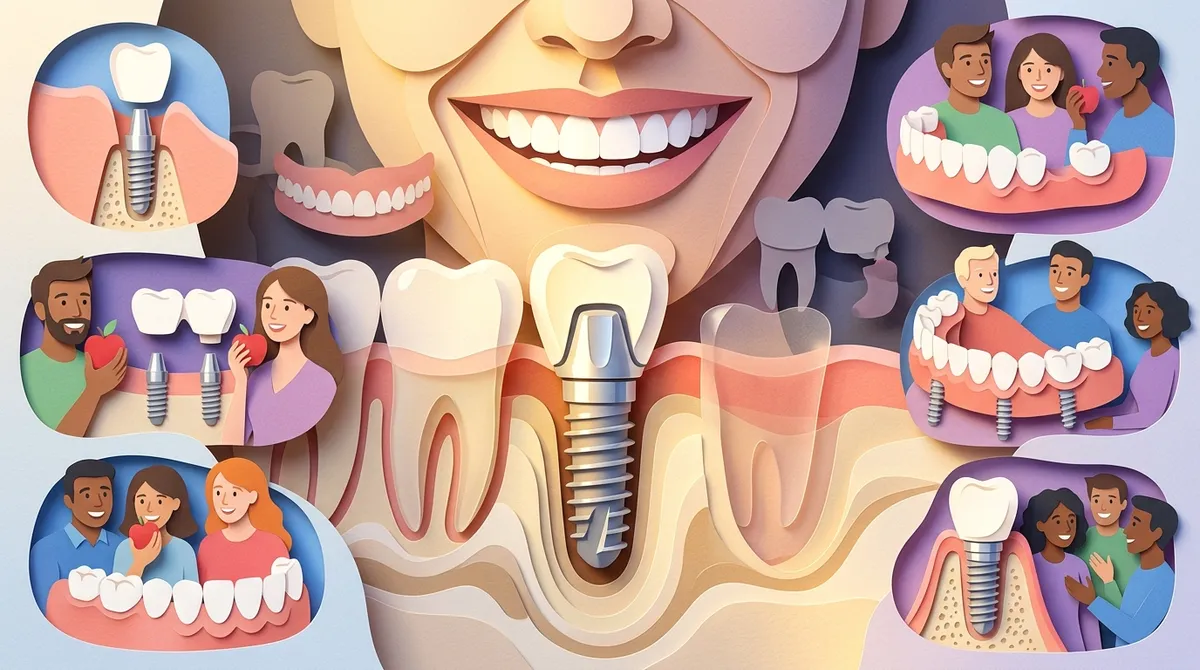
Five main implant types exist: single-tooth implants for one missing tooth, implant-supported bridges for 2-4 consecutive teeth, All-on-4 for full arch restoration with just four implants, implant-supported dentures for removable stability, and custom crowns/prosthetics for complex cases.
-
With proper care including regular brushing and flossing, dental implants can last decades or a lifetime, making them a durable long-term investment compared to other tooth replacement options.
-
Most healthy adults qualify for implants if they have adequate bone density, healthy gums, good overall health, and commit to oral hygiene; a consultation determines individual candidacy.
-
Implant costs range from $3,000-$5,000 for single teeth to $15,000-$30,000 for full-arch solutions, with many practices offering payment plans and partial insurance coverage depending on the plan.
-
Implants restore full chewing function and confidence, allowing normal eating, speaking, and smiling without the maintenance hassles of dentures or the risk of damage to neighboring healthy teeth.
Missing a tooth can feel like a big deal. It affects your smile, your confidence, and even how you eat. The good news? Dental implants are one of the best ways to restore your smile. They look natural, feel great, and last a very long time. In 2026, more adults than ever are choosing implants over other options — and for good reason.
If you live in Brandon, FL, and you’re curious about your options, this guide is for you. We’ll walk through the five main types of dental implants and the benefits that make them worth considering. Whether you’re missing one tooth or several, there’s likely an implant solution that fits your life. Let’s dive in!
What Are Dental Implants?
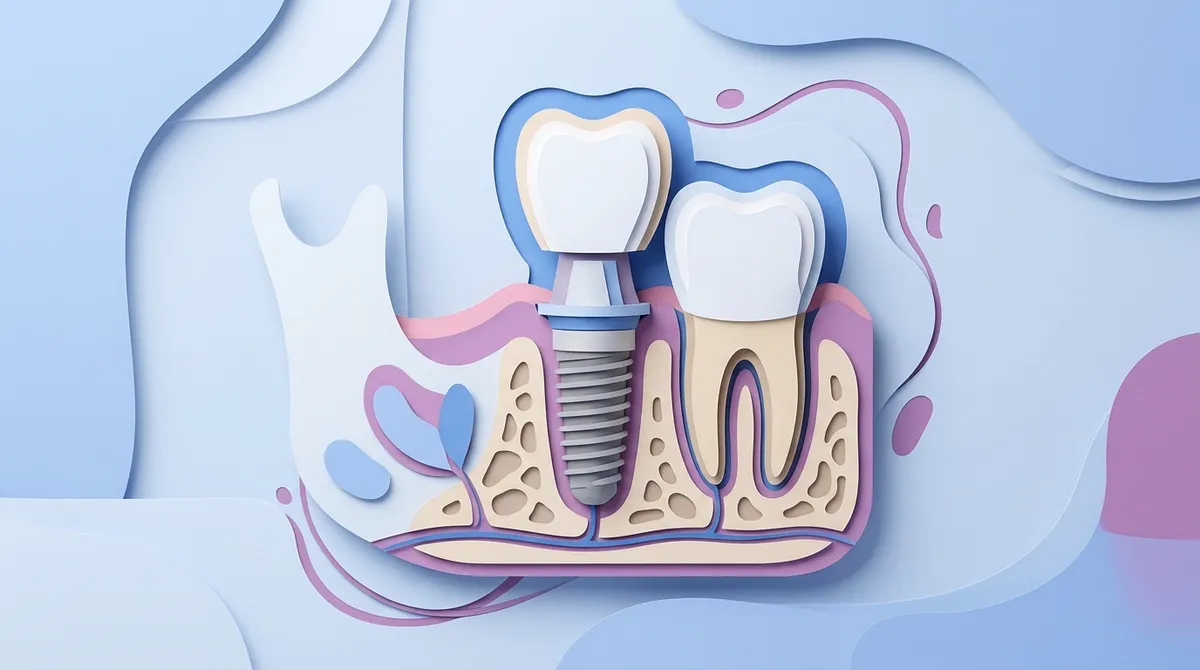
Dental implants are small titanium posts placed into your jawbone. They act like artificial tooth roots. Once the implant bonds with the bone, a crown or other restoration is attached on top. The result looks and feels just like a real tooth.
Unlike dentures, implants stay in place permanently. You don’t remove them at night or worry about slipping. They also help preserve your jawbone, which naturally shrinks when a tooth is lost. That’s a big deal for your long-term oral health. If you’re wondering whether implants are the right choice, you can learn more about dental implants vs. dentures to compare your options.
5 Types of Dental Implants Explained
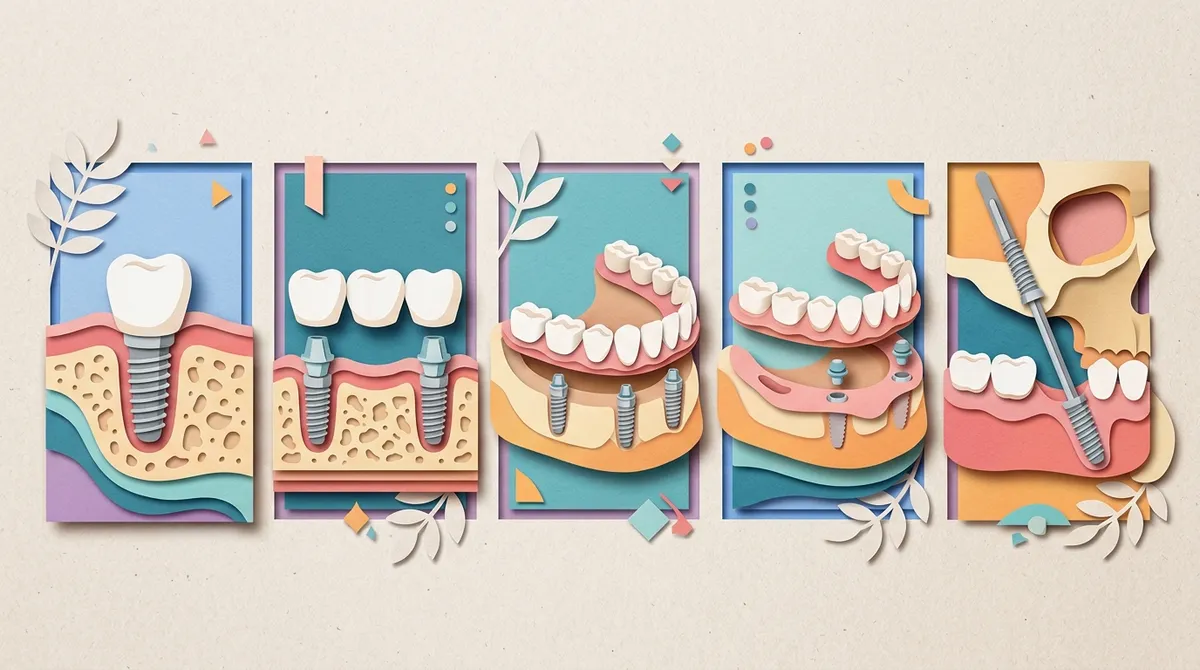
Not all implants are the same. Here are the five main types, what they are, and who they’re best for.
1. Single-Tooth Implants
This is the most common type. A single titanium post is placed where your missing tooth was. After healing, a custom crown is attached on top. It blends in perfectly with your surrounding teeth.
- Best for: People missing just one tooth
- Looks completely natural
- Does not affect neighboring teeth
- Easy to clean — just brush and floss like normal
- Can last a lifetime with proper care
Single-tooth implants are ideal for adults who want a permanent, low-maintenance solution. Learn more about how dental implants are permanent and what that means for your long-term smile.
2. Implant-Supported Bridges
Missing more than one tooth in a row? An implant-supported bridge might be the answer. Instead of using your natural teeth as anchors, two implants are placed on either side. A bridge with replacement teeth is then secured between them.
- Best for: Replacing 2–4 consecutive missing teeth
- More stable than traditional dental bridges
- Preserves jawbone in the missing tooth area
- Does not require crowns on healthy adjacent teeth
This option combines the strength of implants with the coverage of a bridge. It’s a smart middle-ground solution for multiple missing teeth. You can also explore what dental bridges are and how they work for smile restoration.
3. All-on-4 Implants
All-on-4 is a full-arch solution. Just four implants support an entire set of upper or lower teeth. This is a game-changer for people who have lost most or all of their teeth.
- Best for: Patients with significant tooth loss
- Only requires four implant posts per arch
- Often completed in fewer appointments
- Much more stable than traditional dentures
- Restores full chewing function
If you’re in the Brandon area and considering this option, All-on-4 implants in Brandon, FL offer a transformative solution for full smile restoration. It’s one of the most life-changing dental procedures available today.
4. Implant-Supported Dentures
Traditional dentures can slip and slide. Implant-supported dentures snap onto implant posts for a much more secure fit. You still remove them for cleaning, but they won’t move around during the day.
- Best for: Full or partial tooth loss
- More affordable than fixed implant options
- Removable for easy cleaning
- Provides better stability than traditional dentures
- Helps slow jawbone loss
This is a wonderful option for patients who want the security of implants with the convenience of removable dentures. Check out denture options available at Dental Theory to see if this fits your needs.
5. Implant-Supported Crowns and Prosthetics
This category covers specialized restorations. Think of full-mouth rehabilitation or unique prosthetic needs. These are custom-designed to fit your specific situation.
- Best for: Complex cases and full mouth restoration
- Fully customized to your bite and smile
- Combines multiple implant types as needed
- Ideal for patients with complex dental histories
For patients needing more advanced work, implant-supported crowns and prosthetics offer tailored solutions. These are designed with your unique smile in mind.
Quick Comparison: Which Implant Type Is Right for You?
| Implant Type | Best For | Number of Implants | Removable? |
|---|---|---|---|
| Single-Tooth Implant | One missing tooth | 1 | No |
| Implant-Supported Bridge | 2–4 consecutive missing teeth | 2 | No |
| All-on-4 Implants | Full arch tooth loss | 4 per arch | No |
| Implant-Supported Dentures | Full/partial tooth loss | 2–6 | Yes |
| Implant-Supported Crowns/Prosthetics | Complex/custom cases | Varies | Varies |
The Top Benefits of Dental Implants
Now that you know the types, let’s talk about why so many people choose implants. The benefits are truly impressive — and they go well beyond just looking good.
Benefit 1: They Look and Feel Like Real Teeth
Implants are designed to match the color and shape of your existing teeth. Nobody will know they’re not real. You’ll eat, speak, and smile with total confidence. That’s priceless!
Benefit 2: They Last a Very Long Time
With proper care, dental implants can last decades — even a lifetime. They’re one of the most durable tooth replacement options available. That makes them a smart long-term investment. Learn more about how long a dental implant lasts and what factors affect their lifespan.
Benefit 3: They Protect Your Jawbone
When you lose a tooth, the jawbone underneath begins to shrink. Implants stimulate the bone just like natural tooth roots do. This prevents bone loss and keeps your face looking fuller and younger.
Benefit 4: They’re Easy to Care For
No special cleaning solutions or adhesives needed. You brush and floss implants just like natural teeth. Your regular dental routine is all it takes to keep them in great shape.
Benefit 5: They Improve Your Quality of Life
Missing teeth can make it hard to eat your favorite foods. They can also change how you speak and make you feel self-conscious. Implants restore full function and give you back your confidence. That’s a true quality-of-life upgrade.
Key Benefits at a Glance
| Benefit | What It Means for You |
|---|---|
| Natural appearance | Matches your real teeth perfectly |
| Long lifespan | Can last decades with good care |
| Jawbone preservation | Prevents bone loss after tooth removal |
| Easy maintenance | Brush and floss as normal |
| Improved confidence | Smile, eat, and speak without worry |
Am I a Good Candidate for Dental Implants?
Most healthy adults are good candidates for dental implants. Here’s what your dentist will consider before recommending them.
- Healthy gums: Gum disease must be treated before implant placement.
- Adequate bone density: The jawbone needs to be thick enough to support the implant post.
- Good overall health: Certain medical conditions may slow healing.
- Non-smoker or willing to quit: Smoking can affect implant success rates.
- Commitment to oral hygiene: Regular brushing and checkups are essential.
If you’re not sure whether you qualify, the best step is to schedule a consultation. The team at Dental Theory in Brandon, FL, is ready to answer your questions and help you explore your options.
How Much Do Dental Implants Cost?
Cost is often a top concern for patients. Implant pricing depends on the number of implants needed, the type of restoration, and other individual factors. Here’s a general breakdown to give you a starting point.
| Implant Type | Estimated Cost Range | Insurance Coverage Possible? |
|---|---|---|
| Single-Tooth Implant | $3,000 – $5,000 | Sometimes (partial) |
| Implant-Supported Bridge | $5,000 – $15,000 | Varies by plan |
| All-on-4 Implants | $15,000 – $30,000 per arch | Rarely |
| Implant-Supported Dentures | $5,000 – $20,000 | Sometimes (partial) |
Many dental practices offer payment plans to make implants more accessible. Check your insurance coverage options and ask about in-house membership plans that may help reduce your out-of-pocket costs.
Why Choose Dr. K for Your Dental Implants?
Dr. K specializes in adult and cosmetic dentistry, including dental implants, right here in Brandon, FL. He combines advanced technology with a warm, patient-first approach. Every treatment plan is customized to your unique smile and goals. You can also read about the top benefits of dental implants in Brandon to understand what makes this practice stand out.
Dr. K has even been recognized nationally — Dr. Chris Karapasha has been named one of America’s Top Young Dentists in Incisal Edge magazine’s 2025 40 Under 40. That’s the kind of expertise you want on your side when making important dental decisions.
Want to see what patients are saying? Visit us on Google — Dental Theory and read real reviews from happy patients in the Brandon community.
Steps to Getting Dental Implants
- Initial consultation: Meet with your dentist to discuss your goals and get X-rays.
- Treatment planning: Your dentist creates a custom plan based on your needs.
- Implant placement: The titanium post is surgically placed into the jawbone.
- Healing period: The bone fuses with the implant (osseointegration) over several months.
- Crown or restoration: Your custom crown or prosthetic is attached to complete the look.
The process takes some time, but the results are absolutely worth it. Many patients say getting implants was one of the best decisions they’ve ever made for their health and confidence.
Ready to Restore Your Smile?
Dental implants are more accessible than ever in 2026. Whether you need one tooth replaced or a full-arch solution, there’s an implant type that fits your situation. The benefits — from a natural appearance to long-lasting durability — make them a truly life-changing option for adults of all ages.
If you’re ready to take the next step, we’d love to help. You can schedule an appointment online, or feel free to reach out to the Dental Theory team in Brandon, FL, to get all your questions answered. Your best smile is closer than you think — let’s make it happen together!
FAQs
Q: How long do dental implants last?
A: With proper care, dental implants can last decades — and in many cases, a lifetime! The key is maintaining good oral hygiene, attending regular dental checkups, and avoiding habits like smoking that can affect implant health.
Q: Are dental implants painful to get?
A: Most patients are pleasantly surprised by how comfortable the process is! Local anesthesia is used during placement, so you won’t feel pain during the procedure. Some soreness after is normal and typically manageable with over-the-counter pain relief.
Q: Does dental insurance cover implants?
A: Coverage varies widely depending on your plan. Some insurance plans cover part of the cost, especially if the tooth loss was due to an accident or medical necessity. It’s always worth checking with your provider — and asking your dental office about payment plans too!
Q: What is the difference between All-on-4 implants and implant-supported dentures?
A: All-on-4 implants are a fixed solution — they don’t come out and function just like natural teeth. Implant-supported dentures snap onto implant posts and can be removed for cleaning. Both are much more stable than traditional dentures!
Q: Can anyone get dental implants?
A: Most healthy adults are great candidates for dental implants! Your dentist will evaluate your gum health, jawbone density, and overall health before recommending the best option. A quick consultation is the easiest way to find out if implants are right for you.